NASA shares rare pictures of record summer melting in Svalbard, Norway’s ice-covered archipelago

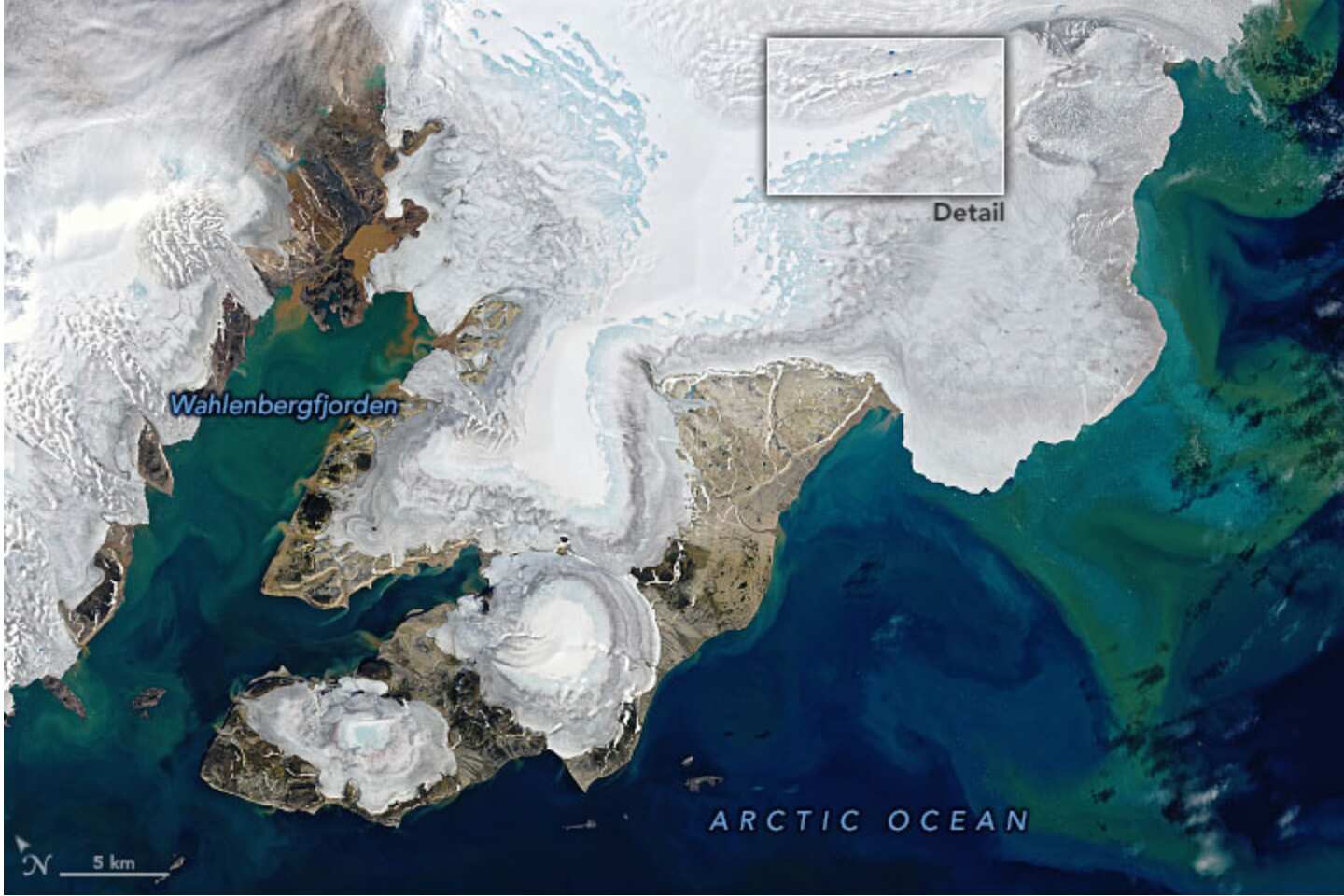
Picture of record summer melting in Svalbard; Credit - NASA
In the summer of 2022, unusually warm air temperatures have resulted in record melting throughout Svalbard. In the ice-covered archipelago of Norway, the plentiful meltwater, much of which went to the ocean, is the most recent manifestation of a rapidly changing climate. Svalbard is located halfway between the Norwegian mainland and the North Pole. Approximately 6% of the planet's surface is covered in glaciers outside of Greenland and Antarctica, covering more than half of its geographical area.

Before the record melting, the environment was altered by warming. Glaciers have been receding, and the "firn", a surface layer of compressed porous snow, has been losing its ability to hold large amounts of meltwater. This summer's melting was brought on by consistent warm breezes coming from the south. Parts of the archipelago had air temperatures that were on average up to 1.8°C (3.2°F) higher than normal from May 1 through July 25, 2022. On July 17, Svalbard experienced its highest-ever recorded melt volume due to a substantial warming trend that began on July 15.
Additional elements also played a part in the record-breaking event. The archipelago's sea ice began to disappear sooner than usual, and by the end of spring 2022, open ocean water was visible. (Sea ice can occasionally last until the end of the summer.) This made it possible for warm southerly winds to blow directly over land without first cooling off by blowing over sea ice. Additionally, the winter of 2021–2022 saw little snowfall. As the weather warmed, the thin covering of new snow quickly melted, revealing vast expanses of older, darker snow, firn, and bare ice. These darker surfaces absorb more solar radiation than bright, fresh snow does, which accelerates melting during the long, sunny days of the Arctic.
Also Read:IN PICS | Rare pictures from 1945 on Hiroshima Day; 77 years since World War II atomic bombings
In the past, a large portion of the meltwater would have been kept in the firn layer, where it would eventually refreeze. The procedure can help maintain glacier ice by preventing meltwater from entering the ocean. Svalbard's snowpack held onto 34% of the summer's meltwater between 1981 and 2010. Only 8% of the workforce was retained this summer.
(with inputs from agencies)