Life blossomed on infant Earth after massive meteorite strike billions of years ago

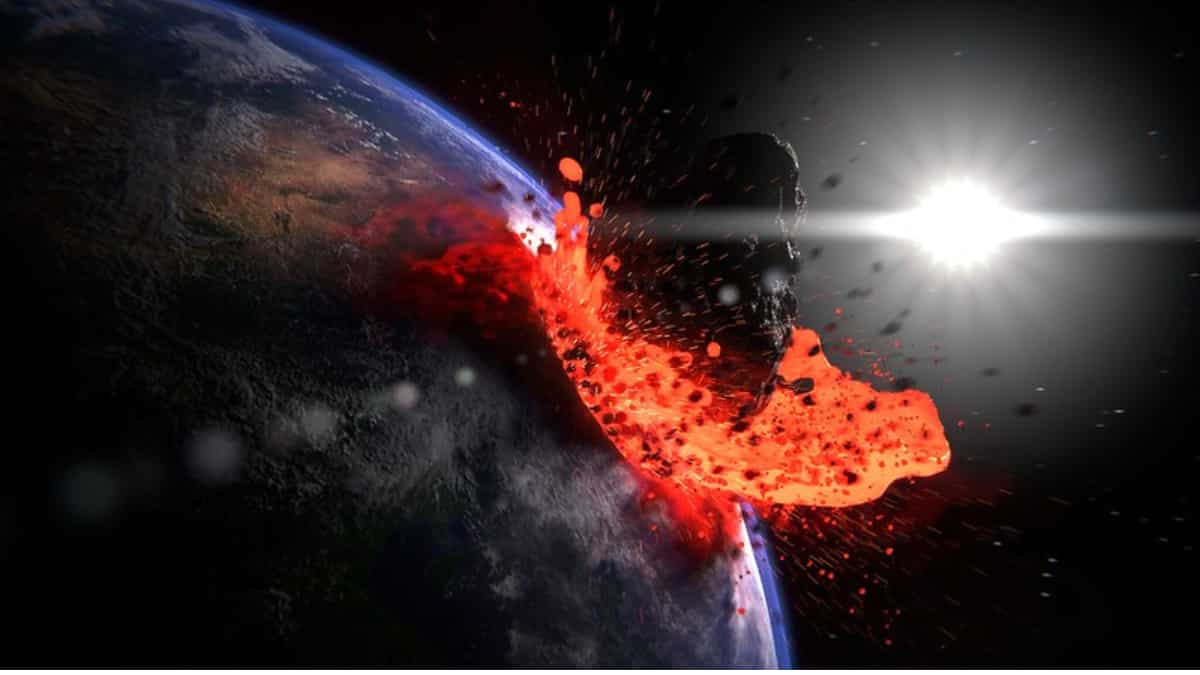
Meteorite impact representational image
A meteorite that Earth three billion years ago might have set up the platform for life to thrive on the planet, a team of scientists has found. But not before causing massive devastation first.
The meteorite was first discovered in 2014 and was 200 times bigger than the asteroid that killed the dinosaurs 66 million years ago. Earth was covered by mainly oceans at this time with only a few continents jutting out from here and there. The impact generated a lot of heat that boiled the oceans and caused the biggest tsunami in the history of mankind.
The team drove and hiked to Eastern Barberton Greenbelt in South Africa three times to collect rocks and learn more about the impact. The region is one of the oldest places on Earth where signs of a meteorite crash can be seen.
Meteorite S2 was one of the several pieces of debris swirling around in space after Earth formed. Bigger than the asteroid killer, S2 was 40-60km wide with a mass 50-200 times greater. In comparison, the asteroid responsible for the extinction of dinosaurs was around 10 km wide, about the size of Mount Everest.
“We know that after Earth first formed there was still a lot of debris flying around space that would be smashing into Earth,” says Prof Nadja Drabon from Harvard University, lead author of the new research.
“But now we have found that life was really resilient in the wake of some of these giant impacts and that it actually bloomed and thrived,” she says.
At the time, Earth harboured simple life forms with microorganisms composed of single cells living on the planet.
Prof Drabon and her team looked for tiny fragments of rock that the impact left behind. They carried back hundreds of kilograms of rock to their lab for analysis.
They have now reconstructed the incident which they say made a 500km crater and pulverised rocks. Moving at fast speeds, the rocks formed a cloud around the globe.
“Imagine a rain cloud, but instead of water droplets coming down, it's like molten rock droplets raining out of the sky,” says Prof Drabon.
It triggered a tsunami that ripped up the sea floor, with heat boiling the oceans and evaporating tens of metres of water. Air temperatures increased by up to 100 degrees Celsius, the skies turned black which even sunlight could not penetrate. Simple life relying on photosynthesis was wiped out.
Surprisingly, the devastation churned up nutrients like phosphorus and iron, leading life to bounce back quickly and thrive.
“Life was not only resilient but actually bounced back really quickly and thrived,” Prof Drabon says.
Iron-rich water from the depths came up to the surface because of the tsunami which gave early microbes extra energy. Prof Drabon says that this finding cements the belief that early life received ample help from other rocks that struck Earth in its early years.

