World’s deadliest ‘death cap’ mushroom has anti-dote, but still don’t eat it

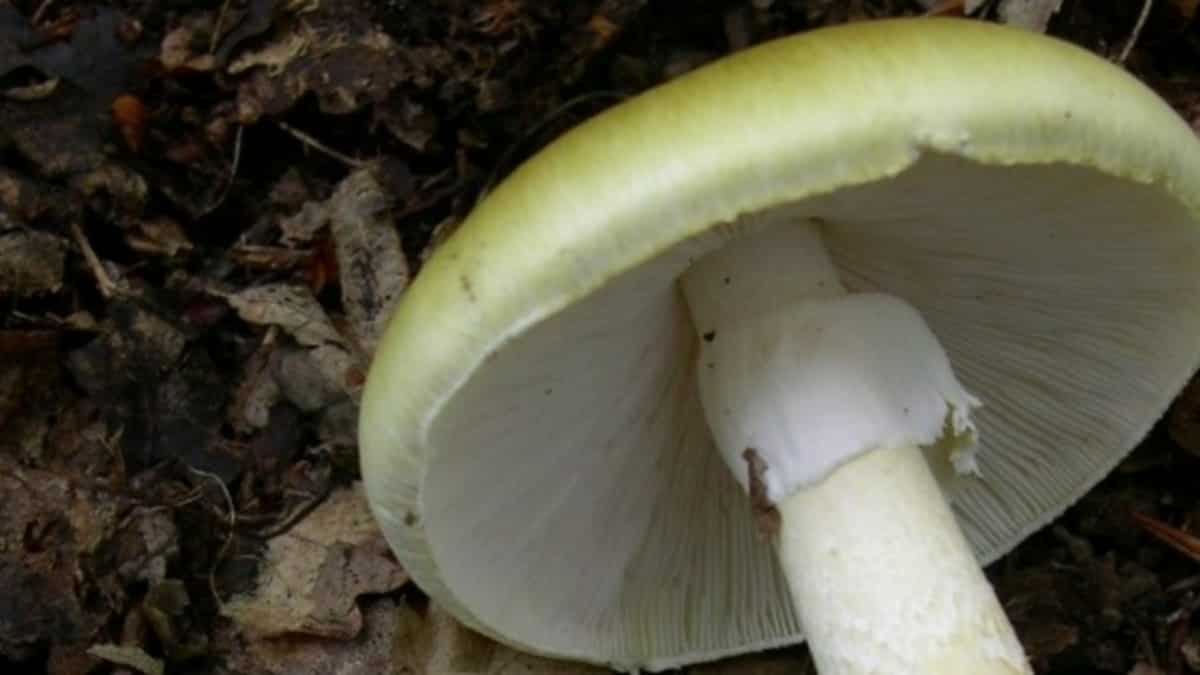
Mushroom
If you've lost your way in a forest and are starving, never ever think of munching on this mushroom which ironically has quite an inviting colour. The fresh green shade will entice your nutrient hungry soul. But just a few bites, and you'll get a quick lesson in why this particular mushroom is called the 'death cap' mushroom.
The toxins this mushroom containseat away at the liver. Without medical help, and sometimes in spite of medical care, the toxins cause failure of liver and sometimes kidneys. This soon leads to death.
Fortunately, scientists have now zeroed in on a substance that may be an antidote to 'death cap' mushroom (Amanita phalloides). It is a dye that's called indocyanine green and already has an approval from Food and Drug Administrationas it is used for medical diagnostic imaging.
A research team from China's Sun Yat-sen University has shown that indocyanine green can combat the toxin of 'death cap' mushroom and effectively blockcell death caused due to it.
To study the toxicity of this mushroom, the scientists took a multi-step approach. They used a genome-wide CRISPR screening on human cell line HAP1 to analyse the destructive impact of the toxin.
The poison
When the scientists studied the toxin, they found that biosynthesis of proteins called N-glycans played significant role in cell death. Moreover, it was found that an enzyme called STT3B was a key to the mushroom’s toxicity.
The antidote
Indocyanine green, was found as potential inhibitor of STT3B.
The researchers found that two different human cell lines - HAP1 and Hep G2- were more resistant to toxin-induced cell death when they were pre-treated with indocyanine green.
The researchers then carried out tests on live mice. The toxin was injected into them and they were treated with indocyanine green four hours later. The organs of the mice were monitored. It was found that the treated mice had less organ damage and even cell death. They had higher survivability.
However, there is still a ‘but’
It may still be a bad idea to eat 'death cap' mushroom though.
It was found that treatment with indocyanine green lost its usefulness after 8-12 hours. By this time, the organ damage reaches an irreversible stage. It was hence suggested that the treatment should be sought as early as possible.
"Overall," the researchers write, "we show that by coupling whole-genome functional genomic characterisation with in silico drug prediction, we can rapidly define and then target medically relevant processes."
The research has been published in Nature Communications and has been reported by ScienceAlert.
WATCH WION LIVE HERE
You can now write for wionews.com and be a part of the community. Share your stories and opinions with us here.