

&imwidth=800&imheight=600&format=webp&quality=medium "3I/ATLAS Live Tracker: Did interstellar comet rupture into 16 pieces near the Sun?")
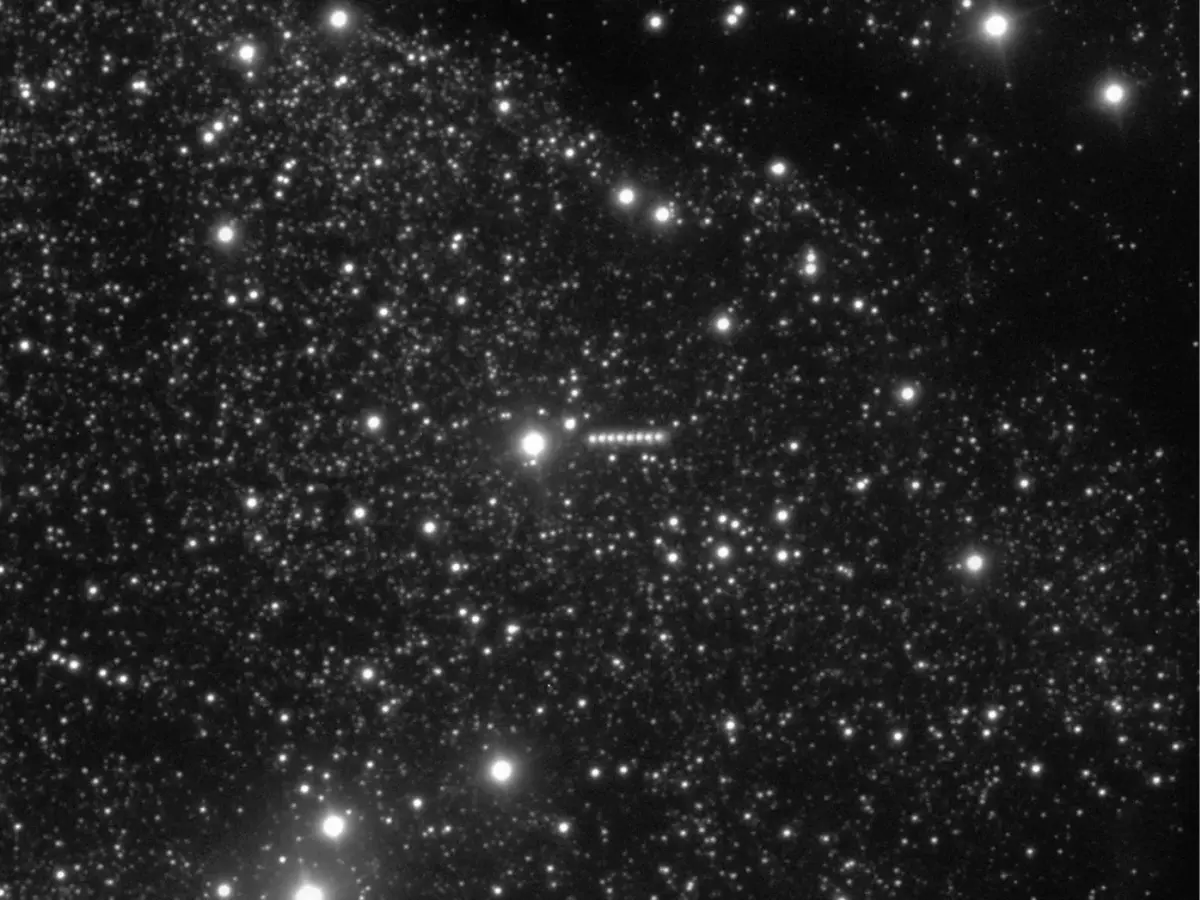
3I/ATLAS is only the third interstellar object seen in our solar system after Oumuamua and 2I/Borisov. It has remained a mystery since being first seen on July 1. Scientists have been trying to figure out its composition and why it behaves the way it does. Its trajectory has brought it close to Mars, the Sun and also later Jupiter. It will come near Earth in December, with the closest approach on December 19. Astronomers are eagerly waiting to take a closer look when it comes near our planet. Right now, it is believed to have exploded near the Sun. The complex jet structure and the sudden brightness indicate so; however, there is no confirmation of the same. Harvard scientist Avi Loeb has hypothesised that it could be an “alien mothership” coming to probe Earth. It could also release several mini probes. Meanwhile, NASA and other agencies say it is merely a comet, even if it is different from those seen in the solar system.
Harvard scientist Avi Loeb thinks that if 3I/ATLAS is a natural comet, it seems it would have exploded into 16 different parts. This would explain why it brightened suddenly and also the “complex jet structure” observed in the latest images. However, if this did not happen, then we should be ready to think that there could be more than meets the eye.
Prior to this study on 3I/ATLAS by a team of astronomers from Belgium and the USA, NASA explained, “The ratio measured for the amount of CO2 gas relative to H2O is among the highest ever observed in a solar system comet, demonstrating that the coma of 3I/ATLAS is very CO2-rich.” The agency said that this means that the interstellar comet was exposed to higher levels of radiation than comets from inside the solar system. It is also possible that it formed in a region of its original planetary disk where CO2 ice naturally freezes out from the gas.
If you wish to see 3I/ATLAS through your binoculars or telescope, here is a handy guide to locate it in the sky. It is now visible from Earth and presents a once-in-a-lifetime opportunity to see this interstellar visitor as it will soon leave to never return.
A study has claimed that the 3I/ATLAS is presenting evidence that Gyr‑scale galactic cosmic rays have altered the outer layers of the nucleus of the interstellar comet. The comet's surface has been processed, and it now has a face shaped by the radiation. This is proved by the James Webb Space Telescope Spectroscopy images and other observatories, as they show extreme enrichment of carbon dioxide (CO₂) compared to water and other anomalies.
3I/ATLAS is anywhere between 7 and 14 billion years old. Scientists studying the interstellar visitor believe that billions of years of interstellar travel have meant that it has been bombarded with high‑energy cosmic rays, which have effectively erased its real self. It is now only a heavily altered shell of its former self.

