3I/ATLAS Live Tracker: A frazzled tail appears on 3I/ATLAS, like fumes from an exhaust

&imwidth=600&imheight=450&format=webp&quality=medium "3I/ATLAS Live Tracker: A frazzled tail appears on 3I/ATLAS, like fumes from an exhaust")
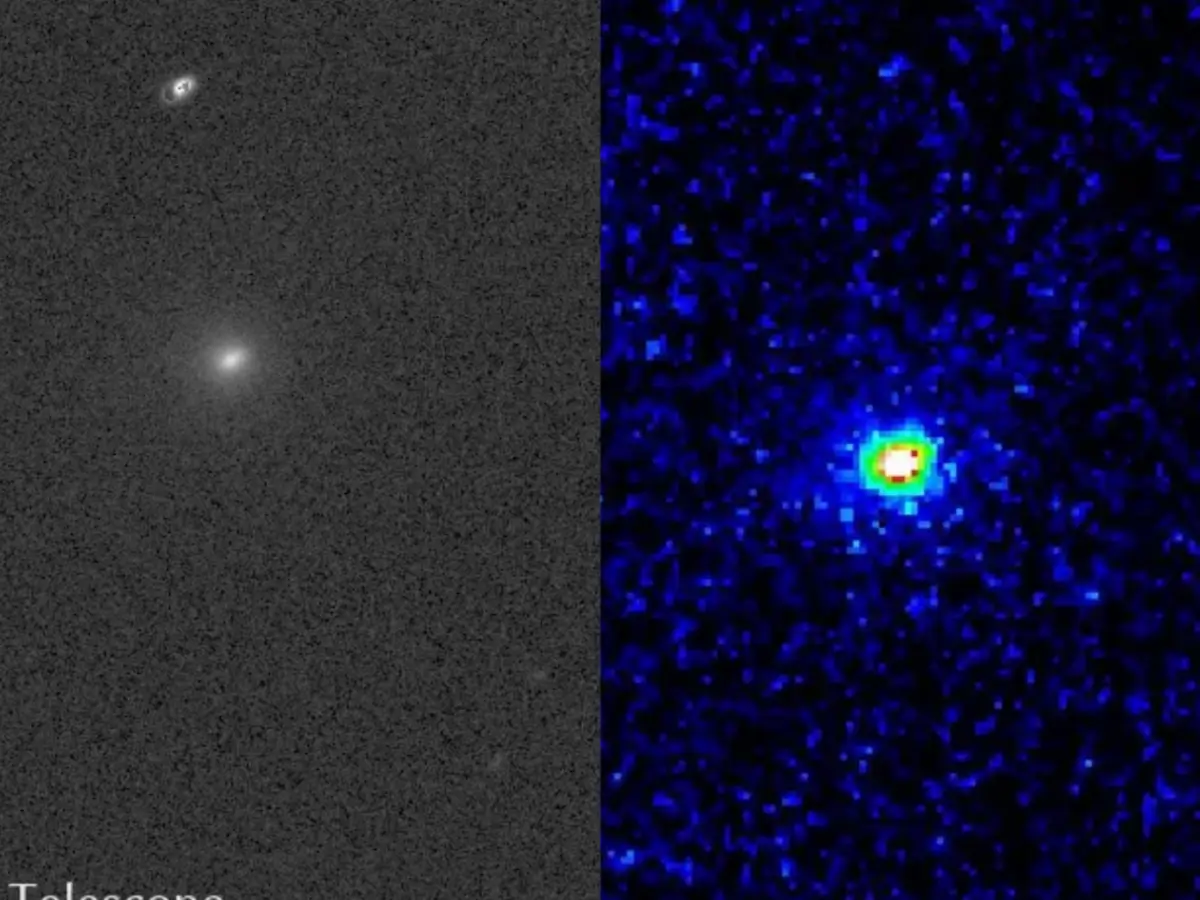
Interstellar comet 3I/ATLAS Photograph: (Lowell Observatory/R. Naves Observatory)
3I/ATLAS is displaying jets shooting out of it. A new photo shows a strange tail and a smaller anti-tail. Avi Loeb estimates that its current appearance indicates a mass of tens of billions of tons, which is vastly larger than 1I/ʻOumuamua.
Interstellar comet 3I/ATLAS is becoming more mysterious by the day. The first radio signal was detected recently originating from it. Now new photos show jets shooting out of 3I/ATLAS, baffling scientists. While there is a tail, albeit a weird one, there are also jets being released towards the Sun. A regular comet doesn't do this. Besides, 3I/ATLAS has displayed a lot of strange behaviour since being first observed in July. Its tail has been the biggest mystery, since it has hardly ever shown up in images. It also underwent strange changes near the Sun on October 29-30. 3I/ATLAS turned bluer than the Sun, became extremely bright and displayed non-gravitational acceleration. It also sped up suddenly and changed its path.
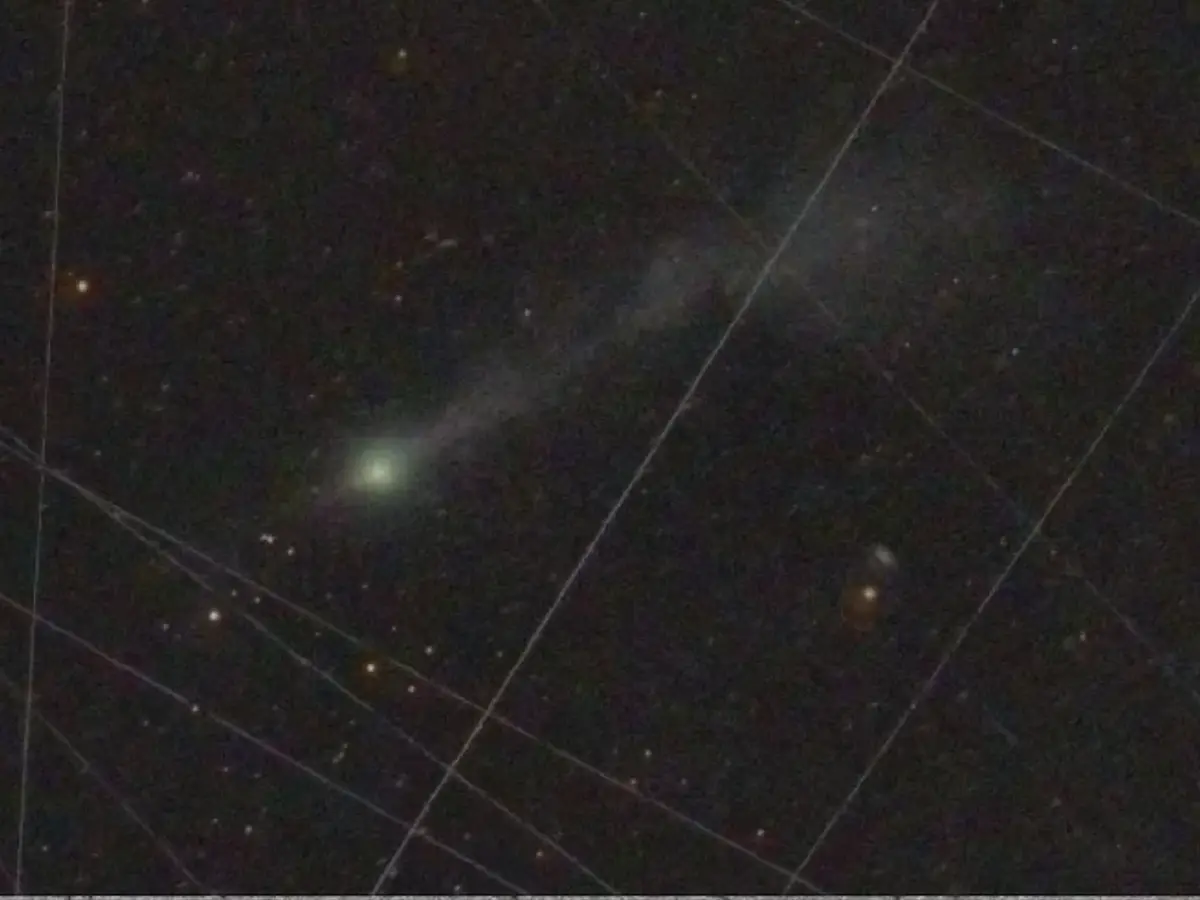
3I/ATLAS had no tail initially. In September, the Gemini Observatory saw one growing live. However, during its Mars flyby, the orbiters did not see a tail, only a bright coma. Since then, none of the images captured showed a tail. Now, the latest observation made on November 9 shows a tail, but not a smooth one like regular comets. It appears like fumes being released from the exhaust of a vehicle. Loeb thinks it could be gases being released by a technological machine.
The problem is that none of the probes preparing to scan 3I/ATLAS would be able to study the jets shooting out of the interstellar comet. This is because of the length of the jets. Near Earth, it will be 269 million kilometres away, about 100 times larger than the extent of the jet structure. Particle probes on Earth-based satellites won't be able to capture particles from the jets. NASA’s Juno spacecraft, around Jupiter, will be 53 million kilometres away in March next year and won't be able to intercept the jets either.
Avi Loeb has been suspicious of 3I/ATLAS ever since it was discovered, citing several anomalies. Now the jets have made the case even more curious since there is not one regular tail, but also an anti-tail, a jet towards the Sun. He asked in his blog, “Is the network of jets associated with pockets of ice on the surface of a natural cometary nucleus, or are they coming from a set of jet thrusters used for navigation of a spacecraft?”
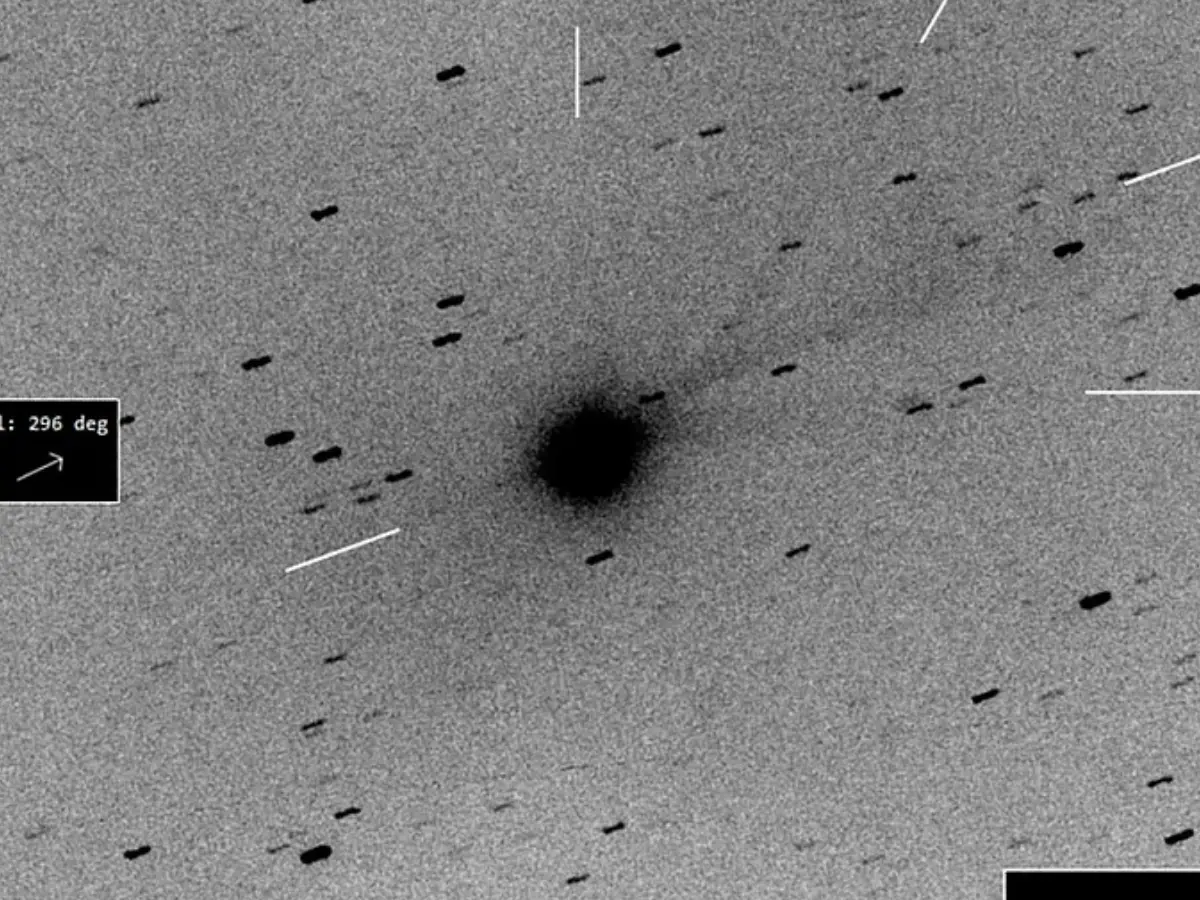
The complex jet structure was first seen in images released by M. Jäger, G. Rhemann and E. Prosperi. A large glowing halo can be seen extending out to half a million kilometres in the photos. In fact, there are at least 7 distinct jets, “some of which are anti-tails in the sunward direction.”
A South African observatory noticed a signal emanating from 3I/ATLAS on October 24. The MeerKAT radio telescope picked up radio absorption lines by hydroxyl radicals, namely OH molecules. It had tried to find signals on September 20 and 28, 2025, as well, but there was nothing. This is the first radio detection from the interstellar object since it was discovered on July 1.
New photos of 3I/ATLAS captured on November 9 show a jet towards the Sun and a longer tail. Calculating the length and other factors, Harvard scientist Avi Loeb has once again said the interstellar object likely has a mass of over 50 billion tons. An object with a diameter above 10 kilometres entering our solar system can only happen once per ten thousand years or longer, he said. Combining this with the “0.2% probability of the retrograde trajectory of 3I/ATLAS being aligned to within 5 degrees with the ecliptic plane” gives it a one in a hundred million chance of being a natural comet.

