Light at the end of tunnel: Scientists harness new therapy to kill cancer cells

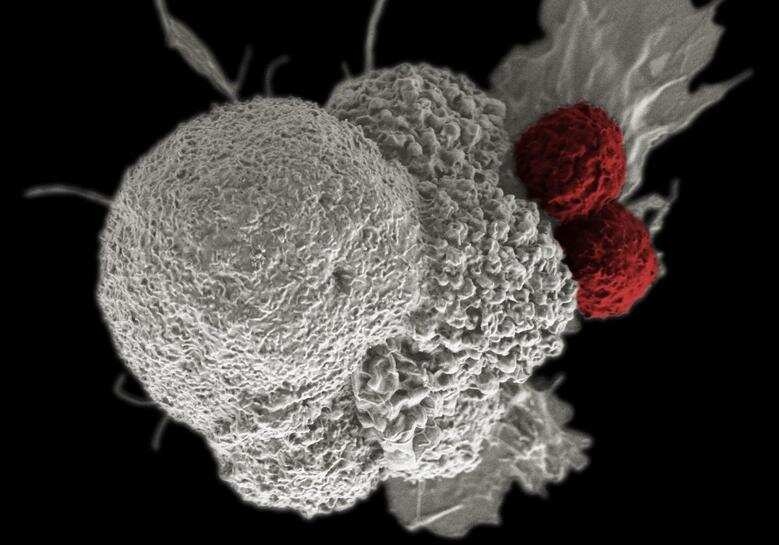
Light-activated therapy
In a major breakthrough, scientists have developed a new therapy that can effectively treat and kill cancer cells in patients. This “revolutionary” treatment, called light-activated therapy, is a new form of photoimmunotherapy that can wipe out microscopic cancer cells.
This new treatment was developed by a joint team of engineers, physicists, neurosurgeons, biologists and immunologists from the UK, Poland and Sweden.
They believe that this new form of treatment has the potential to become the world’s fifth major cancer treatment after surgery, chemotherapy, radiotherapy and immunotherapy.
The treatment, developed at The Institute of Cancer Research, London, could help surgeons to remove brain cancers like glioblastoma, one of the most common and aggressive types of brain cancer, more effectively, and boost the body’s response to cancer cells that remain after surgery.
The light-activated therapy helps cancer cells to lit up in the dark, helping surgeons to remove more of the tumours compared with existing techniques, and then kill off remaining cells within minutes once the surgery is complete.
This treatment uses synthetic molecules called ‘affibodies’– small proteins engineered in the lab to bind with a specific target with high precision.
In this study, the researchers combined an ‘affibody’ created to recognise a protein called EGFR – which is mutated in many cases of glioblastoma – with a fluorescent molecule called IR700, which is used in surgery.
Shining light on these compounds causes the fluorescent dye to glow, highlighting microscopic regions of tumours left in the brain, while switching to near-infrared light triggers anti-tumour activity that kills tumour cells.
“Brain cancers like glioblastoma can be hard to treat and, sadly, there are too few treatment options for patients,” the study leader, Dr Gabriela Kramer-Marek, told the Guardian.
“Surgery is challenging due to the location of the tumours, and so new ways to see tumour cells to be removed during surgery, and to treat residual cancer cells that remain afterwards, could be of great benefit.”
Researchers are now also studying the new treatment for childhood cancer neuroblastoma.
The study was published in the journal BMC Medicine.
(With inputs from agencies)
WATCH WION LIVE HERE