ISRO's LVM3 rocket fully integrated ahead of Chandrayaan-3 launch

Chandrayaan-3
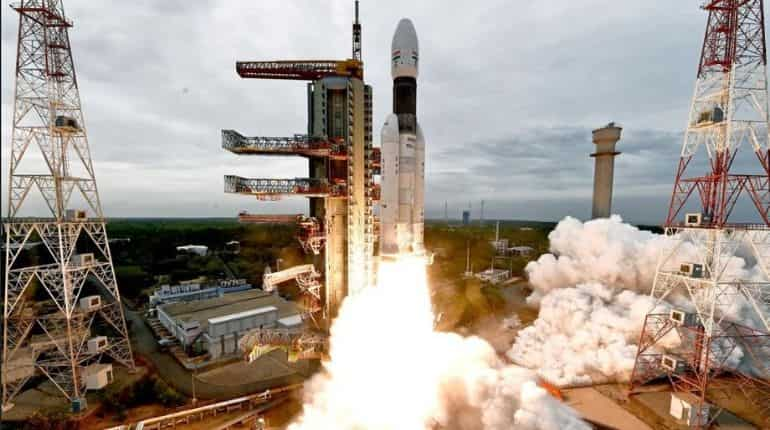
India's largest rocket LVM3 stands assembled and ready at the vehicle assembly building in Satish Shawan Space Centre, Sriharikota. ISRO said on Wednesday that the nose cone (payload fairing) of the rocket, which holds the Chandrayaan-3 Lunar spacecraft within, has been fitted atop the launch vehicle. This indicates steady progress towards a launch around July 13or July 14 afternoon, if all goes well. However, ISRO has not yet officially announced a launch date.
On July 7, the 640-ton Launch vehicle is expected to be moved to the Second launch pad at the Indian spaceport. A day or day and a half prior to launch, a countdown timer is started and a crucial phase of multiple health checks on the vehicle and its systems, sub-systems is carried out. It is towards the final stages of the countdown that the earth-storable liquid fuels and the super-cooled cryogenic fuels are filled into the second and third stages of the rocket, respectively.
DrS Somanath, Chairman, ISRO had earlier told WION that the Chandrayaan-3 lander and rover would retain the names used in Chandrayaan-2. This implies that the Lunar lander will be known as 'Vikram', a tribute to Dr. Vikram A Sarabhai, the brain behind the Indian space programme. The rover will be known as 'Pragyan', a Sanskrit word that means wisdom. We are looking at a Lunar landing around August-end, Dr. Somanath added. The Lunar l sing will have to be conducted at a time when the landing spot is experiencing a Lunar day (roughly spanning 14 earth days). This will help the lander and rover perform experiments within the stipulated mission duration.
India is undertaking its third Lunar mission and second Lunar landing attempt, after the previous mission Chandrayaan-2 could not perform the Lunar soft landing. While barely two kilometres above the Lunar surface, as it was approaching for a vertical landing, ISRO lost contact with the then 'Vikram' Lunar lander. The lander had made a hard landing of the lunar surface, which it did not survive, thus leaving the Lunar landing mission incomplete.
However, the orbiter from Chandrayaan-2 continues to circle the moon and provide science data from its payloads. Therefore, Chandrayaan-3 will not be having an orbiter that is mounted with multiple science payloads. Instead, it will serve as a propulsion module that will help the integrated spacecraft reach Lunar orbit.
While theChandrayaan-3 orbiter weighs lesser than its predecessor, the integrated spacecraft (orbiter, lander, rover) weigh 3.9tons or 3,900kgs, which is approximately 300kgs more than the integrated Chandrayaan-2 spacecraft. However, the payload mass reduced from the orbiter has been added to the Chandrayaan-3 Lunar lander.
The added mass on the Lunar lander comprises more fuel, more ruggedisation, measures for failure tolerance and strengthening of landing legs and increased scientific payloads, larger solar panels for better power generation," Dr S Somanath, Chairman, ISRO told WION. He was responding to WION's question on whether the Chandrayaan-3 spacecraft would weigh lesser than its predecessor (which weighed around 3.6 tonnes or 3,600kgs).
Earlier, Chairman, ISRO had told WION that the launch window for Chandrayaan-3 on board the LVM3 rocket would be between July 12 and July 19. The launch window is the ideal period for a launch mission and any day within that interval would be chosen based on a host of factors. Given that the Indian Lunar spacecraft would require around six weeks to travel from the earth to the moon (a distance of 3,84,000kms), precise calculations are carried out and the launch time is determined down to the minute.
When determining the time of launch, the mission planners consider the weather forecast, a flight path that is free of space debris, the dynamic position of the destination (with respect to earth), the time taken to travel to the destination, the manoeuvres involved, the rocket being used, the purpose of the mission, day or night time at the destination (during the time of landing), the movement and impact of other heavenly bodies etc.
Given that the launch window for Chandryaan-3 is just around a week, ISRO would work towards ensuring that the launch happens in the first few days of the window. It is pertinent to remember that Chandrayaan-2 was originally scheduled for launch on July 15, 2019, but ISRO called off that day's launch, owing to a technical snag that was observed while the rocket's cryogenic fuels were being filled.
ISRO took a week to rectify the issue and finally carried out the launch on July 22 in 2019. Therefore, ISRO's goal would be to launch in the first few days of the window, so that they can have a handful of days at hand, in case of any unexpected technical issues.
Queried about how confident he was about the positive mission outcome of Chandrayaan-3, Dr Somanath had earlier told WION that he is always confident, but space is an unforgiving domain, where only rigorous testing and clear decision-making yield favourable results. Smilingly, making a mention of luck being involved, he said that "even luck comes out of hard work and the perseverance to do the right thing at the right time".
WATCH WION LIVE HERE
You can now write for wionews.com and be a part of the community. Share your stories and opinions with us here.
