India eyes 'debris-free' space mission by the end of decade, says ISRO Chairman

Space Debris
The Indian Space Research Organisation (ISRO) aims to achieve 'debris-free' space missions by 2030.
ISRO announced in late March that one of its satellite missions "practically left zero debris in orbit" after they lowered a spent rocket stage to burn up in Earth's atmosphere during re-entry. Chairman S Somnath said last week that they will use similar deorbiting techniques to make future missions "debris-free" by the end of this decade.
In a session hosted by the Inter-Agency Space Debris Coordinating Committee (IADC), Somnath said, "Over the years, sufficient skill hasbeen developedwithin ISRO in dealing with topics related to debris management." He added, "We want to make sure that for all the spacecraft we are likely to launch in the future, we will be taking action to make sure that we deorbit and bring it to a safe location."
IADC has 13 spacefaring member nations. Currently, India has 54 spacecraft in orbit, excluding non-functional satellites. Of these, 13 were deorbited for reentry into Earth's atmosphere last year.
In February, ISRO lowered an Earth-observation satellite named Cartostat-2, launched in 2007, for a controlled atmospheric reentry over the Indian Ocean. As per predictions, allmajorparts of the satellitevapourised during the event.
ALSO READ |Crater-filled Moon and faint Earth in the background: Chinese satellites beam eerie image from space
However, this may not always be the caseasit's tough to foretell whether acertainsatellite will burn entirely during reentry. Scientists are realising that more entities endure the journey to the surface than previously thought, Space.com reported.
Last month, a piece of debris from a pallet of used batteries thrown overboard from the International Space Station slammed into a home in Florida.Thisproved NASA's prediction wrong that it would burn upcompletelyin space.
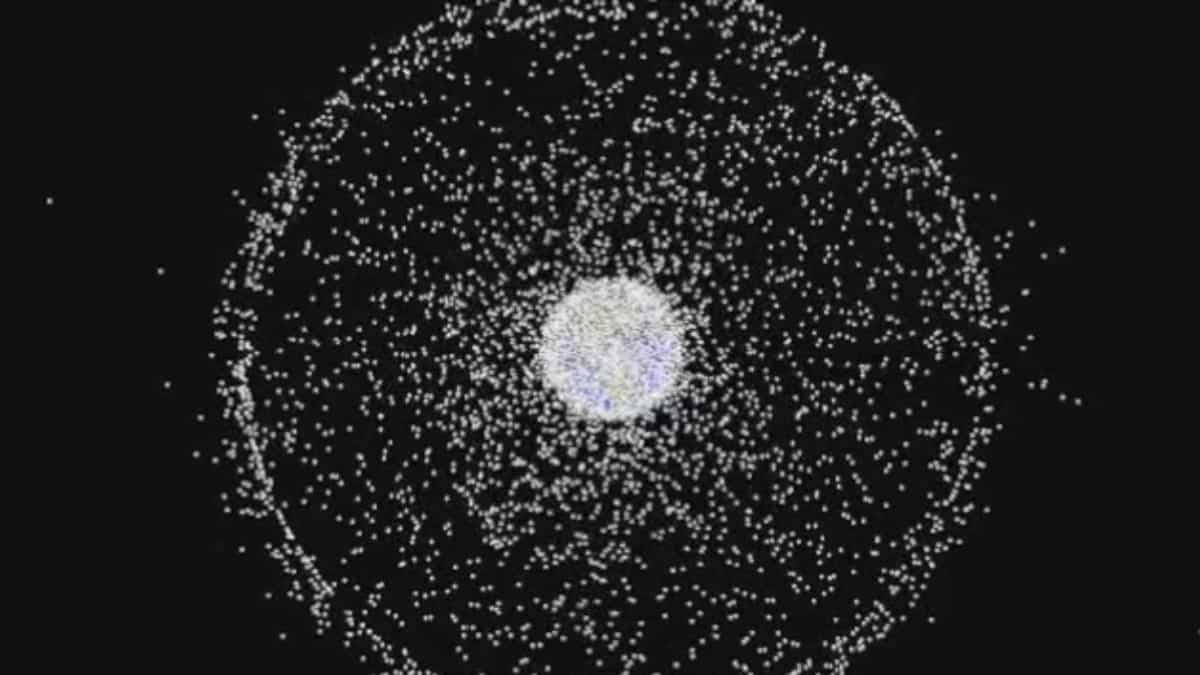
Approximately 30,000 objects in low Earth orbit arelargerthan a softball, and millions of smaller objects areless than a centimetre in size.These objects can circle the Earth at speedsthat can reachup to ten times that of a bullet.
The primary source of space junk is owing to spent rocket stages, dead satellites, and malfunctioning satelliteswhichhavebeenabandonedin their orbits around Earth.These abandoned objects have caused collisions and accidental explosionswhichhave promptedspace agencies and private companiesto intentionally lower their satellites for atmospheric reentries.
(With inputs from agencies)