Humans are now planning to build stone walls on Moon using robots. Here's why

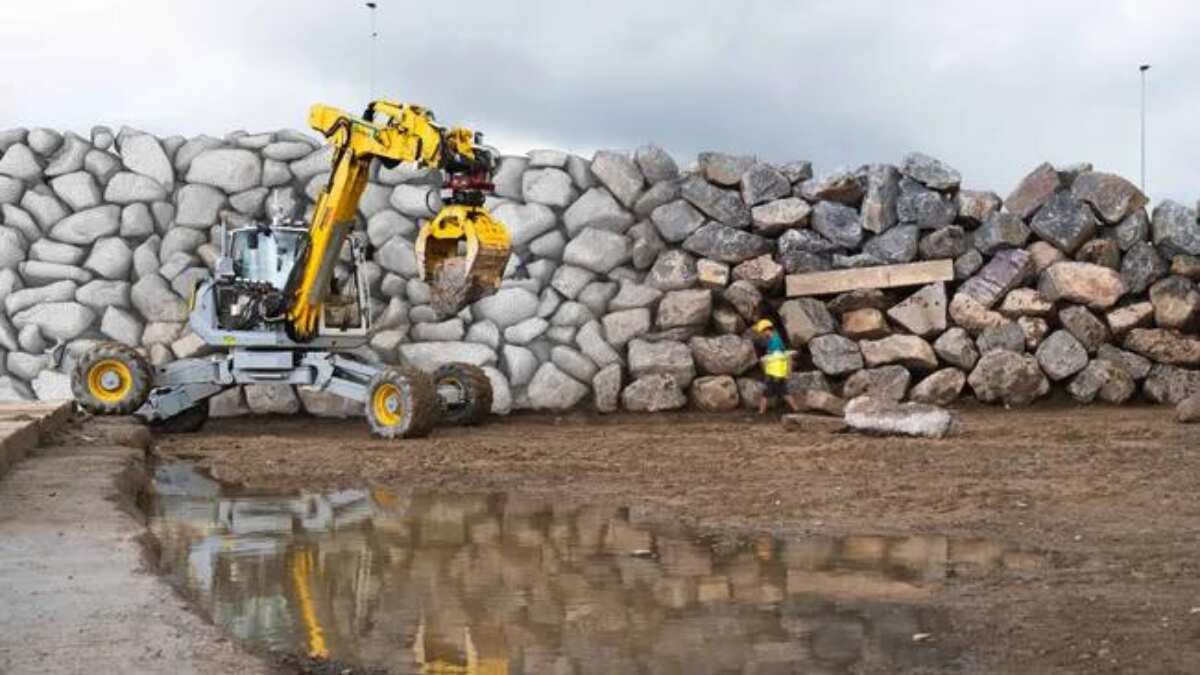
Image of the stone wall. (Courtesy: ETH Zurich)
A team of Swiss researchers have proposed using an autonomous, robotic hydraulic excavator for building a dry stone wall which will work as a blast shield and protect the launch pad on the moon.
The excavator will be using the in situ materials and the rocks from the lunar surface will be collected for making the ringed wall, which will have a radius of between 50 and 100 metres.
The scientists don't plan to adopt the costly practice of transferring the building material fromEarthtothe moon.
"The robot would be used to both collect the boulders as well as to construct the wall," said study lead author Jonas Walther, while speaking to Space.com.
The research was conducted by Walther for his master's thesis at ETH Zürich. Walther is now working with the Swiss company Venturi Lab which has been working with other companies on lunar rover design.
Lunar infrastructure - a quintessential step for humans in future?
According to scientists, the lunar infrastructure will be required if humans someday permanently settle on the moon to protect them from the exhaust and debris from rockets which are landing or taking off.
Gas, small particles and dust from rocket exhaust can prove to be hazardous, which was demonstrated when theSurveyor 3probe was brought back by theApollo 12crew from the Oceanus Procellarum and the scientists found that it suffered damage by dust blown away by the Lunar Module Intrepid.
The scientists also fear that the rocket exhaust fromSpaceX's giantStarshipvehicle - through which astronauts will be sent on NASA'sArtemis 3 mission - will harm the lunar environment in the area of hundreds of metres and extend it into kilometres.
Hence, they feel there is a need to set up a blast shield to protect any future ground infrastructure.
Watch:NASA's Ranger 7 Photographed the Moon, 60 Years Ago
"Some dry stone walls on Earth have endured for thousands of years," said Walther, while speaking about how strong it is.
However, scientists feel that such shields won't have to last on the lunar surface for a very long time and the vastly reduced weathering on the moon means that the wall will only have to resist the blasts of rockets taking off or landing.
According to the estimate of the weather team, the blast shield will have to face pressure from gases released by SpaceX's Starship rockets, which will be 1,135 Pascals.
(With inputs from agencies)