Drenching your head with rainwater during lightning storm increases survival chances by 90%: Study

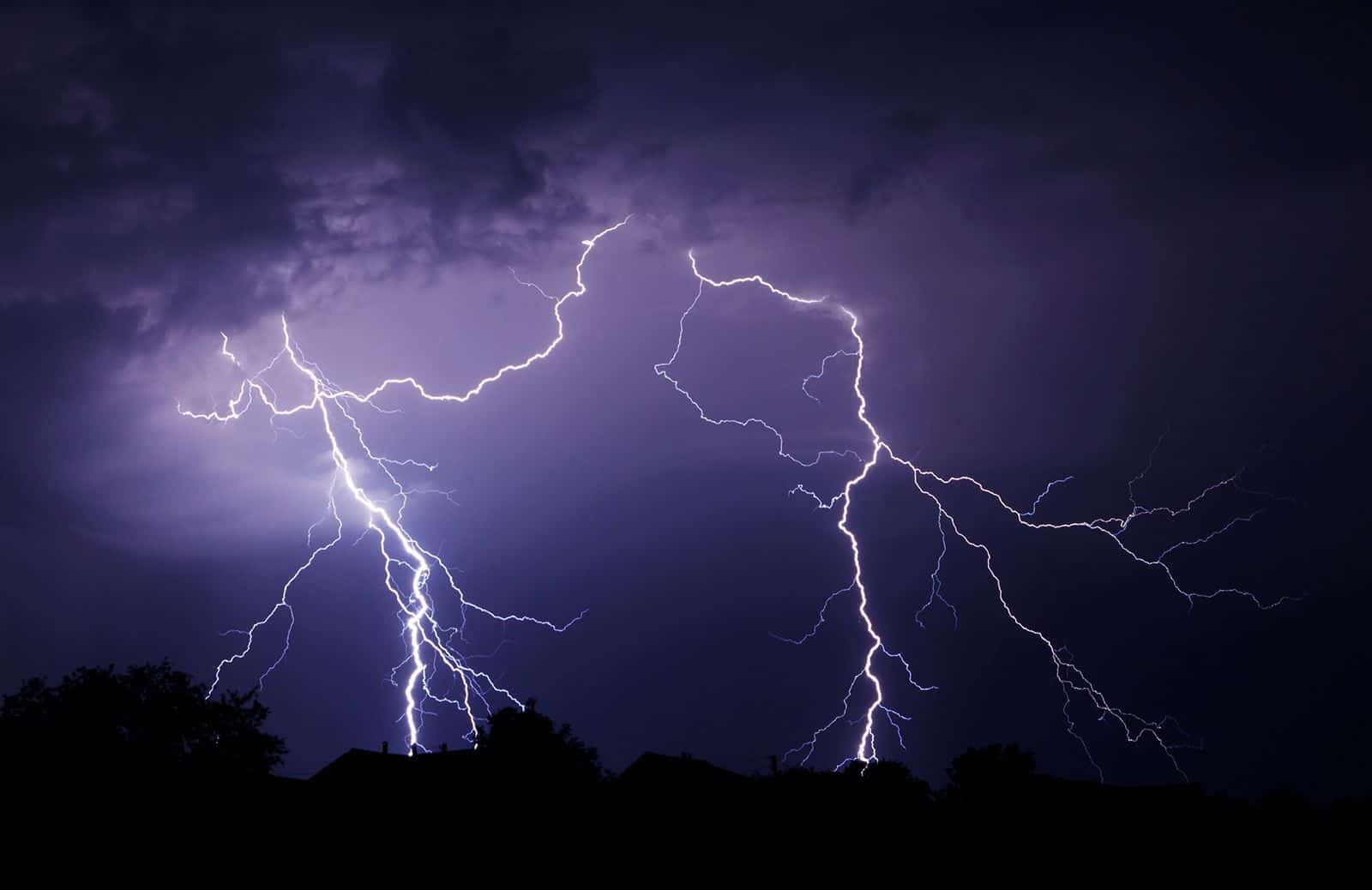
A lightning strike (File photo)
If you find yourself stuck in a lightning storm, you better prefer soaking your head with rainwater to avoid the wrath of a deadly jolt. Scientists have revealed that dousing your head in rainwater might increase your chances of survival by a whopping 90 per cent by avoiding attracting lightning.
However, the scientists warned that the best scenario would be to not step outside in a lightning storm in the first place.
A team led by engineer René Machts of Ilmenau University of Technology in Germany wrote, "Our experiments on human head phantoms provide practical evidence for the theoretically postulated effect that rain-wet skin might have better lightning strike protective behaviour than dry skin."
How was the experiment conducted?
Lightning strikes are incredibly dangerous phenomena, capable of delivering currents exceeding 200 kiloamperes, which is significantly higher than the lethal threshold for humans.
Machts and his colleagues conducted the study to explore how surface moisture influences the path of lightning across a bare human head.
To conduct their research, they constructed two artificial human heads designed to replicate the electrical conductivity properties of real human skulls.
These synthetic heads were meticulously crafted based on CT scan data, consisting of a scalp, skull, and internal tissue volume. Carefully selected materials such as sodium chloride, water, graphite, and agarose were used to mimic the properties of human tissue.
Watch:New evidence suggests size of the Sun could be smaller, says report
The next step involved placing the synthetic heads on electrode arrays. One head remained dry, while the other was sprayed with artificial rainwater to simulate wet skin conditions.
Both heads were then subjected to the maximum current available from a pulse generator, which was set at 42 kiloamperes. This experimental setup allowed the researchers to observe and analyse how surface moisture affects the behaviour of lightning when interacting with a human head.
Results
The wet head sustained fewer injuries than the dry one. The scientists also studied the so-called ‘surface flashover’ phenomenon on each head.
The surface flashover is a discharge path on the surface of the skin caused by a high voltage difference between the entry point and exit point of the current across the body.
The study found that significantly less current entered the body through the wet head. The energy that entered the brain cavity was 32.5 per cent lower for the wet head than the dry one.
Researchers added that the reduced current exposure to the brain amounted to an increased survival rate, by 70 to 90 per cent.
(With inputs from agencies)