Genetically engineered common fly species to combat issue of humanity's organic waste

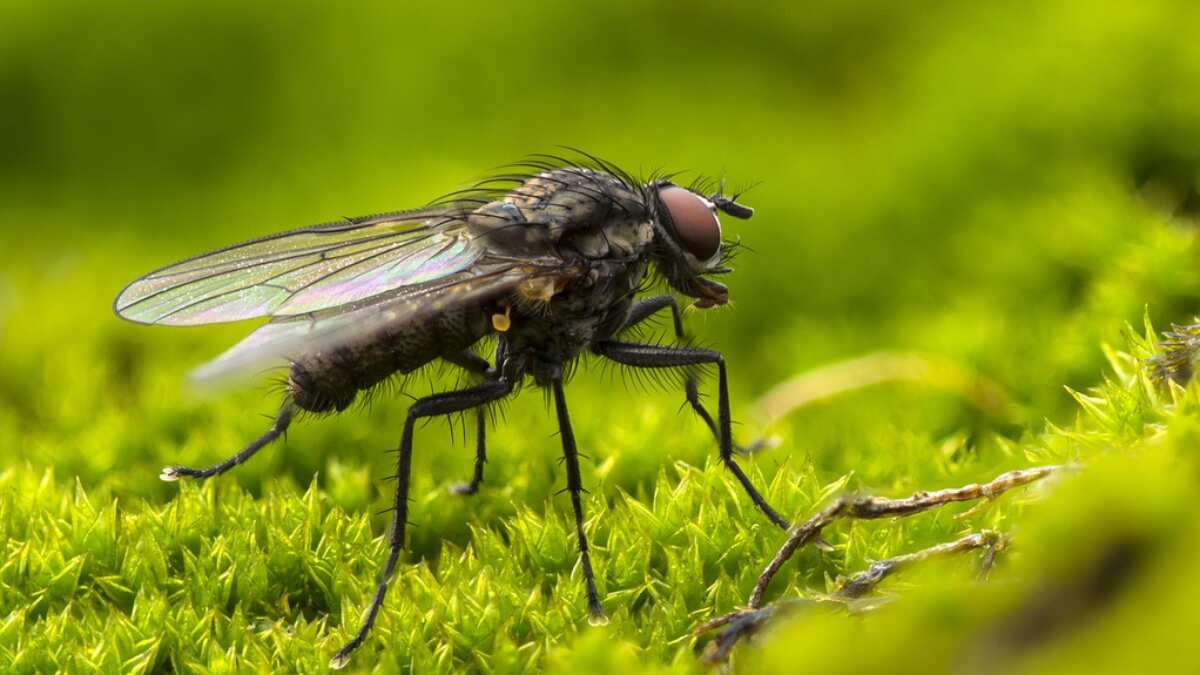
The world faces the massive challenge of managing organic waste. In order to combat the problem, a team of scientists is genetically engineering a common fly species. In a latest scientific paper, Australian scientists said that the fly can eat more of humanity's organic waste while producing ingredients for making everything to high-grade animal feeds.
A team based at Sydney's Macquarie University mentioned how black soldier flies can help tackle the issue. Researchers said that black soldier flies (BSF) are already being used commercially to consume organic waste. When the fly reaches the maggot stage, its job of consuming organic garbage is completed. The maggots are harvested once they develop into pupae.
However, by modifying their genetic makeup, it may be possible to increase the variety of garbage that their larvae ingest and simultaneously produce enzymes and fatty compounds.
The findings were published in the study, titled "Diverting organic waste from landfills via insect biomanufacturing using engineered black soldier flies (Hermetia illucens)", on Wednesday (Jul 24) in Communications Biology.
Solid waste is estimated to be responsible for five per centof global annual carbon dioxideemissions, with the majority of this due to the methane generated from landfilling organic waste.
The study revealed that currently, 40–70 per centof organic waste is disposed of in landfills, where it is tightly compacted to economise space.
It causes the anaerobic microbial decomposition of organic waste into methane, a greenhouse gas (GHG) that is 28 times more potent than carbon dioxide.
"Using synthetic biology, BSF could be developed into a novel sustainable biomanufacturing platform to valorise a broader variety of organic waste feedstocks into enhanced animal feeds, a large variety of high-value biomolecules, including industrial enzymes and lipids, and improved fertiliser," the paper said.
As quoted by The Guardian, Dr Kate Tepper, the lead author of the paper, said, "We are heading towards a climate disaster, and landfill waste releases methane. We need to get that to zero." Tepper has already started engineering the flies at Macquarie University where Dr Maciej Maselko runs an animal synthetic biology lab.
Black soldier flies are found in all continents except Antarctica and "if you've got a compost bin, then you've probably got some", said Maselko, further adding that the insects would become the "next frontier" in dealing with the planet's waste management problem.
(With inputs from agencies)