Fossil reveals giant salamander-like creature that existed before early dinosaurs: Study

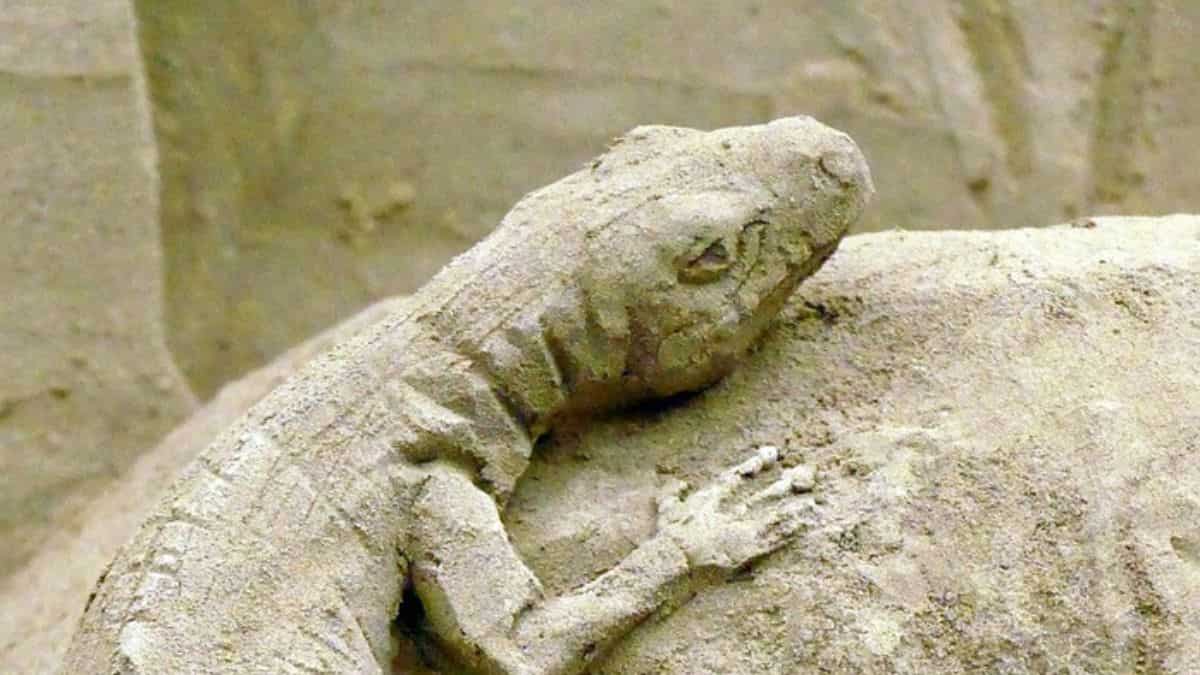
Representative image
Fossil remains of a giant salamander-like creature with sharp fangs, Gaiasia jennyae, have been revealed by scientists. The findings on the beast, that ruled the waters before dinosaurs, have been published in the journal Nature on Wednesday.
The predator, nearly 272 million years old, had a skull measuring about two feet long and was larger than a human. According to the researchers, it used its broad, flat head and front teeth to suck in and bite its unsuspicious prey.
“Gaiasia jennyae was considerably larger than a person, and it probably hung out near the bottom of swamps and lakes," said Jason Pardo, an NSF postdoctoral fellow at the Field Museum in Chicago and the co-lead author of the study.
The fossil remains of the creature, believed to exist about 40 million years before the first dinosaur evolved, were collected about a decade ago. Researchers uncovered several specimens, including a well-preserved one comprising of skull and backbone.
“We had some really fantastic material, including a complete skull, that we could then use to compare with other animals from this age and get a sense of what this animal was and what makes it unique,” said Pardo.
Scientists have been examining such ancient predators to discover the lineages of tetrapods, four-legged animals that live on land and evolved into amphibians and mammals.
Most such fossils of archaic tetrapods have been unearthed from the prehistoric coal swamps in the equatorial regions of North America and Europe. However, these recent fossil remains have been discovered in Namibia in Africa, which once was covered with layers of ice and glaciers. This implies tetrapods may have been living in colder conditions earlier.
“The fact that we found Gaiasia in the far south tells us that there was a flourishing ecosystem that could support these very large predators. The more we look, we might find more answers about these major animal groups that we care about, like the ancestors of mammals and modern reptiles," said Pedro.
The name Gaiasia jennyae originates from the location where it was found, the Gai-As rock formation in Namibia, and the name of palaeontologist, Jenny Clack, who specialised in evolution in early tetrapods.
(With inputs from agencies)

