

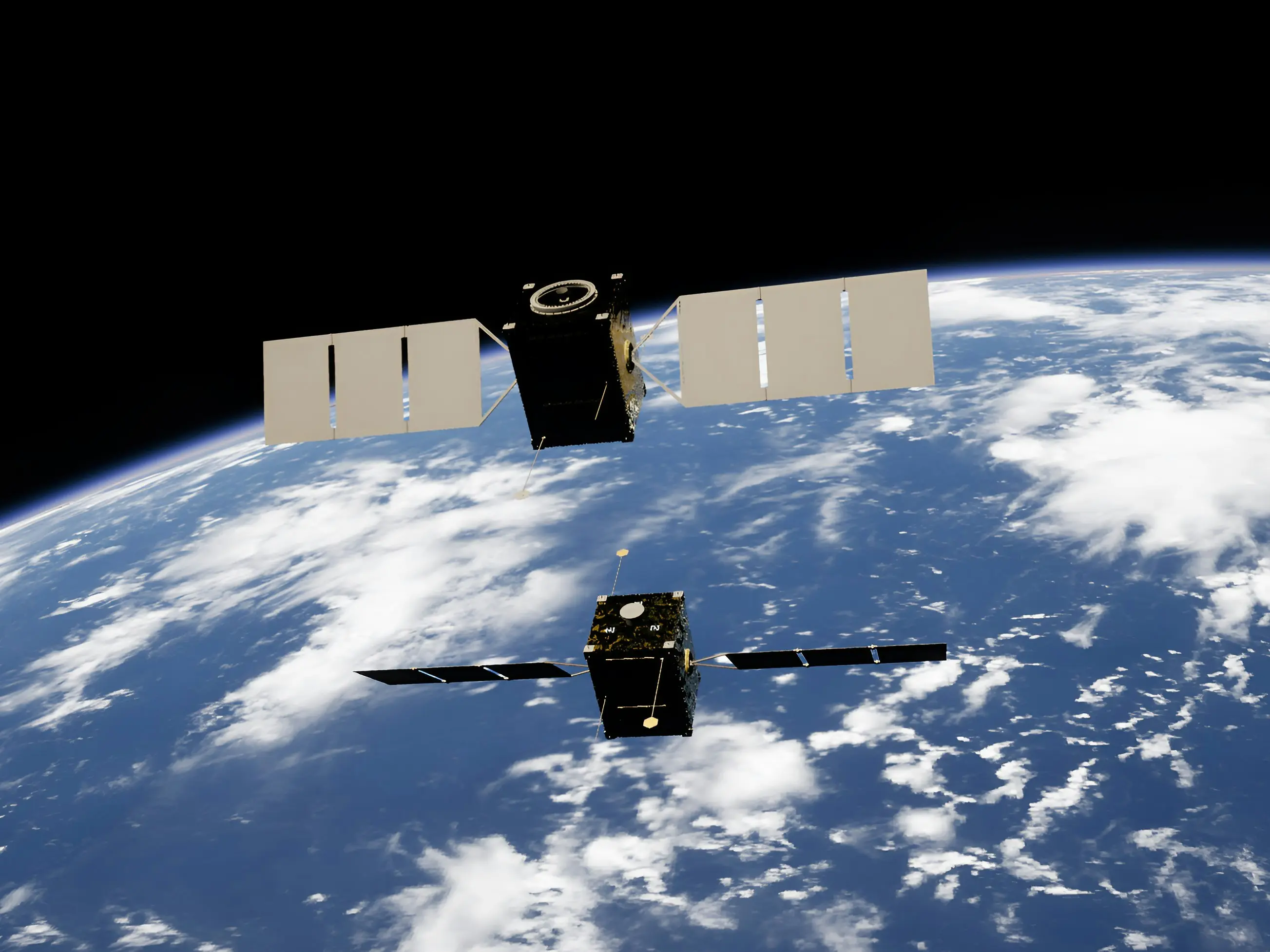
&imwidth=800&imheight=600&format=webp&quality=medium "Entire ISS would not crash down on Earth, as Russia reveals its plans for ROSS")
Russia has announced a twist to its plans of building its own space station. The current space observatory is due to retire by 2030, and will be dragged down by Earth's atmosphere. Initially, Roscosmos had plans to launch brand new modules for the Russian Orbital Space Station, nicknamed ROSS. This was to commence in 2027. But its latest plans have revealed that it will reuse its segment of the ISS. The country has revealed that it would not launch seven new modules into orbit. Instead, it wants to keep its current segments in orbit and will use them for its station. Oleg Orlov, director of the Institute of Biomedical Problems at the Russian Academy of Sciences, announced, "The Scientific and Technical Council of Roscosmos supported this proposal and approved the deployment of a Russian orbital station as part of the Russian segment of the ISS as the main possible scenario."
Orlov said that it has assigned a special commission for ROSS, and they have been working on the concept for the past several months. As part of it, Russia's segments of the space station will be separate to create ROSS after the ISS is retired in 2030. The new modules will be attached to it later on. Initial plans called for a habitable station by 2028, with the first module scheduled to be launched in 2027. Three more modules were to be launched by 2030 and another three by 2035.
The Russian Zvezda module of the space station was launched to low Earth orbit in July 2000. It has witnessed some problems, such as an air leak in 2019. It was traced to the vestibule, named PrK, that connects a docking port to Zvezda. This air leak has gone up from one pound a day to about two pounds. In June, the Axiom 4 mission to the ISS had to be postponed because of a new pressure signal in the Zvezda module.

