Stars can change the orbit of Earth over the years, wreaking havoc on climate, say scientists

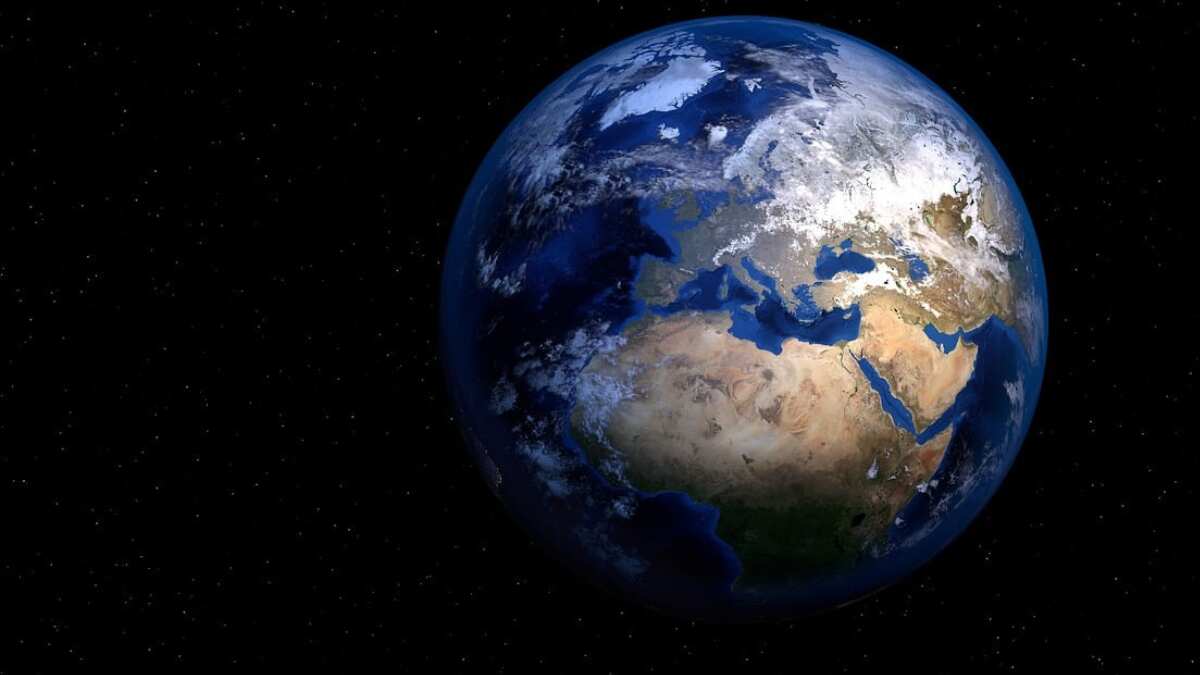
Representational image of Earth.
Stars other than the Sun present in our solar system can havea major impact on the planets including Earth, even possibly changing their orbits, scientists have said. The gravitational pull of the stars has the ability to change the orbit of the Earth, an event that can wreak havoc on the green planet's climate.
The orbital changes happened in the past, millions of years ago. When it happened, the temperature of Earth increased by 8 degrees Celsius, according to the study titled 'Passing Stars as an Important Driver of Paleoclimate and the solar system's Orbital Evolution'.
The study has been published in The Astrophysical Journal Letters.
The study's lead researchers are Sean Raymond and Nathan A Kaib.
Perturbations are a minor deviation in the course of a celestial body, caused by the gravitational attraction of a neighbouring bodyfrom passing stars alter the long-term orbital evolution of the sun's planets, including Earth, explained Kaib, a senior scientist at the Planetary Science Institute, in the study.
"One reason this is important is because the geologic record shows that changes in the Earth's orbital eccentricity accompany fluctuations in the Earth's climate. If we want to best search for the causes of ancient climate anomalies, it is important to have an idea of what Earth's orbit looked like during those episodes," he said.
Scientists predict Earth's past orbital evolution
To understand the events which have occurred in the 4.5-billion-year lifespan of Earth, the researchers carried out extensive scientific research. They ran simulations to predict the planet's past orbital evolution.
Watch:Gravitas: Asteroid flew past Earth in near miss
The scientists then chose a single known event, which occurred 2.8 million years ago, when a Sun-like star known as HD 7977 passed through the Solar System.
The star passed from inside the Oort Cloud and was at a distance of some 31,000 astronomical units (1 astronomical unit is the distance between Earth and the Sun).
Hence, it was at a great distance to have any effect. However, it may have zoomed in as close as 4,000 astronomical units.
"It has already been proposed that Earth's orbital eccentricity was notably high during this event, but our results show that passing stars make detailed predictions of Earth's past orbital evolution at this time highly uncertain, and a broader spectrum of orbital behaviour is possible than previously thought," said Kaib.
(With inputs from agencies)