

&imwidth=800&imheight=600&format=webp&quality=medium "Doomsday asteroid collisions, including the one in India, sowed seeds of life on Earth")
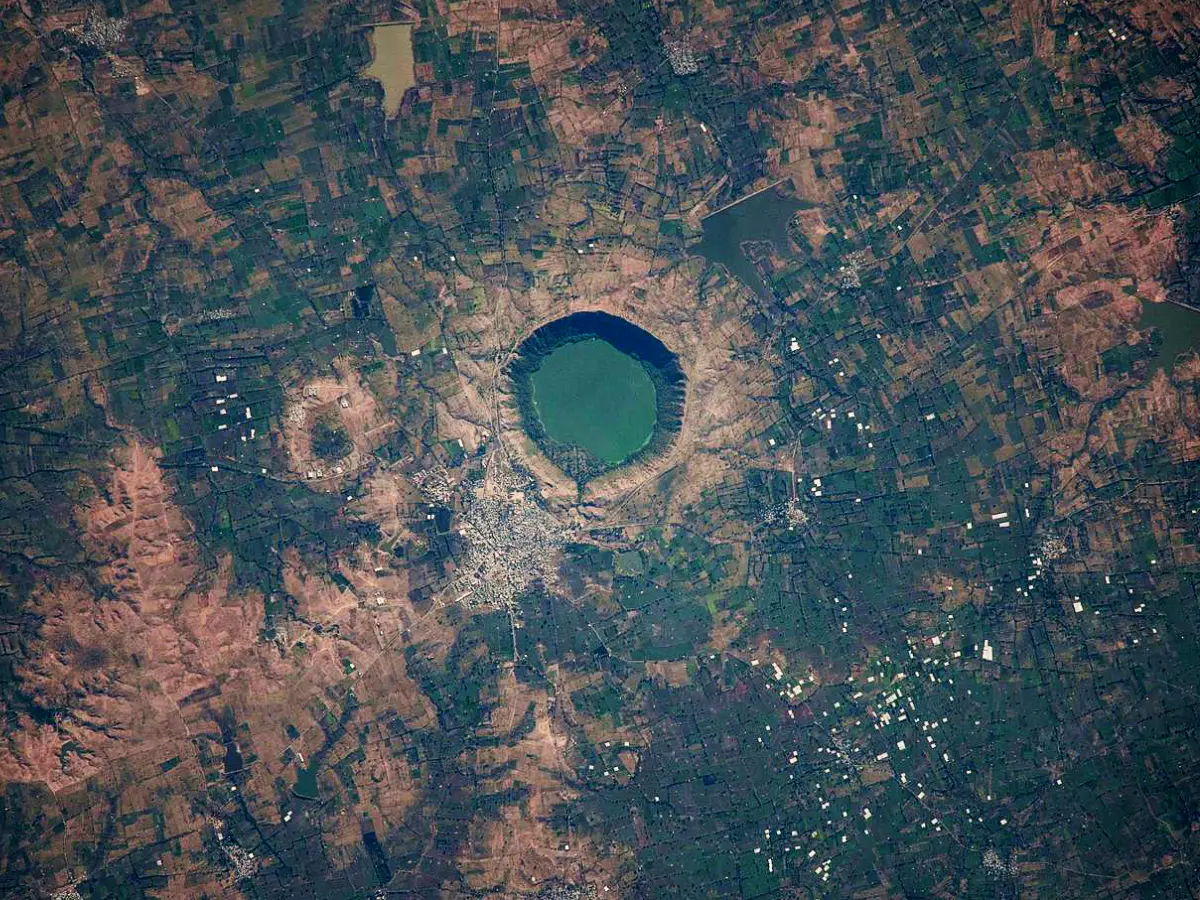
A doomsday asteroid strike in India 50,000 years ago could have created the building blocks of life, a new study has found. Lonar Lake in India, along with the Haughton impact structure in Canada, and the Chicxulub impact crater along the Yucatán Peninsula, created the perfect conditions for life following the fiery strikes. Lead author of the paper, Shea Cinquemani, explained in a statement, "You have a lake surrounding a very, very warm centre." The study was published in the Journal of Marine Science and Engineering. The three collisions generated so much heat that they incubated long-lasting hydrothermal vent ecosystems for centuries, the researchers state in their new paper. Explaining what happened, the paper states that when large meteors struck these areas, intense heat and significant mass displacement happened, because of which the surrounding rock melted. A hot, mineral-rich environment was formed, perfect for new microbial life, as water entered the new crater.
"You get a hydrothermal vent system, just like in the deep sea, but made by the heat from an impact," Cinquemani added. These are similar to deep-sea hydrothermal vents that do not need the Sun for energy. Oceanographer Richard Lutz and Cinquemani examined the three craters and found that the Haughton Impact Structure in the Canadian Arctic was the most instructive. The crater measures 23 kilometres wide and was formed 31 million years ago. The impact triggered heat for “several thousand years” and later the temperature fell below 50 degrees Celsius, which helped the self-generated system of hydrothermal vents to remain alive. “Despite the decreased temperature from being closer to the poles, the magnitude of the heat given off by the impact and stored inside the resulting structure would have kept the crater lake from freezing or dissipating,” the authors wrote.
Also Read: Sun mysteriously shut down for 70 years, indicating a hibernation could strike Earth any time
Asteroids could have created even better conditions for life near equator
Haughton is the perfect example to show that the right meteor can create a long-lasting system of hydrothermal vents even in extremely cold regions. The study of the three craters shows that any asteroid that likely struck Earth in the early years near the equator could have had a much better chance of fostering hydrothermal vents. In the case of the Chicxulub impact, the impact point is located in the Gulf of Mexico, indicating that other meteor impacts could have had an ocean splashdown. "There is also the possibility that similar processes can/could have occurred on other terrestrial bodies,” Cinquemani and Lutz wrote.

