This dinosaur walked on Earth when just one big supercontinent existed

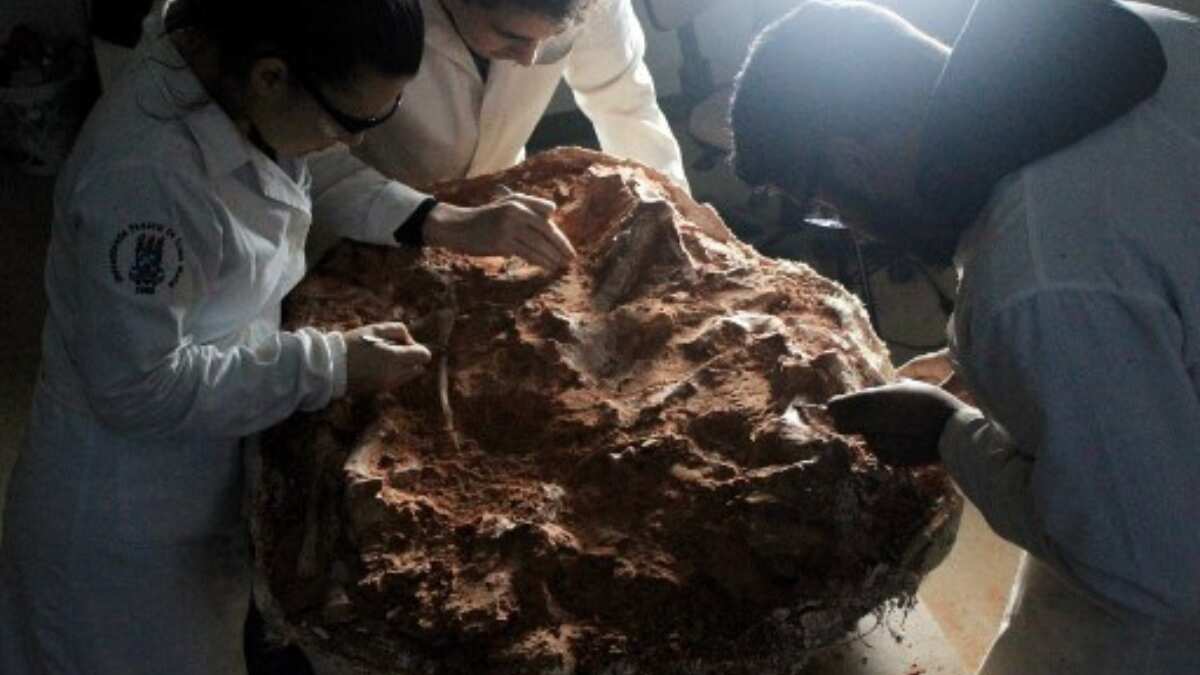
Dinosaur fossil in Brazil
A 233-million-year-old dinosaur fossil has been discovered in Brazil and is being dubbed as the oldest fossil of the gigantic creatures in the world. Paleontologists say that the carnivorous dinosaur belongs to the Herrerasauridae family and walked on Earth during the Triassic Period. During this time, all continents were one, also known as Pangea. The Triassic spanned 50.5 million years and followed the Permian extinction, also known as The Great Dying. This is when the dinosaurs started to emerge on Earth. However, the end-Triassic markedanother extinction event which wiped off 76 per cent of all marine and terrestrial species.
The dinosaur fossil is of a carnivorous species which walked the Earth when there was just one big supercontinent. This was around 233 million years ago, making it the oldest dinosaur to have roamed our planet, as per official records. It was a bi-pedal, eight-foot-long animal and perished in southern Brazil in what is today known as “Rio Grande do Sul".
Scientists are excited by this discovery since it is expected to help them understand the origins of dinosaurs. “It’s among the oldest in the world,” Rodrigo Müller of the Federal University of Santa Maria(UFSM) told Agência Brasil. “It’s already important because of the role it’s likely to play in helping us understand the origin of the dinosaurs. Besides, it’s almost fully preserved. The material will provide a lot of anatomical information.”
As per data, the oldest dinosaurs lived 231 million years ago and the fossils include a collection of different species. However, there are some fossils that date back as far as 240 million years, but these haven't been accepted as officially confirmed records till now.
Heavy rains threaten dinosaur fossils
Meanwhile, scientists are slowly losing out on some fossils in the area as this region in Brazil is known for receiving heavy rains. In fact, heavy deluge is what uncovered the fossils in the first place. Müller told the Associated Press that “a leg bone and a pelvis bone in the pelvic region…were already being destroyed due to the rain.” As per reports, three months of rain fell in just two weeks this June, wreaking havoc in the form of floods that killed at least 182 people.
The scientists are now trying to salvage whatever they can of the Herrerasaurid fossil before they are destroyed by the rains.

