Did we just discover the Moon's long-lost sibling?

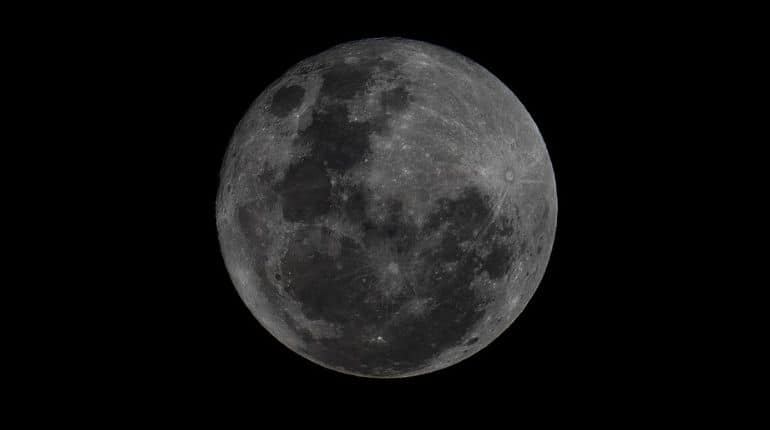
The "blue moon", the second full moon of a calendar month, is seen over Lanus, Buenos Aires province, Argentina, on October 31, 2020.
Did we just discover the Moon's sibling?
Scientists have reason to believe that the Earth’s Moon has a sibling. According to The Guardian, its official name is (101429) 1998 VF31, and it could be our Moon’s sibling. The celestial body is probably 4.5 billion years old, with a lunar appearance, and is twinned with the moon.
Until now, scientists didn’t know our natural satellite even had a sibling. Turns out, it was too small to be noticed by astronomers. Considering how old it is, we are rather discovering it late.
Where is the Moon's sibling located?
Just because it may be the Moon’s siblings does not mean they’re aligned nearby. The asteroid ‘sibling’, with a diameter of 1 kilometres has been hiding behind the red planet, Mars for most of its life.
How is it Moon’s sibling?
Scientists posit that the moon is one of the largest natural satellites in the solar system, relative to the size of its planet - Earth. This is due to the fact that a large body had collided into the Earth, breaking apart the previous body, parts of which constitute our current moon, explaining its huge size.
According to scientists, the relatively small asteroid is made of the same stuff as our Moon, making them somehow related.
This was ascertained by a spectroscopic observation, which was noticed by the Very Large Telescope (no pun intended) in the Atacama Desert in Chile.
The lead author of the study, which was undertaken by Armagh Observatory and Planetarium (AOP) - Dr Apostolos Christou told The Guardian that it has the same colour as the moon.
Based on the analysis, the asteroid boasts pyroxene and iron, constituting a “dead-ringer” for moon’s parts.
Even though the relationship between the moon and this object was ascertained just recently, the object was discovered in 1998, and it is a “Trojan”, which are space bodies stationed between the gravitational fields of sun and Mars, and are called “Lagrange points”.
It is possible that this asteroid is part of the Moon which broke off and found its own way.