Comet 13POlbers visits us once every 68 years. This is when you can see it

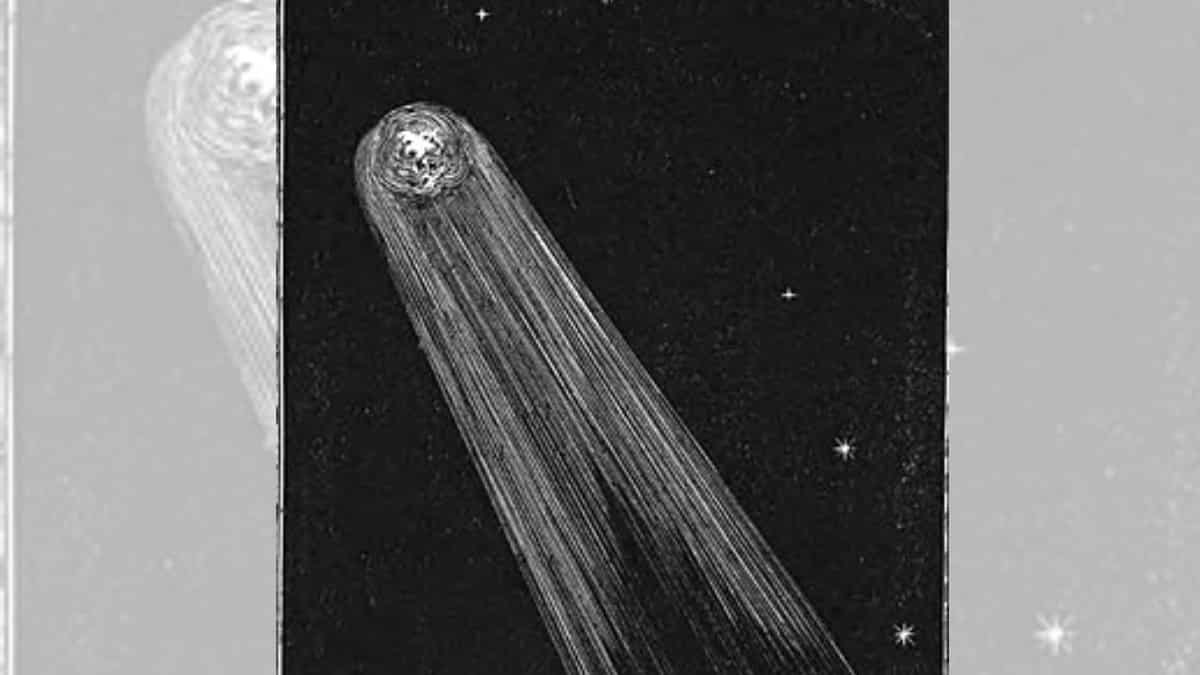
Comet 13P/Olbers
Look up at the sky in the coming days to catch an amazing spectacle that happens once every 68 years. Comet 13P/Olbers is returning to the inner solar system this weekend and will make its close approach on July 20. The comet is currently in Ursa Major. It came at its closest point to the sun on June 30.
Comet 13P/Olbers will be at a distance of 176 million miles at its nearest point from Earth in orbit. It is moving at a speed of 83,802 miles per hour (134,867 kph). Also known as a “Halley-type” comet, the cosmic body orbits the sun every 68 years, as per NASA/JPL. Any comet with an orbit of less than 200 years is classified as a “Halley-type” comet because of its periodic movement. Notably, Halley's Comet returns to our solar system every 72-80 years.
Best time to see Comet 13P/Olbers
Despite being 176 million miles away from Earth, it is the brightest comet in the sky right now. This comet won't be visible to the naked eye and you'll either need binoculars or a small telescope to see it since has a brightness of magnitude 6.5 to 7. It will be best viewed by people residing in the Northern Hemisphere. Those near the equator need to wait for sunset and look very low on the horizon.
When was Comet 13P/Olbers discovered?
The comet was first seen on March 6, 1815, by Heinrich Olbers, the namesake of the comet, in Germany. He saw a faintly lit comet with the naked eye. It last paid a visit in 1956 and its next trip will be in March 2094.
About Halley's Comet
On December 9, 2023, Halley’s Comet reached aphelion - its most distant point from the sun. It is now moving towards our solar system and will be visible in the night sky in late July 2061. As compared to its last appearance in 1986, it will come much closer and appear a lot brighter during its next visit. It has been named after English astronomer Edmond Halley, who calculated its orbit and made predictions about its return in the 18th century.

