Cockroach fossil found in 1984 is of a 180-million-year-old species

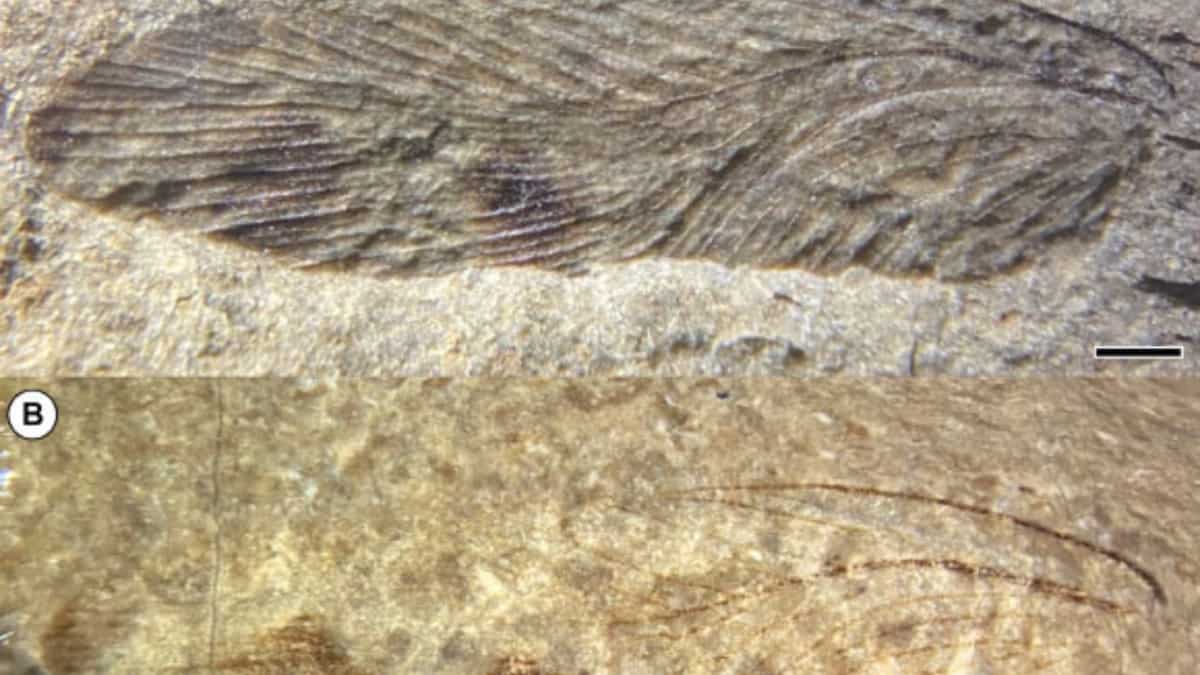
Cockroach fossil
Scientists in the United Kingdom have found a cockroach fossil dating back to 180 million years. This new genus and species of Jurassic cockroach, Alderblattina simmsi was discovered after an isolated wing was found in Gloucestershire.
The findings were published in the journal Papers in Palaeontology by two paleontologists at The Open University, and a colleague from the National Museum of Scotland.
Emily Swaby, Angela Coe and Andrew Ross identified the new species of the cockroach while studying a cockroach specimen found in 1984 by paleontologist Mike Simms.
Studies suggest that cockroaches first appeared as far back as the Bashkirian Age, approximately 323 to 315 million years ago. Since then, they have evolved and playan important role in cycling nutrients back into the environment in several ecosystems. They also act as food for many species.
“As primarily detritivores (decomposers), cockroaches play a crucial role in nutrient cycling in ecosystems, through the decomposition of organic matter, and are a critical food source for many predators including birds, lizards and other mammals," the authors wrote in the paper.
Cockroaches went through mass extinction events
They added that "the number of cockroaches sharply decreased following the end-Permian mass extinction", before flourishing again in the Triassic period.
The researchers took the fossil kept at the Bristol Museum & Art Gallery and studied it using various techniques. They made line drawings of the wing to highlight airflow along the wing and to learn about how it must have flown at the time.
After extensive research, the study authors placed the cockroach in the Toarcian age. This is the early part of the Jurassic, approximately 180 million years ago, and named it Alderblattina simmsi.
They also noted fascinating physical features of the cockroach. It was small and had unique wing colouring and is only the second species of cockroach from the Toarcian to sport wing colouring patterns.
“Color patterning in insects, including on their wings, is primarily interpreted to be a physiological adaptation and/or used for protection against predation, or sexual signalling,” the palaeontologists said.

