China all set to become first country in world to grow blood stem cells in space

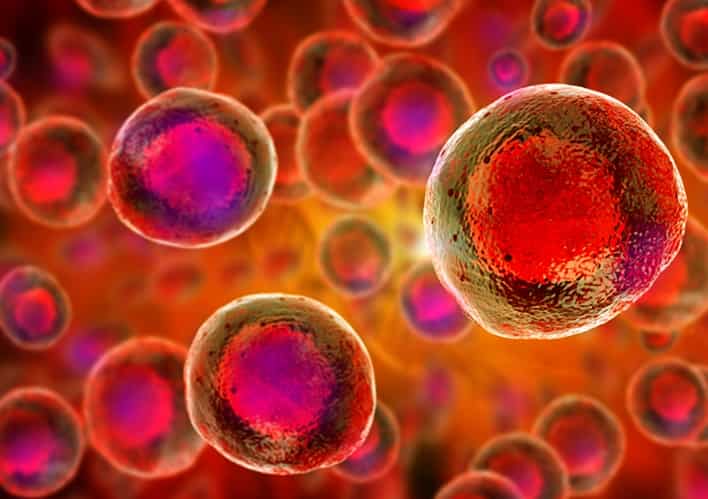
China grows blood stem cells in space
China is close to becoming the first country in the world to grow early-stage blood stem cells in space. Chinese scientists have already conducted a successful first-of-its-kind experiment in space, and stem cells cultured for half the month in the Wentian lab module of China’s Tiangong space station were brought to Earth on Sunday. Now, Chinese scientists will analyse and conduct more tests on stem cells to assess the viability of the scientific process. The experiment was conducted after the Tianzhou 6 docked with the space station.
How did the scientists conduct the experiment?
The research team, led by Lei Xiaohua, a researcher with the Shenzhen Institute of Advanced Technology of the Chinese Academy of Sciences, conducted the experiment using human pluripotent stem cells. These cells have the ability to develop into various types of human cells.
They were placed in the cell culture module of Tianzhou 6 and later transferred to the biotechnology experiment cabinet in the Wentian lab module. The team's objective was to observe the process of these pluripotent stem cells differentiating into blood stem cells. A photograph shared by Lei with state broadcaster CCTV depicted the pluripotent stem cells beginning to undergo this differentiation process while in space.
Watch:Gravitas Plus: China is drilling the world's deepest hole
“These blood stem cells will undergo further maturation and differentiation to form a cluster of blood stem cells similar to a bunch of grapes,” Lei was quoted as saying by CCTV on Saturday.
“We have achieved the first goal of our experiment, which is to produce human blood stem cells in space,” he added.
“While in orbit, the stem cells were in good condition and the collected pictures were clear. The data collected was in line with our expectations,” he said further.
Why blood stem cell experiment in space is significant?
Scientists are curious to know how human cells age in a zero-gravity environment. This can really aid research around stem cell differentiation and regenerative medicine in space.
The Sanford Stem Cell Institute at the University of San Diego also sent blood stem cells to the International Space Station (ISS) in November. The purpose of this endeavour was to study the effects of zero gravity on the ageing process of human cells.
In a similar vein, American scientists utilised the Axiom Mission 2 by Axiom Space in May to send stem cells to space. Their experiment's objective is to investigate the feasibility of cultivating induced pluripotent stem cells in a microgravity environment.
Lei explained that the study attracted interest due to the unique properties of pluripotent stem cells. These cells possess unlimited growth potential and can differentiate into any type of cell found in the human body, making them an invaluable resource for regenerative medicine.
WATCH WION LIVE HERE