Can stress have a bearing on the menstrual cycle? Expert explains

Stress and menstrual cycle
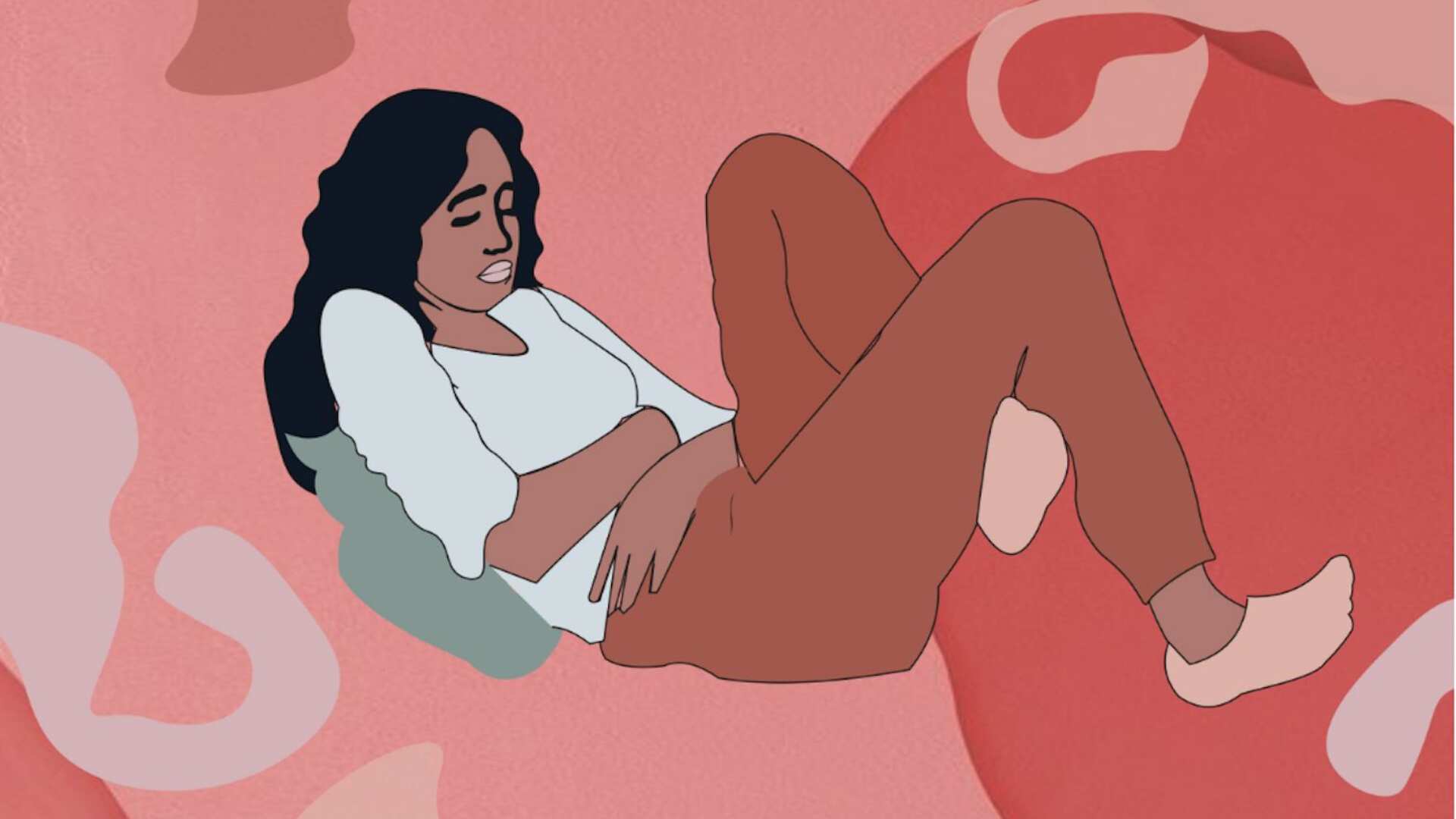
Have you ever considered the possibility of stress being the culprit behind your irregular menstrual cycle? Well, the question is valid and the problem prevalent. WION spoke with Dr Pushpa Dahiya, head of the departmentof Obstetrics and Gynaecology, Pandit Bhagwat Dayal Sharma Post Graduate Institute of Medical Sciences,Haryana, to get a deeper understanding on the connection.
The regular rise and fall of various hormone levels in a woman'sbody regulates the menstrual cycle. Our hormone levels are also significantly impacted by stress. In order to better understand how stress affects menstruation, let's first go through the hormonal changes that take place during the menstrual cycle.
The main hormonal changes include:

- Asurge in the hormone known as follicular stimulating hormone (FSH), which directs the ovaries to start maturing eggs for ovulation.
- An increase in the hormone luteinizing hormone (LH), which instructs the ovary to release a mature egg.
- An increase in progesterone that instructs the uterus to keep its lining in place in case of an egg implantation.
&imwidth=180&imheight=135&format=webp&quality=medium)
Poland: 19-year-old stabs several at Polish vocational school
&imwidth=180&imheight=135&format=webp&quality=medium)
'Baseless and misconceived': India issues statement after Elon Musk's 'oligarchs' claim over Starlink delay
&imwidth=180&imheight=135&format=webp&quality=medium)
‘Team first and team ahead’: India coach Gambhir pens heartfelt wish for chief selector Ajit Agarkar
&imwidth=180&imheight=135&format=webp&quality=medium)
October 7 mystery: Warnings, IDF response, Hannibal Directive, Nova festival
&imwidth=180&imheight=135&format=webp&quality=medium)
Trump's naked 23-karat gold statue unveiled near European Parliament
&imwidth=180&imheight=135&format=webp&quality=medium)
Russia warns Lithuania over nuclear weapons, Europe braces for massive hybrid attack | Gravitas
&imwidth=180&imheight=135&format=webp&quality=medium)
Captain Smit Machchhar on feet again, walks 10 steps as recovery continues after Flydubai flight attack
&imwidth=180&imheight=135&format=webp&quality=medium)
'They came in, they hit us': New videos show Iranian attacks on US Camp Buehring in Kuwait | Watch
&imwidth=180&imheight=135&format=webp&quality=medium)
Trump distances himself from senior political advisers over work for pro-Russian government
&imwidth=180&imheight=135&format=webp&quality=medium)
Narendra Modi Stadium bomb threat declared hoax; India & Australia U19 squads safe
&imwidth=180&imheight=135&format=webp&quality=medium)
US midterms 2026: Why the Latino vote could shape control of Congress
&imwidth=180&imheight=135&format=webp&quality=medium)
US Midterms 2026: Barack Obama hits campaign trail to boost Democratic candidates
&imwidth=180&imheight=135&format=webp&quality=medium)
Shia LaBeouf and Mia Goth head for divorce after nearly 10 years
&imwidth=180&imheight=135&format=webp&quality=medium)
Nicolas Maduro, wife likely to face new charges over alleged torture of US citizens: Report
&imwidth=180&imheight=135&format=webp&quality=medium)
Texas man executed by lethal injection; first US execution since botched Christa Pike execution
&imwidth=180&imheight=135&format=webp&quality=medium)
Jon Rahm quits LIV Golf as breakaway tour attempts to relaunch itself
&imwidth=180&imheight=135&format=webp&quality=medium)
Christa Pike wakes after failed execution, asks 'Where am I and who are you?'
&imwidth=180&imheight=135&format=webp&quality=medium)
Christa Pike 'angry' and 'confused' after failed execution; judge orders to preserve evidence
&imwidth=180&imheight=135&format=webp&quality=medium)
Nigerian President Bola Ahmed Tinubu hails Modi’s 25-year leadership milestone, calls for deeper Nigeria-India strategic ties
&im=FitAndFill=(700,400)&imwidth=180&imheight=135&format=webp&quality=medium)
US midterms 2026: 10 leaders and candidates to watch in the battle for Congress
&imwidth=180&imheight=135&format=webp&quality=medium)
Africans knew how to build 20-storey skyscrapers 2,800 years ago
&imwidth=180&imheight=135&format=webp&quality=medium)
Nana Patekar's #MeToo controversy: From Tanushree Dutta’s allegations to court ruling
&imwidth=180&imheight=135&format=webp&quality=medium)
First signs of Planet Nine may have been finally detected
&imwidth=180&imheight=135&format=webp&quality=medium)
Veteran actor Nana Patekar dies at 75 after suffering cardiac arrest
&imwidth=180&imheight=135&format=webp&quality=medium)
Musk alleges ‘oligarchs’ blocking Starlink in India, here is what we know so far
&imwidth=180&imheight=135&format=webp&quality=medium)
Lightning strikes IndiGo Patna-Lucknow flight at 17,000 feet, damages nose; all 110 safe
&im=FitAndFill=(700,400)&imwidth=180&imheight=135&format=webp&quality=medium)
New OTT releases this week (October 5-11, 2026): Reporting Live, Animals, Carrie- 8 new titles coming on Netflix, Prime Video, JioHotstar and more
&imwidth=180&imheight=135&format=webp&quality=medium)
Mall of America attack: FBI arrests man over alleged ISIS-inspired mass shooting plot with AK-47 and 200 rounds
&imwidth=180&imheight=135&format=webp&quality=medium)
'I should win it': Trump renews Nobel Peace Prize claim ahead of 2026 announcement
&imwidth=180&imheight=135&format=webp&quality=medium)
IndiGo flight struck by lightning at 17,000 feet, nose of Patna-Lucknow flight damaged
&im=FitAndFill=(700,400)&imwidth=180&imheight=135&format=webp&quality=medium)
World’s top vehicle producers: Top 10 countries making the most cars. Check where India stands
&imwidth=180&imheight=135&format=webp&quality=medium)
Trump to honour Elon Musk, Sergey Brin and Jensen Huang with top science honour at White House. Check the full list here
&imwidth=180&imheight=135&format=webp&quality=medium)
'We don't think so': Trump says Russian plague lab worker's death not linked to bio-weapon
&imwidth=180&imheight=135&format=webp&quality=medium)
France protests: How a Gen Z school movement turned into a political war | The Verdict
- An increase in oestrogen that instructs the uterus to create its lining in the event that the egg successfully fertilises.
When an egg is not fertilised at the conclusion of the cycle, the levels oestrogen and progesterone naturally decline to allow for menstruation and the cycle to begin again.
Brain and the ovaries: Tracing the link
The brain and ovaries have a connection that governs all of these changes. The hypothalamic-pituitary-ovarian axis, a tightly regulated system controlling female reproduction is responsible for this.
Due to the fact that these organs frequently work in tandem, medical professionals find it convenient to refer to them as one entity, explains Dr Dahiya.
The brain regions that cause the release of FSH and LH are the pituitary gland and hypothalamus (the control centre of your brain).
The brain communicates with the ovaries with the help of these hormones. After then, the ovaries produce oestrogen and progesterone, which also provide crucial feedback to the brain.
However, the brain and the adrenal glands also communicate. These tiny glands, which are found close to the kidneys, are responsible for producing cortisol, a hormone released when we are stressed.The feedback loop between the brain and the ovaries may get disrupted when cortisol enters the equation.
Cortisol is primarily released when we are in a stressful scenario. As cortisol primes our systems for a "fight-or-flight" response, this adrenal response has played a crucial role in our evolution.
The human body isput into a "survival mode" by cortisol in a variety of ways. For instance, it speeds up our breathing and pulse rate. The blood is also directed towards our muscles.
The hypothalamus is also impacted by cortisol, which instructs it to stop producing the hormones that initiate the menstrual cycle.
In the course of our evolutionary history, this made sense because it prevented women from conceiving when their survival was in danger. But,our systems are unable to distinguish between stress brought on by a life-threatening situation and unpleasant circumstances in recent times.
“In our fast-paced world, not everyone can handle stressful situations. Moreover, each individual has a different style of handling stress. Hence, it affects the body in myriad ways,” says Dr Dahiya.
A condition known as hypothalamic amenorrhea may occur under extreme circumstances. In simple terms, a woman does notmenstruate due to a problem with herhypothalamus in this condition, as defined byCleveland Clinic.
The hypothalamus quits producing GnRH, a crucial hormone for menstruation. which throws off the balance of your hormones. This causes periods to be erratic or nonexistent. Thehypothalamus may decide to go on strike (or stopfunctioning) if it senses that something is putting undue stress on your body.
Ways to overcome stress
DrDahiya suggests four simple steps to maintaining a healthy balance in life which would also keep the menstrual cycle in check.
- Pay attention to how you feel and give your mental health first priority.
- Spend some time on the activities that make you happy and content.
- Self-care methods:Get enough rest, consume wholesome foods, and work out frequently.
- Use mindfulness and meditation strategies.
WATCH WION LIVE HERE: