Breakthrough in search for aliens? What does a habitable ice shell on Jupiter's moon Europa mean?

Extraterrestrial habitability
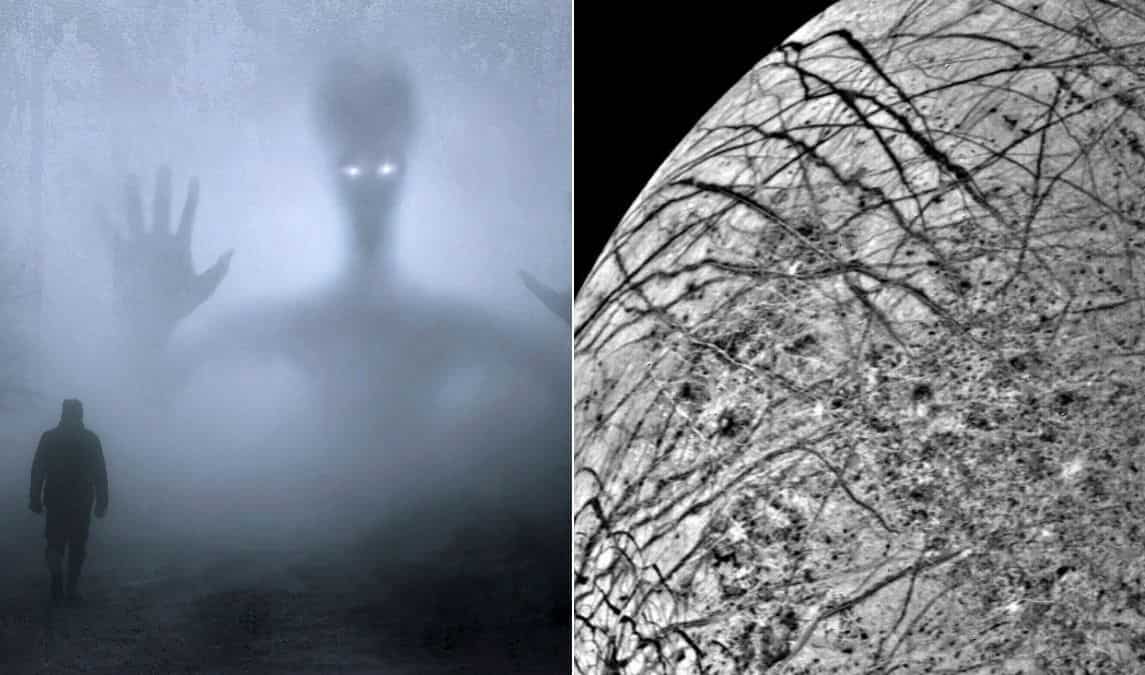
It is a known fact that Jupiter's moon Europa is considered a prime candidate for extraterrestrial habitability in our solar system. Jupiter has a lot of moons but if we talk about Europa, it is the smallest of the four Galilean moons orbiting Jupiter.
Europa, which was discovered in 1610 by Galileo Galilei, is said to be the sixth-closest to the planet of all the moons (nearly 80) of Jupiter.
Two Voyager spacecraft by the National Aeronautics and Space Administration (NASA) flew by Europa in the late 1970s and found strong evidence of a global liquid water ocean that is apparently beneath its icy shell.
However, studying the samples of water is slightly difficult for scientists due to the thickness of the icy crust, which is perhaps as thick as 30 kilometres.
The knowledge of such a thick icy crust previously suggested that it might be difficult to study and analyse the ocean and it might be out of reach of future space missions.
However, in a breakthrough, a new study published on Tuesday (April 19) in the journalNature Communicationssuggests there is potentially another path to sampling the deep waters of Europa.
The study noted that the thickness and thermophysical structure of this ice shell is poorly constrained. The detailed structure and dynamics are critical for "understanding both the fundamental geophysical processes and habitability of Europa".
"Double ridges are the most common surface feature on Europa and occur across every sector of the moon, but their formation is poorly understood, with current hypotheses providing competing and incomplete mechanisms for the development of their distinct morphology," a part of the study noted.
To explain it, scientists presented the discovery and analysis of a double ridge in Northwest Greenland with the same gravity-scaled geometry as those found on Europa.
The study noted that using surface elevation and radar sounding data, it has been observed that the double ridge was formed by successive refreezing, pressurisation and fracture of a shallow water sill within the ice sheet.
And as per the scientists, if the same process is responsible for Europa's double ridges, then the findings of the study hint that shallow liquid water is spatially and temporally ubiquitous across Europa's ice shell.
"Because it's closer to the surface, where you get interesting chemicals from space, other moons and the volcanoes of Io, there's a possibility that life has a shot if there are pockets of water in the shell. If the mechanism we see in Greenland is how these things happen on Europa, it suggests there's water everywhere," said geophysicist Dustin Schroeder of Stanford University as quoted by Science Alert.
ALSO READ |Expanding problem of space debris: What is space junk? Why is it a problem?