Bison herd of 170 capable of storing CO2 emissions equal to 43,000 cars, finds study

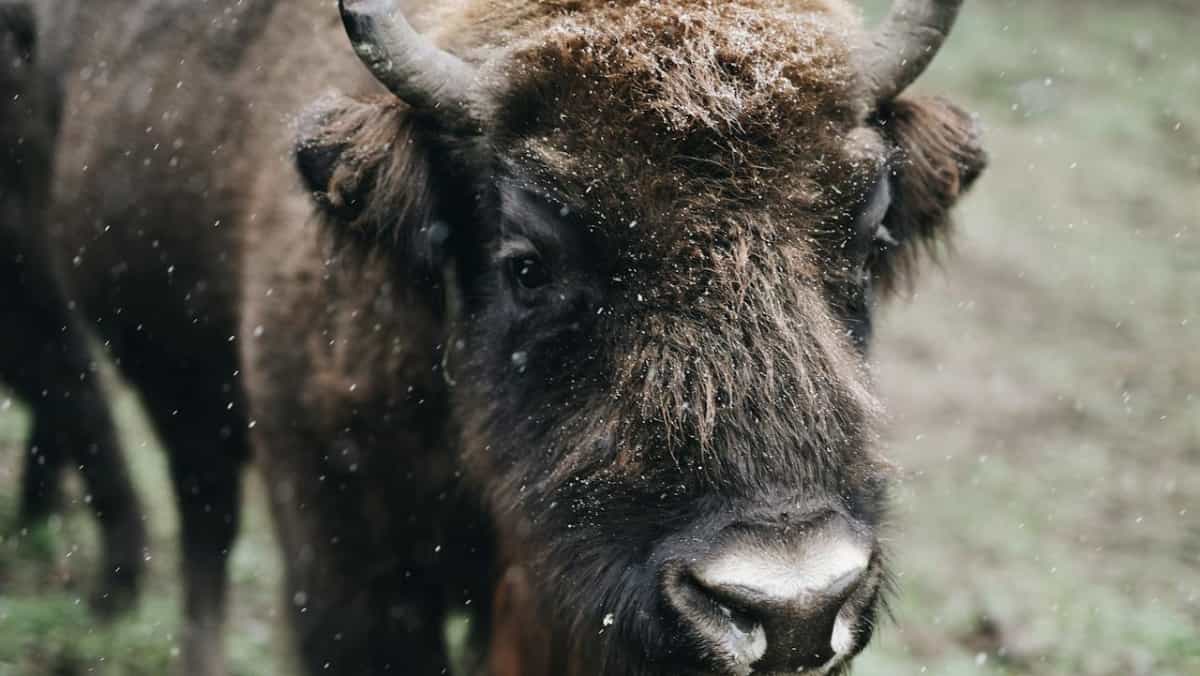
A herd of 170 European bison, reintroduced to Romania's Țarcu mountains, could help captureCO2 emissions equivalent to removing 43,000 US cars from the road annually, according to new researchwhich is yet to be peer-reviewed.
This research can play a crucial role in combating the climate crisis. Bison's natural behaviours and ecosystem contribute to storing carbon emissions that can impact the climate positively.
Notably, European bison, who are large creatures known for their massive heads and muscular bodies, vanished from Romania over 200 years ago. However, in 2014, Rewilding Europe and WWF Romania brought them back to the southern Carpathian mountains. The population currently is about 170 bison with the region's capacity to support 350-450 bison.
Also Read |Cold-blooded reptiles or hot-blooded mighty overlords? Scientists unravel age-old dinosaur mystery
The research, published in the Journal of Geophysical Research: Biogeosciences, employed a model that calculates the extra atmospheric CO2 that wildlife helps capture and store in soil through ecosystem interactions.
In the Țarcu mountains, the bison, grazing over nearly 50 sq km of grasslands, could potentially capture an additional 54,000 tonnes of carbon yearly - 9.8 times more than without their presence.
This carbon capture corresponds to the yearly emissions of around 43,000 average US petrol cars, or 123,000 average European cars due to their higher fuel efficiency.
Bison combating climate crisis
Bison grazing helps maintain healthy grasslands, which are effective at sequestering carbon. It can enhance soil health by encouraging the growth of a variety of plant species. Bison can also contribute to the spread of plant seeds and enhance plant diversity and ecosystem health.
Watch | Summer 2023 the hottest in 2,000 years; new study's findings alarming
“Bison influence grassland and forest ecosystems by grazing grasslands evenly, recycling nutrients to fertilise the soil and all of its life, dispersing seeds to enrich the ecosystem, and compacting the soil to prevent stored carbon from being released," said Professor Oswald Schmitz of the Yale School of the Environment, lead author of the report.
“These creatures evolved for millions of years with grassland and forest ecosystems, and their removal, especially where grasslands have been ploughed up, has led to the release of vast amounts of carbon. Restoring these ecosystems can bring back balance, and ‘rewilded’ bison are some of the climate heroes that can help achieve this.”
He pointed out that this "really is a policy option with massive potential.”
(With inputs from agencies)