Babies use scent of their mothers to 'see' faces of people: Study

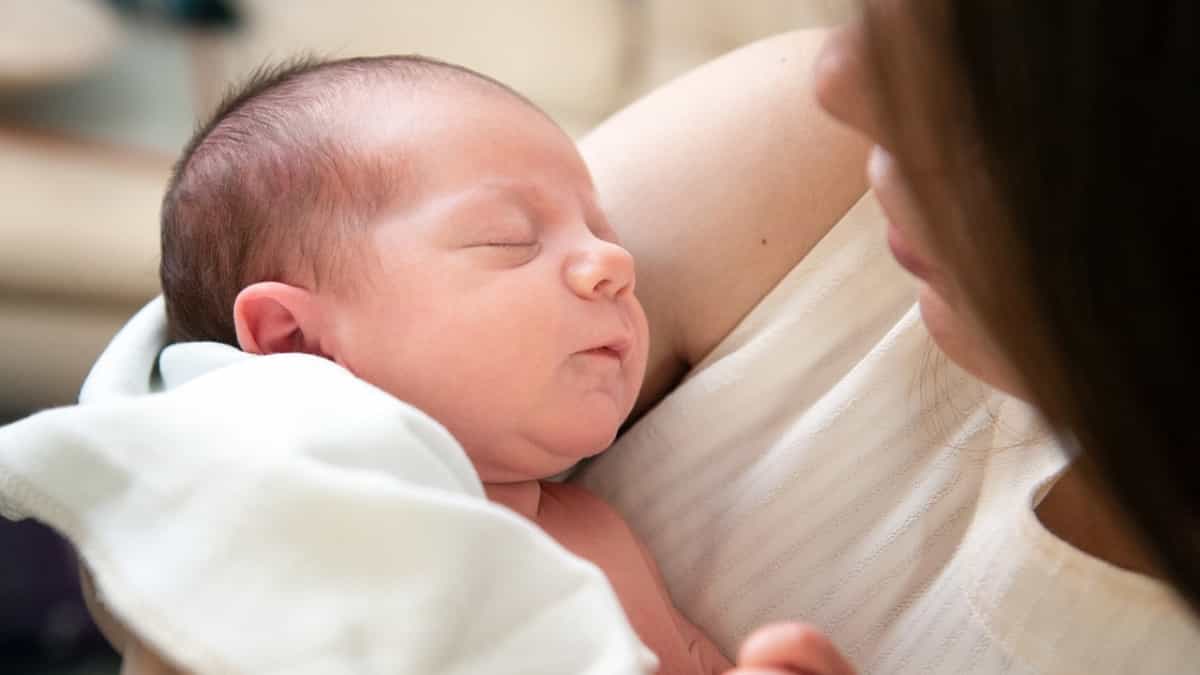
Representational image of a baby with mother.
A team of researchers have made a new and stunning finding that infants are able to see faces because of their mother's scent.
Researchers from different institutes carried out a study to understand how babies use the scent of their mothers to perceive faces. The study's findings are intriguing and never heard of.
The researchers discovered that the infant's this specific ability sees great improvement between four and 12 months.
However, older infants are able to primarily use visual information for perceiving faces and do not need concurrent cues.
Université de Bourgogne's Center for Taste, Smell and Feeding Sciences (CSGA) associate professor of psychology and neuroscience Dr Arnaud Leleu said, “I have a longstanding interest in how sensory perception works in the human brain. Despite its apparent simplicity (e.g., we open our eyes to see), perception is a complex neurocognitive ability derived from past experience with various stimulations coming from all the senses at the same time.”
DrLeleu said how the young infant brain treats the multisensory inputs is important to understanding perception in the different senses and how it develops in adulthood.
Babies' brains and their sensory perception
DrLeleu carried out the research to investigate how the development of visual perception is shaped by the olfaction in the infant's brain.
In the study, it was discovered that the rapid perception of faces which increases by the odour of the mother declined when infants grew older and were able to efficiently perceive faces just by visual cues.
DrLeleu underlined the early exposure to concurrent sensory inputs' importance fromdifferent modalities to enhance perceptual learning in the babies.
Watch:Nigeria Bomb Attack: Woman with baby on her back carries out suicide attack
“Together with the large body of research on multisensory perception in infants, our findings reveal the importance of the early exposure to concurrent sensory inputs from different modalities for perceptual learning,” Dr Leleu said.
“Such early exposure to repeated intersensory associations is also a building block for the later development of higher-level abilities such as semantic memory, language and conceptual reasoning. It is therefore important to expose infants to a variety of cues related to the same objects as early as possible," he added.
(With inputs from agencies)