At Lagrange point 2, micrometeoroids, solar storms and more threaten to end Gaia's journey

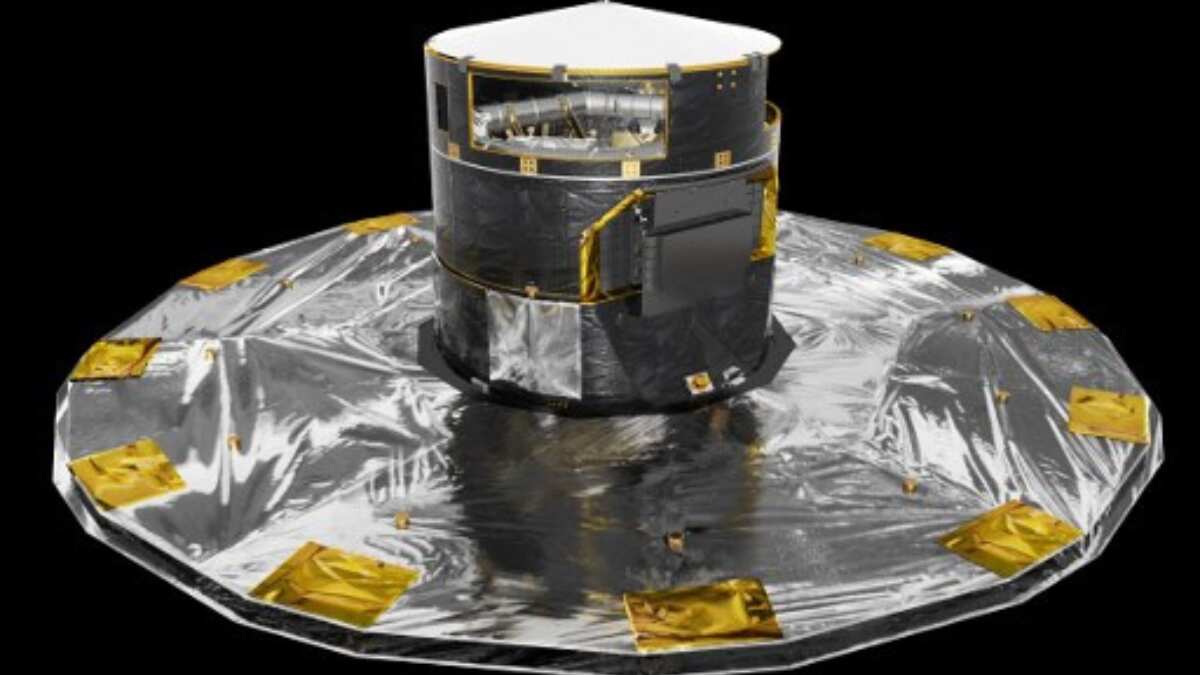
Gaia spacecraft
European Space Agency's Gaia spacecraft is facing severe hurdles out in deep space. Gaia has been sending precise measurements ever since its launch in 2013. But in the past few weeks, things haven't been going its way. The spacecraft has been struck by hyper-velocity space dust and the strongest solar storm in 20 years. This has created some issues with the spacecraft, ESA informed in an update.
In April, a micrometeoroid, struck Gaia, damaging the spacecraft’s protective cover. Smaller than a grain of sand, micrometeoroids are not something Gaia has been bothered by during its time in space. However, the recent incident saw the space body collide with it at high speed and at the wrong angle. As a result, Gaia's sensitive sensors have been disrupted as the collision created a small gap allowing in stray sunlight.
Where is Gaia right now?
Gaia is currently 1.5 million km from Earth at the second Sun-Earth Lagrange point (L2). So micrometeoroids are quite common in this region. Scientists got down to fixing the problem, but another one came banging through. Gaia has a billion-pixel camera that relies on a series of 106 charge-coupled devices (CCDs). The electronics controlling one of these CCDs went kaput in May.
ESA said that this is the first time that Gaia has had a CCD issue in more than 10 years in space. The affected sensor was responsible for Gaia detecting stars, but in the absence of the CCD, there was nothing to validate its observations. So Gaia began to register thousands of false detections.
"Both recent incidents disrupted this process. As a result, the spacecraft began generating a huge number of false detections that overwhelmed our systems,” Edmund Serpell, Gaia spacecraft operations engineer at ESOC, said.
Solar storm hits Gaia
ESA added that around the time the CCD failed, a massive solar storm also hit it. This is the same storm that caused auroras on Earth in May. Gaia was designed to work for six years and is way past that mark now. Solar radiation has never been a problem for it. But with time, its systems are likely aging and the solar storm might have added to its troubles.
The silver lining amidst all this, ESA says, is that they have been able to refocus the optics of Gaia’s twin telescopes, and as a result, the spacecraft is sending back the best data it ever has.

