Artist filed copyright for this AI-generated art. It was denied. He is now appealing decision

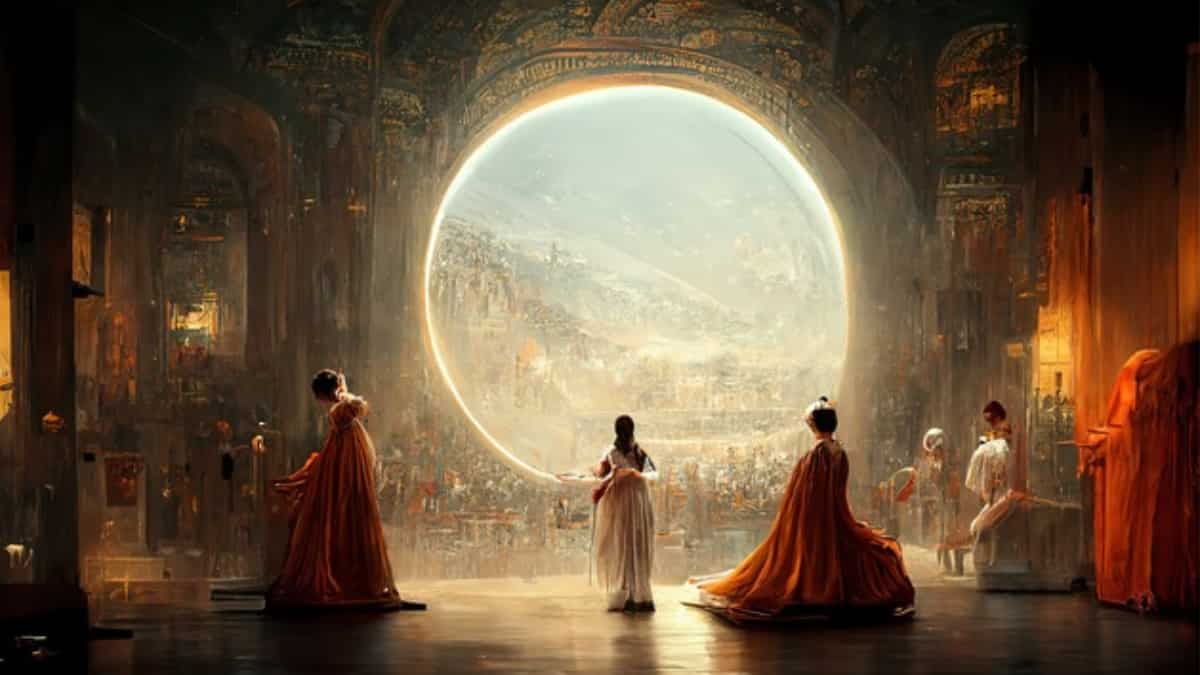
Midjourney AI art piece
Jason Allen, a synthetic media artist, became famous when his Midjourney-generated work "Théâtre D'opéra Spatial" won a state fair art competition. The AI piece went viral and people had several opinions about it.
However, the Copyright Office refused to register Allen's work. It claimed that it was entirely AI-generated and for copyright registration, more human authorship was needed "than simply plugging a prompt into Midjourney".
Allen is now appealing that decision. He alleges that "the negative media attention surrounding the Work may have influenced the Copyright Office Examiner's perception and judgment."
He is asking for a judicial review and claims the examiner was biased and considered "improper factors" to reach the decision, of which public backlash was a major factor. It stated that he had "no control over how the artificial intelligence tool analysed, interpreted, or responded to these prompts."
Allen says that the Copyright Office Examiner didn't take into consideration that he didn't use Midjourney for random outputs. Instead, he used it as a tool he could use to get a specific image out of his head.
He states in his complaint that he "initially envisioned a detailed image of women in Victorian dresses wearing space helmets" while "performing opera on stage," with "their attire presenting a juxtaposition between old-world charm and a futuristic twist."
Allen said that a rule establishing a review process which says that an Examiner should determine which parts of the work are human-authored seems "entirely arbitrary".
He also saidthat the denial of copyright has led to confusion over all AI-generated work and not just Midjourney-generated art. He further says that as AI progresses, it will become harder for the Copyright Office to make those authorship judgement calls.
Allen hopes that the jury will reverse the denial since he says there is more human authorship in his AI-generated work than the Copyright Office considered.
Ars Technica reported Kit Walsh—a senior staff attorney focused on copyright law for the nonprofit the Electronic Frontier Foundation (EFF), as saying that EFF has now commented on the matter yet "because the Copyright Office has pretty much been getting it right."

