Archaeologists discover bedroom ‘used by slaves’ in ancient Rome’s Pompeii

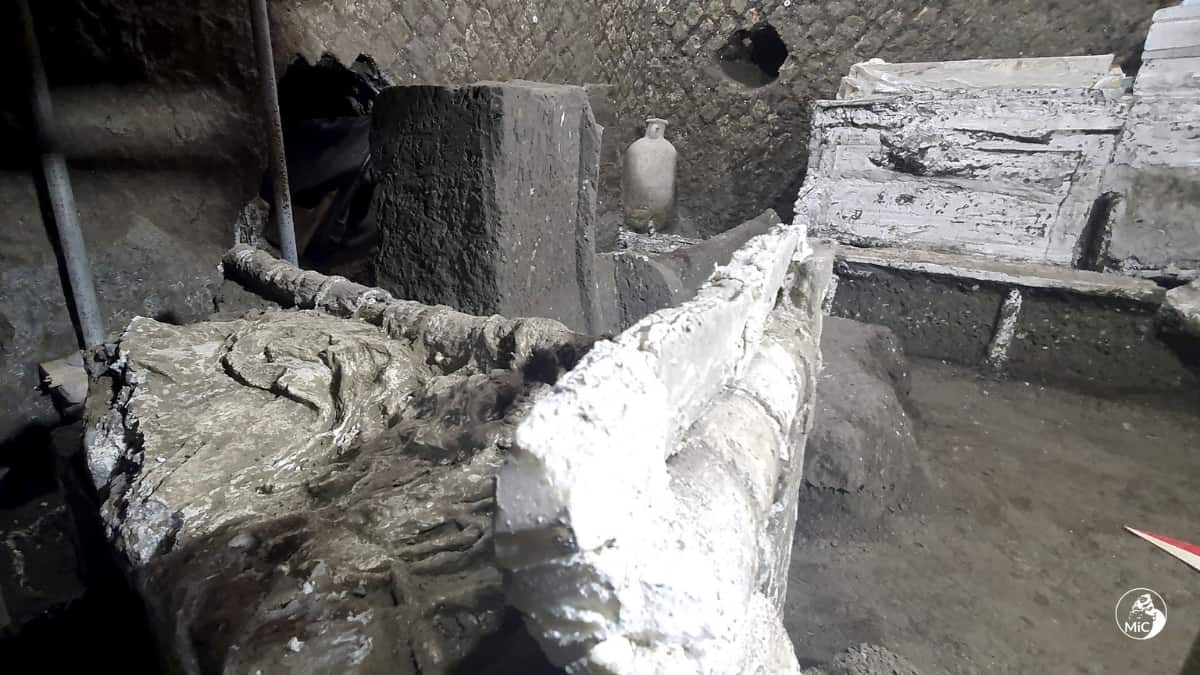
Civita Giuliana villa, Pompeii
Archaeologists have discovered a small bedroom in a Roman villa near Pompeii which was almost certainly used by slaves, said the Italian culture ministry on Sunday (August 20). The room contained a number of items that shed light on their “lowly status” in the ancient world.
What was found in the room?
The small room found at the Civita Giuliana villa some 600 metres north of the walls of Pompeiicontained two beds, only one of which had a mattress, two small cabinets and a series of urns and ceramic containers. According to the Italian culture ministry, the remains of two mice and a rat were found in the containers.
“These details once again underline the conditions of precarity and poor hygiene in which the lower echelons of society lived during that time,” said the ministryin a statement.
The archaeologists also discovered materials like furniture and fabric, decomposed over the years and covered with blasts of rock fragments and ash likely from the volcanic eruption of Mount Vesuvius, which wiped out Pompeiinearly 2,000 years ago.
The decomposed material had left a void in the debris, which has since been filled with plaster, that reveals the original shape and contours of the long-gone material, including the outline of a crumpled blanket left on the bed netting, reported Reuters.
What does the room discovered tell us about slavery back in ancient world?
Archaeologists also noted the absence of grates, locks, or chains to restrain the room’s inhabitants, which, according to Director of the Archaeological Park of Pompeii Gabriel Zuchtriegel, suggests that the “control was primarily exerted through the internal organisation of servitude, rather than physical barriers and restraints.”
Site of excavation damaged
Notably, this is not the first excavation at the Civita Giuliana villa as the previous ones were carried out in 1907-08, and then again in 2017. The one conducted six years ago took place after the police found that the site was being plundered by illegal diggers.
Archaeologists said part of one of the beds had been destroyed by a tunnel used by robbers to access another part of the villa.
The site has also recently seen a burst of archaeological activity after years of decay and neglect, largely thanks to the $115.58 million European-Union-funded project, as per Reuters.
“What we are learning about the material conditions and social organization of that era opens up new horizons for historical and archaeological studies,” said Italian Culture Minister Gennaro Sangiuliano. He also said that the conservation and research efforts would continue.
WATCH WION LIVE HERE
You can now write for wionews.com and be a part of the community. Share your stories and opinions with us here.