'Inside NASA': The debate over public disclosure on 3I/ATLAS

&imwidth=600&imheight=450&format=webp&quality=medium "'Inside NASA': The debate over public disclosure on 3I/ATLAS")
'Inside NASA': The debate over public disclosure on 3I/ATLAS Photograph: (NASA)
Within 72 hours, citizen astronomers had already shared confirmed orbital data through the Minor Planet Center, effectively forcing NASA to go public.
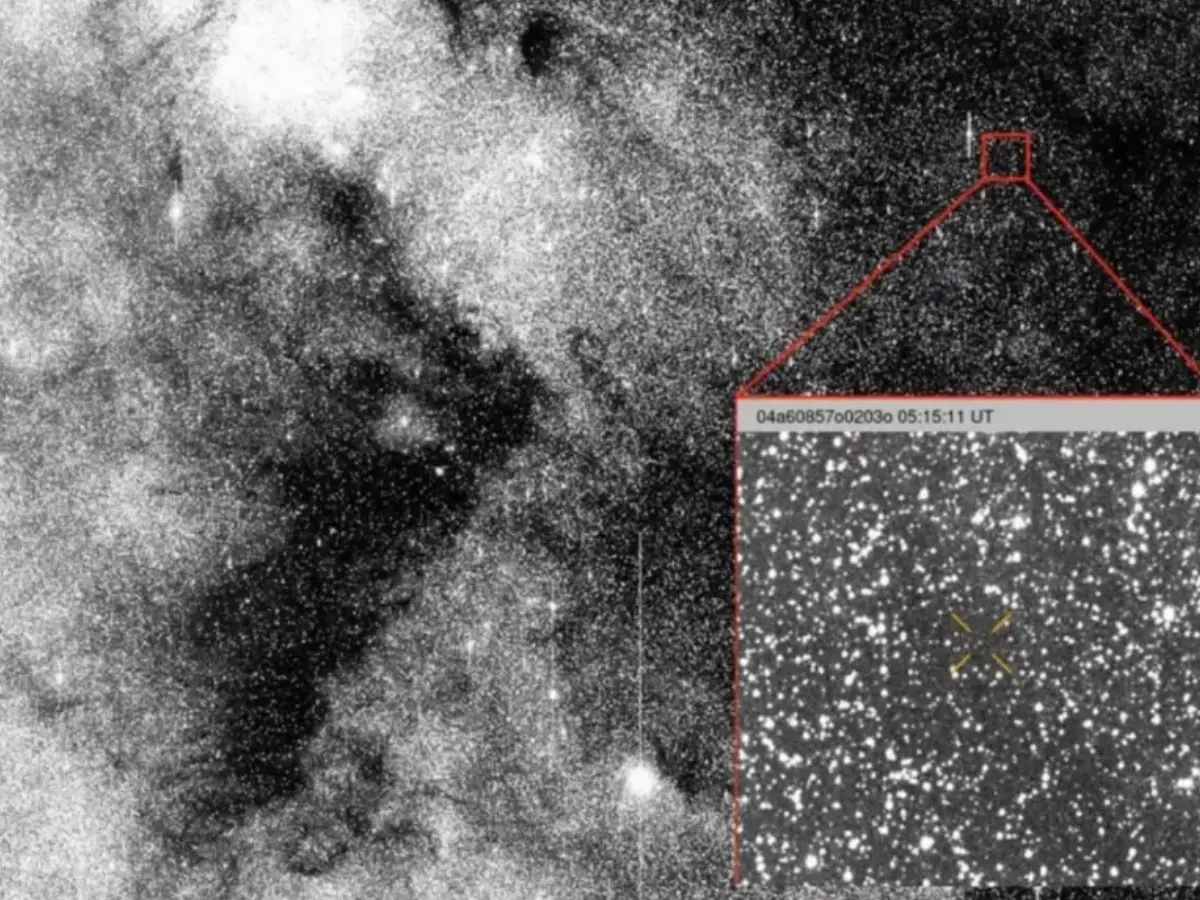
When NASA’s Near-Earth Object Coordination Office (NEOCO) first noticed the erratic behavior of the object later named 3I/ATLAS, the agency found itself facing one of the trickiest communication dilemmas in recent memory: how much to reveal, and when. The discovery carried all the signs of something extraordinary, a body moving too fast and with too steep an orbital inclination to belong to our solar system. Early analysis hinted it could be an interstellar interloper, only the third ever detected. But inside NASA, the excitement was tempered by caution.
At the Jet Propulsion Laboratory (JPL) and Goddard Space Flight Center, scientists were split. One group argued for a swift preliminary disclosure, emphasising that NASA’s credibility rests on transparency. They pointed out that data from independent observatories, including those in South Africa, Chile, and India would soon leak into public databases, making secrecy futile. Another faction, however, remembered the chaos surrounding ‘Oumuamua in 2017, when early, ambiguous data led to a media storm and even UFO speculation. This time, they wanted to confirm every variable: the object’s light curve, albedo readings, and possible non-gravitational accelerations.
Internal memos, later obtained under the Freedom of Information Act, reveal that NASA’s delay wasn’t rooted in secrecy but in data integrity. Engineers worried that the U.S. feed had missing telemetry frames, making the orbital model unstable. A misclassification could undermine public confidence and create unnecessary panic. Protocol required a multi-agency consensus involving ESA and the International Asteroid Warning Network (IAWN) before labelling any object “interstellar.”
Ultimately, the agency decided to wait but the sky didn’t. Within 72 hours, citizen astronomers had already shared confirmed orbital data through the Minor Planet Center, effectively forcing NASA to go public.
The 3I/ATLAS episode reignited an old institutional debate: does public trust come from waiting for certainty, or from being candid about uncertainty? For NASA, the balance between scientific rigor and public transparency remains as complex as the universe it studies.

