

&imwidth=800&imheight=600&format=webp&quality=medium "$1bn Spanish satellite collides with a cosmic particle 50,000 kilometres above Earth")
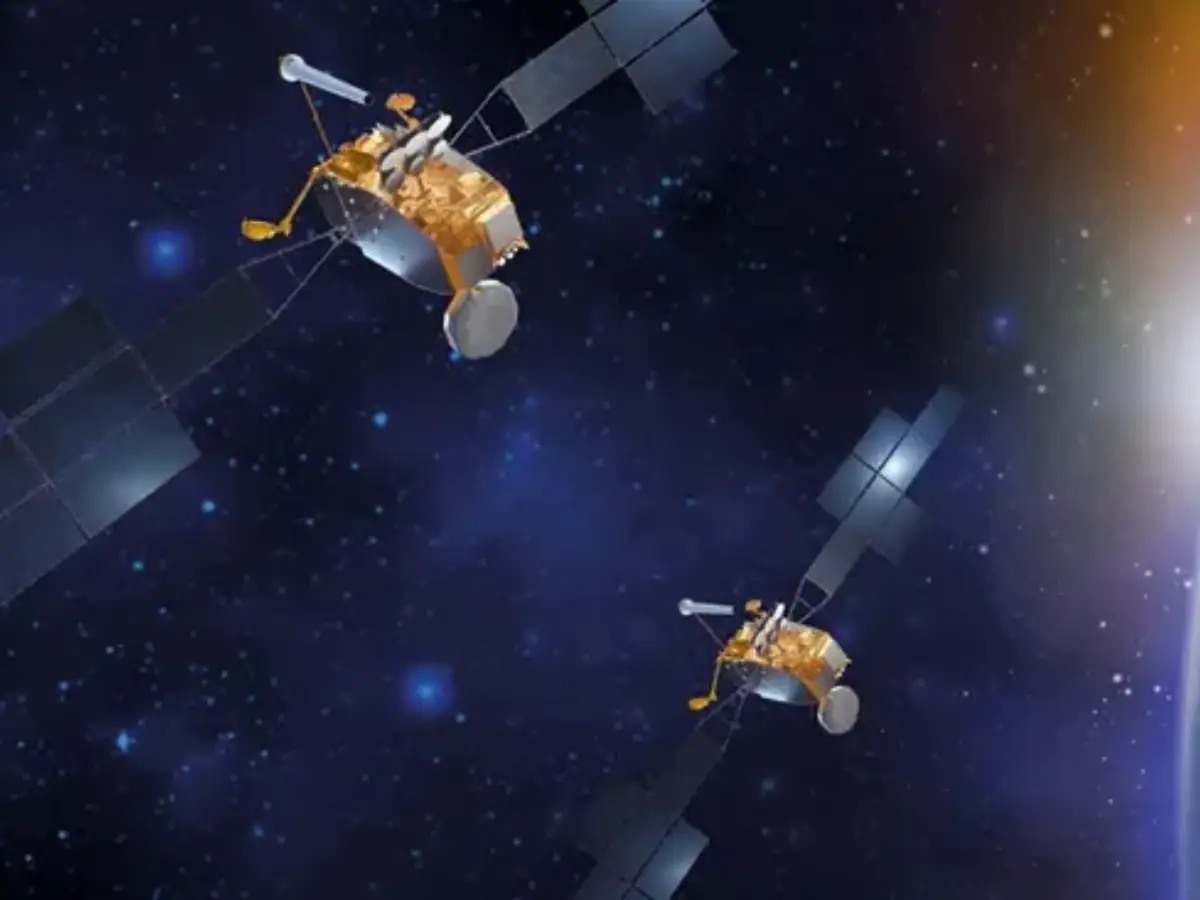
A recently launched Spanish satellite was struck by a space particle as it was moving towards its operational position in the geostationary orbit, according to an official statement by a stakeholder issued on January 2. SpainSat NG-2 was the second military communications satellite sent to space in 2025 as part of a program meant to serve the communications needs of the government and the military. However, now it might not be able to achieve its goal of completing a secure communications constellation duo. Indra Group, the majority stakeholder of Hisdesat, which owns and operates the SpainSat NG-2 satellite on behalf of Spain’s Ministry of Defence, informed about the mishap. The satellite was launched on October 23 on a SpaceX Falcon 9 rocket from Cape Canaveral Space Force Station in Florida.
After being launched on 24 October, the satellite was on its way to the geostationary orbit when a "space particle" slammed into it. Indra Group said that the impact happened at an altitude of about 50,000 kilometres. Notably, the geostationary orbit lies 35,786 km above Earth, which means the satellite had travelled far beyond its intended location. The current status of SpainSat NG-2 is not known. "Hisdesat implemented a contingency plan to ensure that the Ministry of Defence and other clients are not affected," Indra Group said in the statement. The extent of damage to the satellite is being ascertained. The group added that, depending on the nature of the problem, SpainSat NG-2 could also be replaced.
Also Read: Remote Iran volcano stirs up after 700,000 years as satellites spot a bulge at the summit
The first Airbus satellite for SpainSat
SpainSat NG-1 was the first of the duo to be launched, shooting to space in January 2025 aboard a SpaceX Falcon 9 rocket. It was fully operational in August 2025. Both satellites have been built by Airbus for $2.3 billion. According to Airbus, the duo was designed as an "advanced government communications system in Europe." The communications satellites are supposed to serve the government and military's secure communications needs.

