Why liberal political parties run by dynasts are a gated community

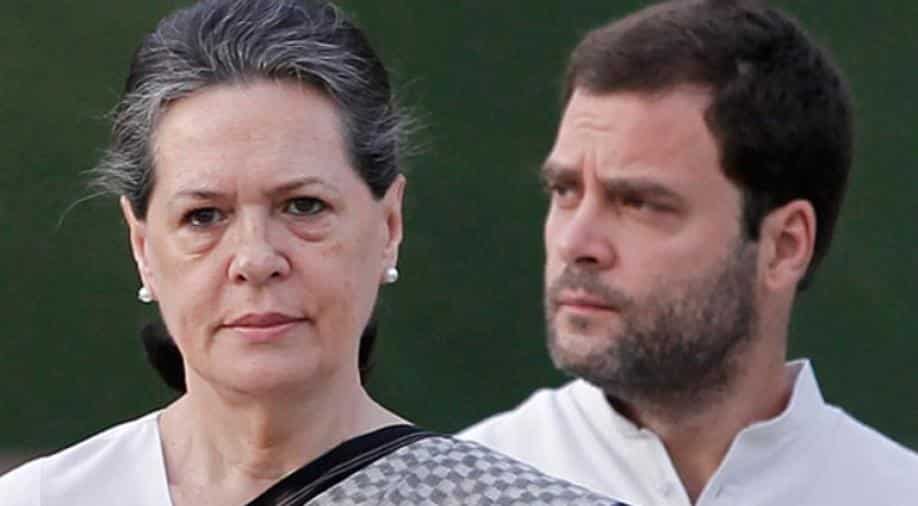
Rahul-Sonia
The principle reason why Indian liberalism has turned on its head is because of dynasties which have spawned all across political parties. Dynasties are undemocratic in nature, and hence, the functioning of the political parties remain undemocratic.
Social mobility lies at the core of liberal values. Liberalism was a movement against medieval institutions which stood for the politics of birth and entitlement. The aristocracy wanted to perpetuate the old order which liberal values challenged.
Liberal order fought for mobility in the society which freed labour and mind from traditional structures of social and political hierarchies. Indian democratic politics started with liberal politics at helms of the affair. The conservatives in Indian politics immediately after 1947 were a minority and did not enjoy social and cultural gravitas.
70 years down the line, every party in India claiming itself to be liberal has turned dynastic and conservative. BJP seems to be the only party holding ground to rampant dynasticism which exists in Indian politics.
The irony is that BJP does not call itself liberal but demonstrates the fastest political mobility within the organisation. It is not as if families are absent in RSS-BJP. They do exist, but power transition does not take place within one family. BJP is not hostage to one family. The party firmly rests on the principle of ideology than family loyalty. The vote catching job is not rested on the shoulder of the charism of a clan but on the organisation which has the build in capacity to outlast any individual. It is for this reason that BJP was able to make a transition from Vajpayee to Narendra Modi.
The other big reason why parties which claim to be liberal became highly elitist and short on mobility because successive generations became more and more westernised but not the party. It created a social circuit within the all-powerful political spectrum which was distinct and different from the culture and ideology of the organisation.
For example, Rajiv Gandhi in 1980s wanted to change the party with his friends. Rahul Gandhi also fought with the top Congress brass with little help from his friends. Other regional parties have witnessed this development with various degrees. Such social circuits operate in most of the parties and claim to hold liberal values. This circle involves people related to the first family of a party in a personal way where loyalty to the family members is ranked over and above the organisation.
If one looks at BJP-RSS Parivar, the ideology of the parent outfit and health of the organisation is given primacy over the individual. Moreover, frontal organisations of RSS and BJP became a conduit to mainframe which is not the case with many other parties. Many leaders of these two subsets constitute the top rung of BJP now. Today, Congress cannot boost such mobility. The regional parties run by dynasts cannot promise mobility.
Mobility means that every post in a political party should be open to contest. Those parties which band around a family do not have the right to exist in modern societies because they only end up perpetuating a feudal system. Such parties should wither away making space for healthier options to come up.
(Disclaimer: The opinions expressed above are the personal views of the author and do not reflect the views of ZMCL.)