
&imwidth=800&imheight=600&format=webp&quality=medium "Not for Sale: India Rejects Trump's Command on Russian Oil")
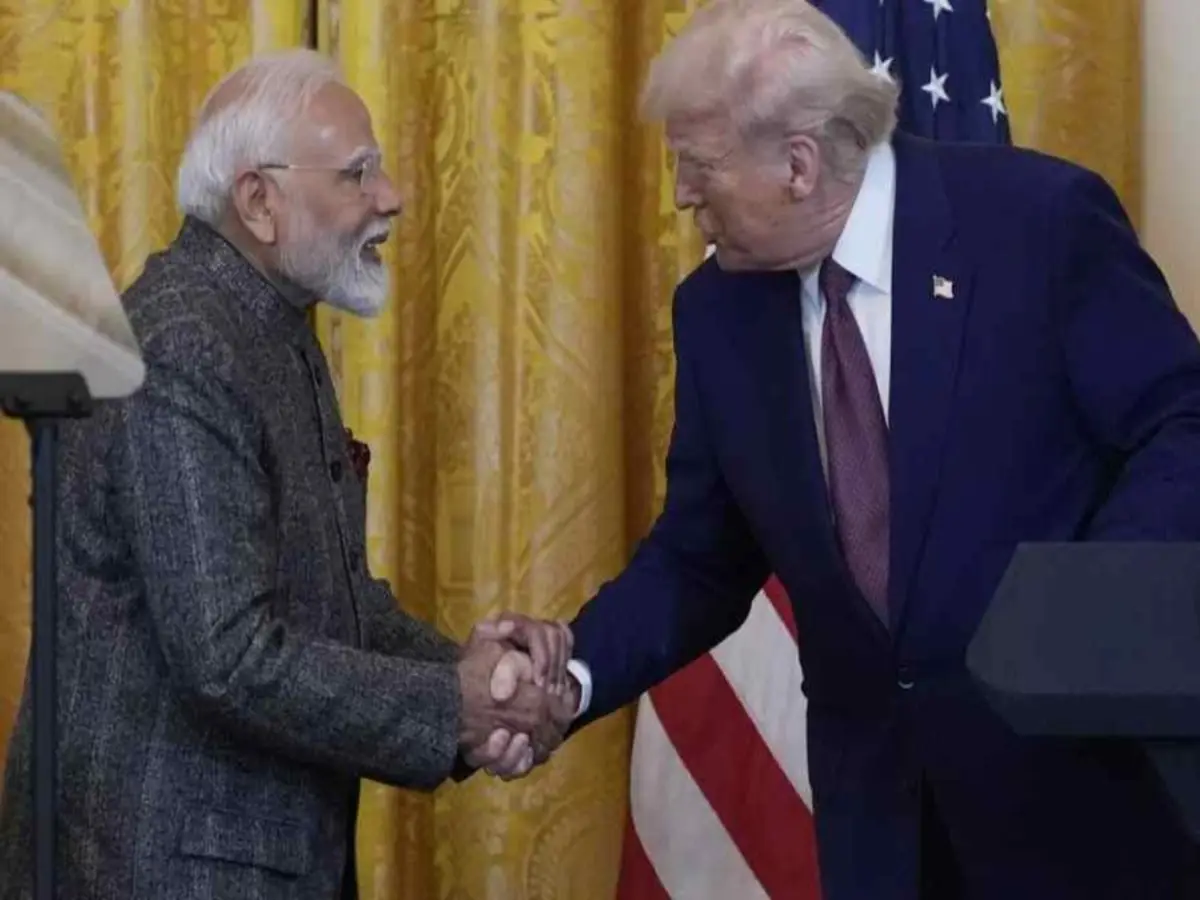
In the complex dance of international diplomacy, few positions are as uncomfortable as the one India finds itself in today. US President Donald Trump's recent claim that Prime Minister Narendra Modi promised to stop buying Russian oil has put New Delhi in a diplomatic corner, caught between American pressure and its own strategic interests. The Indian government's swift denial the very next day was not just a correction of facts—it was a declaration of sovereignty.
This is not the first time Trump has made statements that don't quite match reality, but this particular claim strikes at the heart of India's ongoing trade negotiations with Washington. The timing couldn't be more sensitive. Indian trade teams are working to finalize a new agreement with the US, even as they navigate the fallout from a 25 percent American tariff imposed on Russian oil purchases back in August. Trump's public remarks have effectively painted India into a corner where any reduction in Russian oil imports now risks looking like capitulation rather than choice.
The numbers tell a story that contradicts any notion of India bending to pressure. In September, India imported roughly 1.60 million barrels of Russian oil daily, barely five percent less than August. By October, that figure had actually climbed to 1.81 million barrels per day. These are not the statistics of a country preparing to abandon its largest oil supplier. They reveal instead a nation making calculated decisions based on economic reality rather than political theater.

India's Ministry of External Affairs has been admirably clear and consistent. The country will continue purchasing Russian oil based purely on its own requirements. Indian state-owned refineries have echoed this stance, emphasizing that their procurement decisions rest entirely on business fundamentals and cost considerations, not geopolitical maneuvering. This is not defiance for its own sake—it is pragmatism born of necessity.
Consider India's energy landscape. The country imports roughly 88 percent of its crude oil needs, making it the world's third-largest oil importer. When Russia invaded Ukraine in February 2022, Russian oil accounted for less than two percent of India's imports. Today, Russia supplies approximately one-third of India's total oil requirements. This dramatic shift didn't happen because of ideology or alliance—it happened because Western sanctions pushed Russian crude prices down, and Indian buyers recognized an opportunity too significant to ignore.
The transformation was swift and sensible. As European nations cut ties with Russian energy, Moscow began offering steep discounts to Asian buyers willing to maintain trade. Indian oil companies responded rationally to market signals, turning Russia from a marginal supplier into the country's single largest source of crude. This wasn't a political statement—it was elementary economics.
Trending Stories
Now Trump and his administration want India to reverse this course, viewing Russian oil revenues as leverage to end the Ukraine conflict. The logic is straightforward: starve Russia of energy income and force Moscow to negotiate. But this strategy overlooks a fundamental reality—India cannot simply flip a switch and redirect its entire oil import infrastructure overnight.
The technical challenges alone are formidable. India's refineries have adapted their operations to process Russian Urals crude. While West Asian oil from Iraq, Saudi Arabia, and the UAE is chemically similar and could theoretically replace Russian supplies, the transition would be neither quick nor cheap. Transportation costs are higher, supply availability is less certain, and freight charges add substantial expense. Private refineries in India continue purchasing massive volumes of Russian crude precisely because the economics remain favorable despite smaller discounts than in the past.
As Sumit Ritolia, Lead Research Analyst at Kpler, rightly observes in an Indian Express report, abandoning Russian oil entirely would require navigating enormous logistical, political, and financial obstacles. Even if India decided to gradually reduce its Russian imports under sustained pressure, such a shift would unfold over months or years, not weeks. Oil trade operates on long-term contracts, established supply chains, and carefully calibrated market relationships. These systems cannot be dismantled and rebuilt at diplomatic convenience.
The broader implications deserve serious consideration. If India were forced to abandon Russian oil without a comprehensive global ban, it would intensify competition for non-Russian supplies. Middle Eastern, African, and American crude would face increased demand, likely driving up global prices. This would hurt not just India but oil-importing nations worldwide, potentially destabilizing markets and reducing refining profitability across the board.
For India, the costs would be immediate and severe. Russian oil remains cheaper than most alternatives, meaning its loss would inflate India's already substantial import bill. Higher costs would inevitably translate to increased fuel prices domestically, adding inflationary pressure to an economy still managing post-pandemic recovery. The impact would ripple through every sector dependent on transportation and energy, from agriculture to manufacturing to services.
Beyond economics lies a matter of principle that New Delhi takes seriously. India has consistently maintained that it will not sacrifice strategic autonomy or allow any nation to dictate its trade relationships. Russia is not merely an oil supplier—it is a decades-long defense partner, a counterweight in regional geopolitics, and a crucial relationship that transcends any single commodity. Abandoning this partnership at American insistence would set a precedent India cannot afford to establish.
The uncomfortable truth is that Trump's public statement, whether factually accurate or not, has made India's position more difficult. Any reduction in Russian oil imports now carries the appearance of yielding to external pressure, even if driven by purely commercial considerations. This complicates New Delhi's diplomatic calculations as it simultaneously pursues deeper trade engagement with Washington and preserves its valued relationship with Moscow.
India's response has been measured and mature. The government has neither escalated tensions nor made promises it cannot keep. Instead, it has restated its position with clarity: oil purchases will be determined by national interest, economic advantage, and business logic. State-owned refineries continue operating without political directives regarding Russian crude, while gradually diversifying sources to reduce dependence on any single supplier.
This approach reflects strategic wisdom. India understands that energy security demands diversification, but it also recognizes that abrupt shifts serve no one's interests. The slight reduction in Russian oil imports observed in recent months stems from narrowing price advantages and rising transport costs, not American pressure. If and when India chooses to further adjust its energy mix, it will do so according to its own timeline and priorities.
The United States must understand that pressing India too hard on Russian oil risks undermining the very partnership it seeks to strengthen. India is not a client state that takes orders—it is a rising power making independent choices in its national interest. Treating New Delhi as a subordinate rather than a sovereign equal will only push it toward the diversified, multi-aligned foreign policy it increasingly favors.
As India's trade delegation continues negotiations with their American counterparts, both sides would benefit from recognizing reality. India will not and cannot simply stop buying Russian oil on command. The economic, logistical, and strategic barriers are too substantial. What India can do—and is already doing—is gradually diversifying its energy sources to reduce vulnerability to any single supplier, whether that supplier is Russia, Saudi Arabia, or the United States itself.
This is not about choosing sides in someone else's conflict. It is about a nation of 1.4 billion people making rational decisions to secure affordable energy for its economy and population. If the United States truly values its partnership with India, it will respect this reality rather than demanding impossible concessions that serve neither country's long-term interests.
The path forward requires nuance, patience, and mutual respect. India has proven itself a reliable partner across multiple domains, from defense cooperation to technology collaboration to shared democratic values. But partnership means accepting differences, not demanding conformity. On Russian oil, India's position is clear, consistent, and unlikely to change at America's insistence. The sooner Washington accepts this, the sooner both nations can focus on the substantial areas where their interests genuinely align.
