The international community has failed Syria

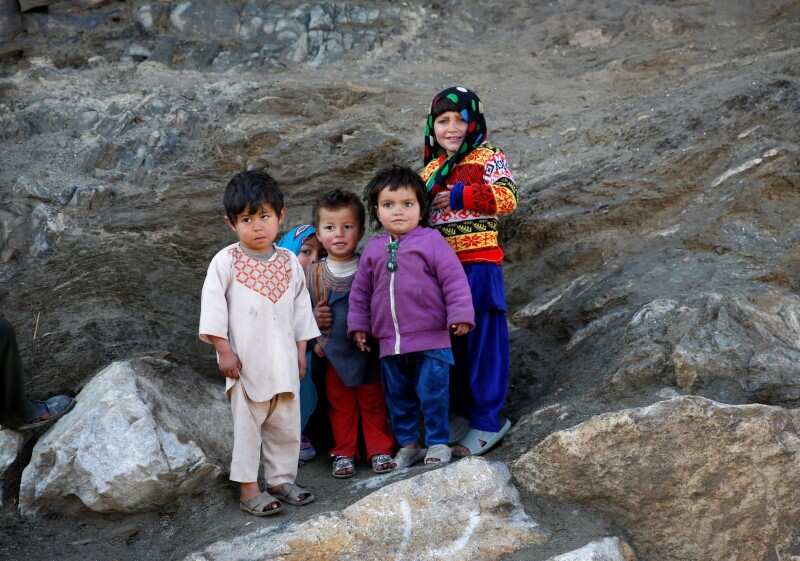
What can be done when a state acts against its citizens? Or, put slightly differently, do people of and within a given state have recourse to redressal when their state turns against them? No is the sad answer. The questions posed here are not academic. These are the real world, hardnosed questions and issues which are panning out all too poignantly in a country which has become emblematic of peoples’ epic helplessness and the international community’s stoic but hypocritical inaction. The reference is to Syria and its peoples who have been trapped in the crosshairs of a vicious conflict that now has morphed into a veritable battlefield for the panning out of competing geopolitical interests.
The victims, with no clear end game in sight, have been the people of Syria, killed, injured or displaced by the vortex of this deadly conflict. The so called international community not just watches as a mute spectator but, in reality, the Syrian conflict or even war, has provided its major states opportunity to expand their respective interests. Needless to say, this politics of opportunism goes against the high minded and lofty-sounding principles that the so called international community professes and, at times, loudly proclaims. All this raises a bevvy of questions: what explains the impunity of states when they act against their people? Why is the international community “helpless” in cases like these? What explains the dissonance between the international community’s proclamations and its (in)action? Last but not the least, do then people have to be at the sufferance of a state that goes against them? And, with reference to the “case” in contention, will the people of Syria ever have a respite from war, misery and depredation?
The thrust of the answer lies in the summum bonum of international politics and system: the state and its concomitant, sovereignty. The fundamental unit of the international system is the state and sovereignty is the bedrock of the state. This system and its corollaries, accruing from the Treaty of Westphalia has till now held its ground, so to speak. While there are some salubrious aspects to it but, it would appear, that the main failing of the Westphalian system is its privileging of the state over people. State sovereignty then acts as a shield for the state under which a given state can do anything, without accountability to anyone. (This happens because the international system and international relations are anarchic. That is, there is no higher authority in the system to which states can take recourse to). States then are free to do anything within their sovereign jurisdictions and frontiers.
The tragic Syrian saga corresponds to sovereignty as a shield, under which a regime has not only gone against its people but murdered, gassed and displaced them.
The question that may be posed here is that is not international law a binding constraint on states? The answer again is no. International law is merely a normative corpus of laws that hardly goes against a state. And, states merely or largely pay lip service to it. International law is also handicapped by the absence of an appellate authority where people can take their case(s) to. The International Criminal Court of Justice exists but yet again sovereignty is a major constraint here along with the reluctance or even obstructionism by major states. The recent threats against and bullying toward the ICJ by United States national security advisor, John Bolton, illustrate the point.
States’ sovereignty and prerogatives thereof win over the safety and security of the people. Obiter dictum, public opinion as a rallying force against states’ atrocities against their people is a pious and a vain wish. Unless and until a given state's interests (howsoever defined) are not affected, it will not act. The state system then, despite proclamations to the contrary, is slanted and configured against people. As a corollary, the so called international community is a fiction maintained perhaps for rhetorical purposes.
Against this backdrop, and with reference to Syria, its people are doomed to suffer and their collective fate is uncertain. But, this assertion must be qualified. Syria and its peoples are doomed to be trapped in the vortex of war and depredation, till a power state decides to act for them.
The reference here is not to the so called Responsibility to Protect (R2P), another vain construct that flounders on the rocks of reality but humanitarian intervention, of a military nature. But, humanitarian intervention, appears to be an oxymoron, for states hardly ever act out of altruism. They act when their interests are at stake. However, there has been an odd case of humanitarian intervention or so in the recent past. If this is the case, why has not this happened in the case of Syria? The reason might be civilizational or cultural.
Syrians, by and large, are Muslims so the world powers might not be amenable to intervene military in the conflict. However, the overwhelming reason appears to be there are no stakes for Great powers to intervene except as players to advance their interests. To put a semantic twist to it, Great Powers might also be an oxymoronic phrase.
There might be powerful powers, if this phrase makes sense but no great powers for greatnessis not something that accrues from the metrics of power but sheer and pure humanity which is conspicuously missing from any so called Great power. Greatness is earned by what an individual, persons, groups or even states can do for their fellow humans even if they are “different”. There, alas, is no such great power, in the world, that can offer respite and succour to the blighted people of Syria. They will suffer till perhaps Providence intervenes!
(Disclaimer: The opinions expressed above are the personal views of the author and do not reflect the views of ZMCL)