Unveiling 1971 war atrocities & economic contrasts: Bangladesh's success and Pakistan's perilous path

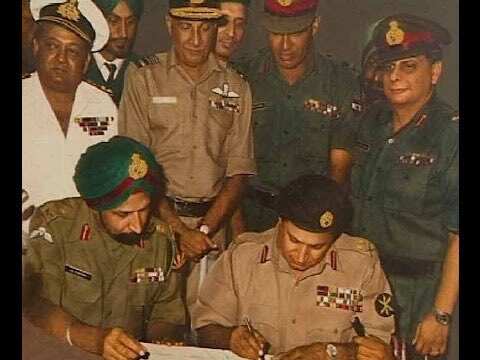
1971 war surrender pic
The echoes of the barbaric spring and blood-soaked December of 1971 bear witness to the unspeakable atrocities and genocide endured in East and West Pakistan. This haunting legacy serves as a constant reminder of the depths of human suffering and the indomitable spirit that emerged from the darkness.
Against the backdrop of this painful past, the geopolitical stage witnessed a complex dance of power. As superior nations like USA and UK threw their weight behind West Pakistan, their old adversary India found an ally in the strategic treaty forged with the Soviet Union on August 9, 1971. This intricate web of alliances added layers of complexity to an already volatile situation, amplifying the stakes and consequences.
March 25, 1971, marked a turning point that plunged the region into a state of terror and despair. Operation Searchlight, unleashed by Pakistan, initiated a reign of darkness that stretched for nine agonising months, leaving in its wake a trail of unimaginable suffering and an indelible scar on the collective memory of the people.
ALSO READ| Pakistan unveils $51 billion budget with focus on ‘elements of real economy’ hikes defence spending
In the wake of this painful past, fifty-two years later, Bangladesh and Pakistan have taken divergent paths, especially in the economic realm. Bangladesh has defied the odds, experiencing remarkable growth and development, while Pakistan faces ongoing political and economic challenges.
Economic contrasts: Bangladesh’s rise and Pakistan’s struggle
Bangladesh's economic success story is one of resilience and triumph. Through a focus on export-oriented industries and the development of a robust manufacturing sector, the country has attracted foreign investment and achieved consistent GDP growth. Bangladesh's achievements extend beyond economics, excelling in areas such as passport rankings, literacy, micro-credit financing, and women empowerment. Its impressive GDP per capita and strong forex reserves further underline its economic prowess.
In contrast, Pakistan has faced economic setbacks and struggles for stability. The country has failed to meet its economic growth targets, with GDP growth at a meagre 0.3%. Inflation, currency depreciation, and a decline in industrial output have compounded its challenges. Pakistan's global economic ranking has plummeted, adding pressure to the cash-strapped government ahead of the upcoming elections. The government must navigate the demands of the International Monetary Fund and implement stringent reforms to secure a vital bailout package.
In a recent conversation with WION, Asad Ejaz Butt, a renowned economist based in Islamabad, shared a profound insight into the disparity between Bangladesh's remarkable economic growth and Pakistan's ongoing struggle and political instability. Mr Butt's perspective shed light on the ground sentiment surrounding this divergence, as he expressed, “Bangladesh is an oft-cited case study within both academic circles and government meetings in Pakistan. The Bengali currency 'takka,' once used derogatorily in Pakistan to denote something as cheap and lacking value, is now regarded by many Pakistanis with a complex mix of envy and awe.'"
Pakistan Budget 2023 -2024
Pakistan's 2023-24 national budget poses a daunting challenge as no new taxes are imposed, but a modest GDP growth target of 3.5% is set. With an outlay of Rs 14.46 trillion and increased current expenditure, stabilising the economy and addressing issues is vital. IMF assistance is crucial to avoid a debt default and tackle inflation, yet limited fiscal space hampers popular measures for economic stimuli.
Conclusion
In conclusion, the economic contrasts between Bangladesh and Pakistan are stark. Bangladesh's success story serves as an inspiration, while Pakistan must embrace economic reforms and stability. The upcoming budgets of both countries carry significant implications for their economic trajectories. By recognizing the historical context, promoting cooperation, and prioritising inclusive growth, Pakistan and Bangladesh can bridge the divide and forge a prosperous future together.
Disclaimer: The views of the writer do not represent the views of WION or ZMCL. Nor does WION or ZMCL endorse the views of the writer.

WATCH WION LIVE