UN Security Council reform – mission impossible?

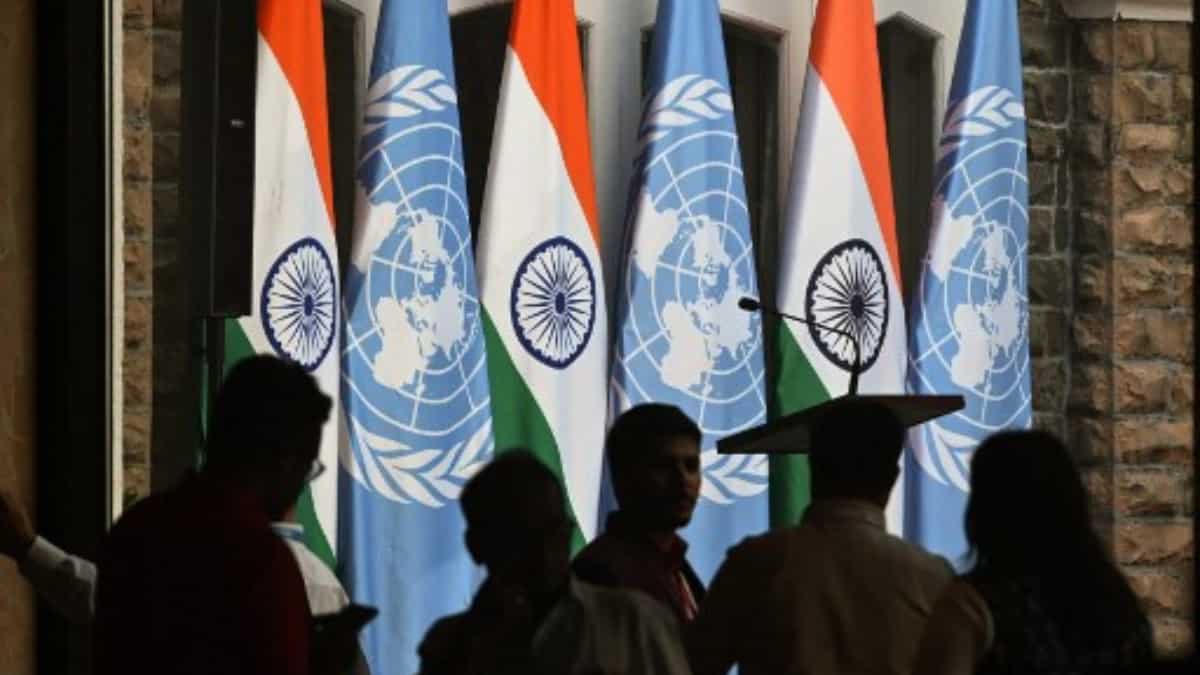
UN Security Council
“We have historically and continue to stand behind the idea that Germany, Japan and India should be permanent members of the Security Council.”
So said a White House official in September. Though he wanted to remain anonymous, he was elaborating on a speech by President Joe Biden to the United Nations General Assembly in which he expressed support for enlarging the council but did not specify the countries the USdeems deserving a seat on the UN’s supreme decision-making panel.
Flash back to November 2010 and a speech by then USPresident Barack Obama to India’s parliament: “In the years ahead, I look forward to a reformed United Nations Security Council that includes India as a permanent member.”
His words fell to receptive ears to an audience which believed that their country has not been given the proper global recognition of its size, military power, economic clout, and prominent role in UNpeacekeeping missions.
Words, words, words. In the 12 years between Obama’s statement and Joe Biden’s newly-expressed wish for Security Council expansion, there have been many words on the subject but no action. You need to view the world through rose-tinted glasses to spot progress on changing an anachronistic body that reflects the world as it was after the end of World War II, not as it is today.
One of the most memorable descriptions of the Security Council has come from Stewart Patrick, a foreign policy veteran at the Council on Foreign Relations, a New York-based think tank. It is “a body frozen in amber since the end of World War II.”
For decades, diplomats have had on-again, off-again talks on how to change a system that gives extraordinary power to five countries – The United States, Russia, China, Britain and France. When the United Nations came into existence in 1945, the international leaders who worked out its charter gave those five countries permanent seats on the council along with the right to veto any “substantive” draft resolution by UNmember states.
That right, given to what is known as the P5 in UNspeak, translates into the privilege to ignore not only the wishes of the majority of the UN’s 193 members represented in the General Assembly, whose votes are non-binding, but also the ten non-permanent members of the Security Council.
These members are drawn from regional groupings, elected by a two-thirds majority and serve two years. India’s non-permanent term began in 2021 and ends by the end of this month.
India’s diplomats and External Affairs Minister S. Jaishankar have used India’s tenure to reiterate the logic of reforming and enlarging the council. As the world’s biggest democracy, second-most populous country, and a nuclear power (like the P-5) India could help the council in meeting the job it was assigned in 1945.
That is laid out in the UNCharter and lists “the maintenance of international peace and security” as its primary responsibility.
There have been numerous occasions –wars and civil wars -- when this phrase sounded like mockery, the latest being a Russian veto on a council resolution demanding that Moscow stop a large-scale attack on Ukraine and immediately withdraw the troops that invaded the country on February 24.
Ten months later, the war rages on, thousands of Ukrainians and Russians have been killed and large parts of major Ukrainian cities laid to waste. General Assembly votes demanding an end to the bloodshed have been ignored.
It was sadly ironic that the presidency of the council when Russia invaded Ukraine was held by Russia. (The presidency rotates among the 15 members on a monthly basis and the role is largely procedural and ceremonial).
Ideas on what to change in the UN’s most important decision-making bodies and how to do it have been tossed around since 1993 in relative obscurity in the bureaucratically-named “Open-ended Working Group to consider all aspects of the question of an increase in the membership of the Security Council and other matters related to the council.”
The phrase “other matters” embraces abolishing the veto – and none of the veto-wielders have shown any willingness to give up theirs, no matter how encouraging they may sound about reform.
Watching the carnage in Ukraine has prompted academics and pundits to debate whether it is possible to expel a country as flagrantly violating the UNcharter as Russia.
The short answer is no. The international leaders who set up “the body frozen in amber” did not include a mechanism for a member’s expulsion. Theoretically, it would be possible if the Security Council recommended Russia’s removal and then put that to all member nations.
Russia has a veto, so that recommendation would never be made.
America’s voice in UNaffairs matters – the United States is by far the biggest contributor to the organisation’s budget 22 per scent and the United States was instrumental in setting up the UNin the ashes of World War II.
But how energetically Biden will pursue his stated aim of enlarging and reforming the Council is open to conjecture.
The UScomes second in the number of vetoes it has cast over the years – 82 compared with 121 by the Soviet Union and its successor, the Russian Federation.
And how involved Washington gets in UN matters depends on who holds power. Republicans tend to have negative views of the UNand many see it as a waste of time and money.
Such views were reflected in strikingly undiplomatic terms by the man George WBush in 2005 made UNambassador to the United Nations, John Bolton.
In a television interview, he said: “If you think that there is any possibility in this country that a 51,000 person bureaucracy is going to be supported by most Americans, you better think again. The Secretariat Building in New York has 38 stories. If you lost 10 stories today, it wouldn’t make a bit of difference. The United Nations is one of the most inefficient inter-governmental organisations going.”
(Disclaimer: The views of the writer do not represent the views of WION or ZMCL. Nor does WION or ZMCL endorse the views of the writer.)
WATCH WION LIVE HERE
You can now write for wionews.com and be a part of the community. Share your stories and opinions with us here.
