Opinion: Will Pride Month do more than just rainbow colouring of displays?

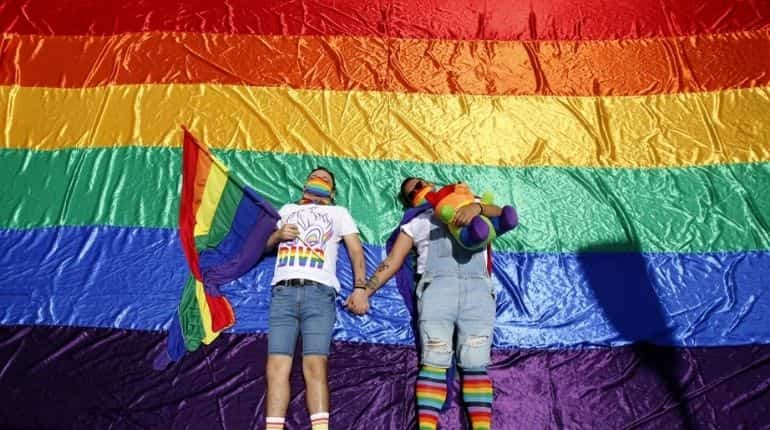
Two people lie down over a huge rainbow flag
On 12 June 2016, Omar Mateen opened fire in a gay nightclub in Orlando, United States. By the time he finished the rampage, 49 people from the LGBTQIA+ community were dead and 53 injured.
This month, President Joe Biden signed off on naming the Pulse nightclub a national memorial.
The gruesome incident in that club, once a space of joy, is a reminder to the LGBTQIA+ community of the consequences they face for exercising freedom, even in relatively open societies. Asserting those freedoms is at the heart of thePrideMonth.
In late 20th century, when "certain looking" people were discouraged from pursuing social interaction in public, clubs emerged as safe spaces for sexual minorities.
With the Stonewall riots in New York City, the Gay Liberation Movement took off in 1969 and called on governments to take notice of the community’s needs and demands. After being excluded from the mainstream narrative, minorities were finally finding a voice. That movement continues to manifest itself globally with yearlyprideparades and the enlarged demands for representation.

But the Orlando nightclub shooting brought to light a new threat posed by community-driven safe spaces, marking a new direction in hate crimes of trespassing these spaces that were instituted for the safety enshrined in them.
Suddenly, the community felt shocked and scathed - dumbfounded by how their years-long struggle was diluted by an ignorant homophobe. It shook everyone to this cold reality: exclusive clubs are not enough, safe spaces aren’t safe enough, marriage equality is not enough.
While legal recognition in democratic countries has allayed fears among sexual minorities, the ground reality continues to remain grim.
In fact, with global discussions about marriage equality and anti-discrimination measures, the community has been flung into the mainstream narrative. This does not sit well with naysayers. And when majoritarian groups feel threatened, they react with violence.
An NBC news report claims that in 2019 alone, hate crimes against transgenders soared by 20 per cent and that’s just in the US.
The pertinent question is - has the LGBTQIA+ community been celebrating a premature victory?
In India, the scrapping of the archaic Section 377 instilled a sense of faith among people. But there are no measures in place to protect LGBTQIA+ community from discrimination and harassment, in both the public and private spheres.
The transgender community especially remains extremely compartmentalised due to decades-long stigmatisation.Are radical changes like marriage equality enough?
In 2019, theTransgenderPersons Billwas passed with the hope of endingdiscrimination in terms of employment, education, and access to healthcare. But is that change trickling down in India?
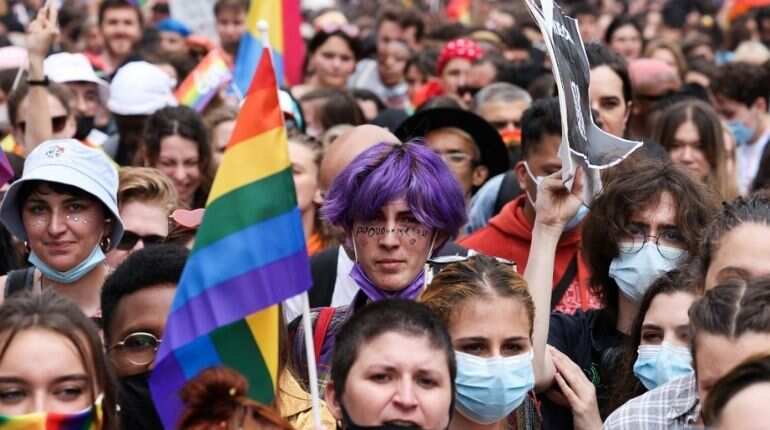
European countries are also facing a "cultural battle" over the scope of LGBT+ rights, as suggested by French President Emmanuel Macron.
On June 25, Dutch Prime Minister Mark Rutte told Hungary's premier Viktor Orbanto "respect LGBT rights or leave the European Union" over a contentious law which prohibits schools in the country from using material that "promotes homosexuality".
The country's"Anti-Paedophilia Act" conflates pedophilia with homosexuality, a common trope which is pushed in homophobic regimes to curtail rights.
On the otherend of this spectrum are countries like Italy, where an attempt is being made to create an anti-LGBT hate law.A noble proposal, it was immediately shot down by neighbouringVatican whichheadquartersthe Roman Catholic Church.
It's not unusual for neighbours to disagree with each other's policies. But the Vatican's attempt to alter the course of pro-LGBTQIA+ measures in Italy are peculiar.
This time, its stance has been invoked as a nation, deeply symbolic of the“concordat” that defines Vatican'srelationship with Italy, whose"Zan bill" intends to outlaw targeted violence against sexual minorities.
Italy has extremely less protective provisions for its sexual minorities when compared with other European countries, which is perceived as adirect product of the Catholic Church's historical influence on the country.
It takes a lot more than snap alterations to change a society comfortably settled in majoritarian excesses.No amount of rainbow posturing by corporates will usher real social change until education begins from both ends of power.
In India, the absenteeism exhibited by mainstream political leaders in terms of LGBTQIA+ rights is jarring. It reflects the misplaced priorities of a democracy. At a time when democracies should expand their freedoms, many regimes are taking a step back and questioning the need for diversity.
If this trend escalates, there could be pushback against equality.
At Euro 2020, a sporting event has drawn attention after Manuel Neuer donned a rainbow-coloured armband to support equal rights, which was seen as a ‘political symbol’ by the Union of European Football Associations (UEFA).
They opened an investigation into this statement and are planning to hold more matches in Budapest, where legislation prevents dissemination of any content which ‘promotes’ homosexuality.
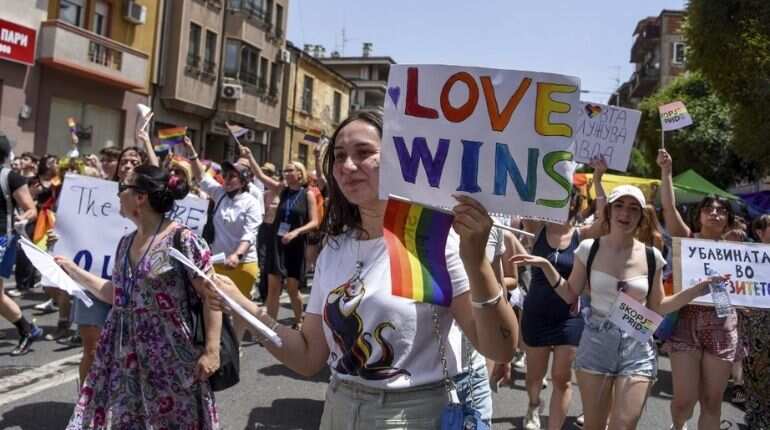
Token moves like yearly events are not enough in a world where many countries still punish homosexuality by death.
We’re all familiar with the Holocaust. But how many of us know that after the Jews, Hitler’s ferocious empire systematically targeted homosexuals - a story that has remained largely buried because war crime archives tend to ignore gendered and sexual violence.
In Chechnya, a Russian territory, anti-gay purges have become rampant in the last five years. Forced disappearances and secret imprisonments at Hitler-style concentration camps have been noted by several eyewitnesses.
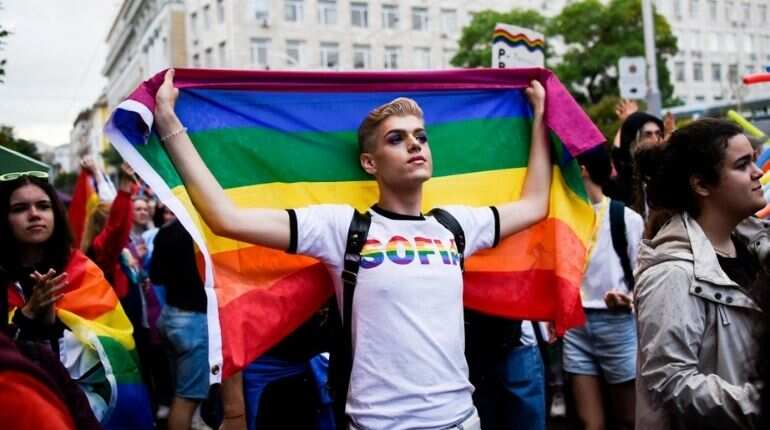
Most online campaigns driven by marketing greed are acts of posturing more than redemption that appear and disappear in sync with evolving laws. Roughly 50 per centof Indians have access to internet - the behemoth of free information and knowledge accumulation. Unfortunately, our national politics have never openly embraced narratives of equality for fears of alienating vote banks. But it’s time to move forward, to trigger targeted awareness campaigns, to imbibe sexuality and not just procreative sex into our education system.
Till then, forget marriage equality, most LGBTQIA+ folks can’t even occupy public spaces without being jeered at, verbally abused, or facing acts of violence.
(Disclaimer: The views of the writer do not represent the views of WION or ZMCL. Nor does WION or ZMCL endorse the views of the writer.)