Loitering with intent on the high seas

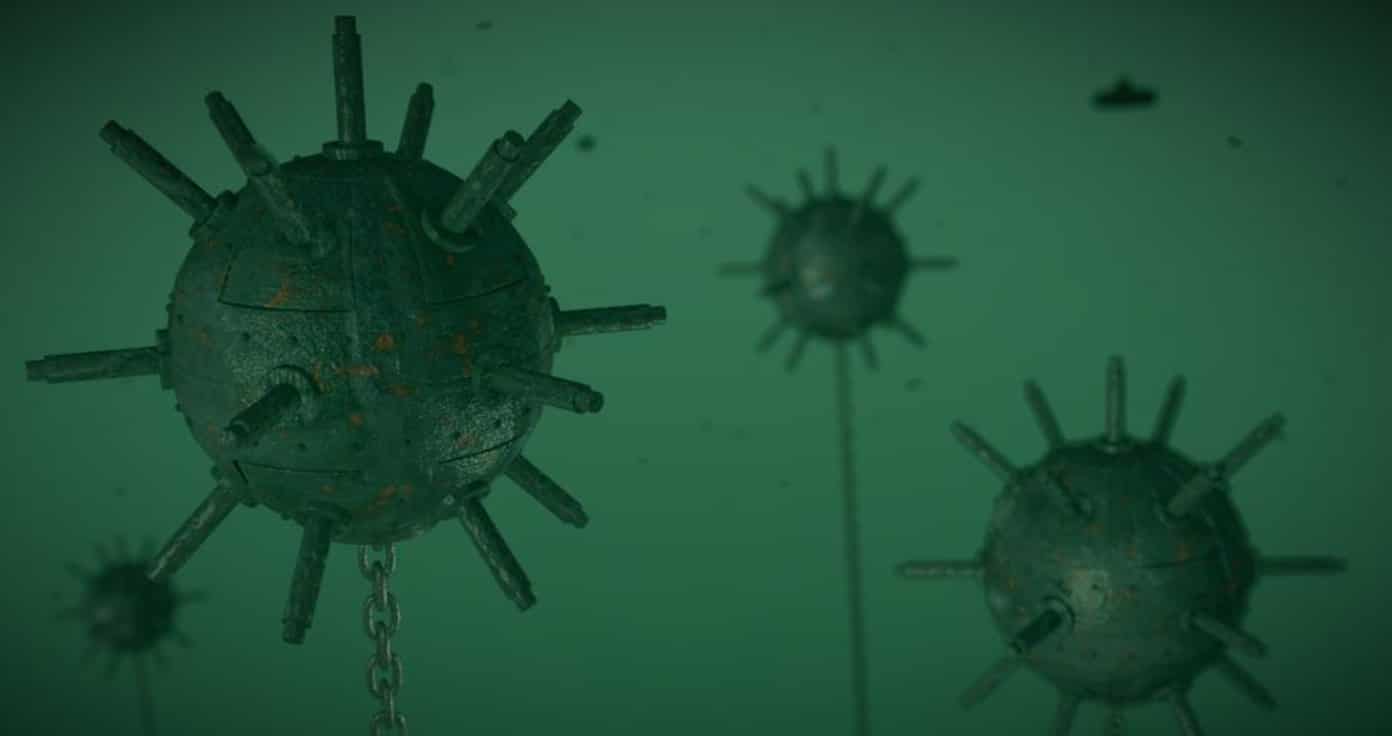
File photo of sea mines
For centuries, sea mines have represented a low-cost and highly effective method of naval warfare. This simple yet devastating weapon has continually adapted to technological advancements, remaining a critical threat in modern naval conflicts. As terrorist organisations and non-state actors increasingly use sea mines to disrupt global trade routes, navies must evolve their mine countermeasure (MCM) capabilities.
Precursors to naval mines were first invented by innovators of Imperial China. The first plan for a sea mine in the West was drawn up by Ralph Rabbards, who presented his design to Queen Elizabeth I of England in 1574. Since the invention of the Bushnell Keg in 1776 (a watertight keg filled with gunpowder that was floated toward the enemy, detonated by a sparking mechanism if it struck a ship), mine warfare has been an important element of naval warfare.1 While the first attempt to deliver the Bushnell Keg from America’s first combat submarine, the Turtle, against a British warship in 1776 failed, subsequent attempts to employ these early mines were successful.
According to the U.S. Naval Institute, the challenge of sea mines is becoming more severe as countries enhance their mining capabilities, and the lethality of these underwater threats continues to grow. Navies worldwide are recognizing the growing sophistication of mines and are turning to Unmanned Maritime Systems (UMS) as the future of MCM. By removing the human element from the hazardous task of mine clearance, unmanned systems provide a safer, more efficient solution. As Captain Bruce McEwen emphasised, “It’s time to take the sailor out of the minefield by leveraging advanced unmanned systems to remotely hunt and destroy mines.”In the past several decades, rogue states have indiscriminately employed sea mines. Libya disrupted commerce in the Gulf of Suez and Strait of Bab el Mandeb with mines, while in the 1980s, Iran used mines in the Arabian Gulf and Gulf of Oman, resulting in the USS Samuel B. Roberts (FFG 58) mine strike. Naval mines pose a constant threat in the Middle East, even outside major conflicts. During Russia's 2022 invasion of Ukraine, mines laid near Crimea drifted into shipping lanes used by Ukrainian and NATO vessels.
This article explores how modern technologies can be employed to counter the rising threat of sea mines.
The Evolution of Mine Countermeasures
Historically, the U.S. Navy and its allies relied on legacy systems such as the Avenger-class minesweepers and MH-53E Sea Dragon helicopters. However, these platforms are rapidly approaching the end of their operational lifespans, with both expected to sunset by 2025. In their place, a new generation of Unmanned Systems is emerging, designed to detect, neutralize, and remove mines without endangering human life.
Traditional mine countermeasures are both time-consuming and dangerous. Mines are difficult to detect, and hunting them with manned systems requires operating directly within minefields. The introduction of unmanned surface vehicles (USVs) and underwater drones offers a promising alternative. These systems, equipped with advanced sensors and autonomous capabilities, can locate and neutralize mines from a safe distance.
The Role of Unmanned Systems in Mine Warfare
Unmanned systems present a unique opportunity to revolutionize MCM operations. Autonomous underwater vehicles (AUVs) and unmanned surface vehicles (USVs) are being deployed to handle both detection and neutralization tasks. The U.S. Navy, for example, has been testing systems like the MARTAC MANTAS USV, which has shown promising results in both mine detection and other maritime operations.
The most significant advantage of these unmanned systems is their ability to operate in hazardous environments without risking human lives. Systems like the Devil Ray T38 and Pluto Gigas have been integrated with towed sonars and remotely operated vehicles (ROVs) for autonomous detection and clearance of mines. By deploying unmanned assets, navies can maintain operational effectiveness while minimizing risk to personnel. Moreover, advanced sensors, such as synthetic aperture sonar (SAS) used by systems like Kraken Robotics' Katfish, allow for high-definition imaging of the underwater environment. These sensors provide accurate identification of mines, which is crucial for successful clearance operations.
A Paradigm Shift: From Reactive to Proactive
The shift from legacy systems to unmanned platforms signals a broader change in how navies approach mine countermeasures. Instead of reactive measures—where ships would detect mines and attempt to clear them—UMS allows for proactive mine warfare. By leveraging artificial intelligence (AI) and machine learning, unmanned systems can autonomously detect, classify, and neutralize mines in real-time.
The autonomy of these systems also makes them more efficient. Autonomous systems can perform multiple tasks in a single mission, including deploying and neutralizing mines while simultaneously conducting intelligence, surveillance, and reconnaissance (ISR) operations. This “detect-to-engage” capability reduces the time needed to clear a minefield, allowing for faster and safer operations. Moreover, the deployment of unmanned systems allows for greater operational flexibility. USVs and AUVs can operate in areas that are inaccessible or dangerous for manned vessels. This is particularly valuable in littoral zones, where the shallow waters are often heavily mined.
The Future of Mine Warfare: Swarming and AI Integration
One of the most exciting developments in UMS technology is the integration of swarming capabilities. A swarm of AUVs can coordinate to cover larger areas of the seabed, reducing the time required to locate and neutralize mines. These systems, linked through a mesh network, can communicate and adjust their operations autonomously, improving efficiency and effectiveness. For example, researchers at the Naval Postgraduate School have been developing systems that incorporate AI and machine learning for dynamic minefield management. These swarming systems can identify enemy vessels, adapt to changing environments, and autonomously deploy or deactivate mines as needed. This represents a shift from traditional static minefields to dynamic, responsive systems that can actively engage hostile targets or allow friendly forces to pass unharmed.
Challenges and Considerations
While the future of unmanned mine countermeasures is promising, challenges remain. One significant issue is ensuring that unmanned systems can effectively communicate in contested environments, where adversaries may attempt to jam or disrupt communications. Innovations in optical communication, such as blue-green lasers, offer a potential solution. These technologies enable underwater systems to communicate through hundreds of feet of seawater without surfacing, ensuring operational effectiveness in degraded environments.
Another challenge is the integration of these systems into existing naval fleets. The deployment of unmanned systems requires rethinking how naval assets are structured and supported. Platforms such as Littoral Combat Ships (LCS) have been designed to operate with UMS, but integrating these technologies into other ship classes remains an ongoing effort.
Home Port Efforts
Over the last few years India’s military naval fleet has seen a constant growth with the addition of new vessels, frigates, destroyers, corvettes and even a full-fledged aircraft carrier that was built indigenously. Notwithstanding this appreciable growth and acquisitions is the glaring anomaly of absence of minesweepers in the Indian Navy. The Indian Navy is actively exploring innovative solutions to address the shortage of minesweeper boats in its fleet. One such solution is the deployment of Unmanned Surface Vessels and Micro AUVs, either together as a team or independently. There are many startups like Sagar Defence, Robosys and Tardid Technologies who are trying to pioneer this. They have been searching funding and partnering with bigger defence companies to cross the valley of death.
The Navy needs to procure more than 26 units of MCMVs to fulfil its immediate requirements. This will have to be complemented by follow-on orders to achieve economies-of-scale and to keep the production lines active. Once the navy has the desired number of vessels, India can also look forward to build new MCMVs for exports. This would serve as a hallmark to the product quality and operational efficiency. If we could utilise this gap as an opportunity towards creating Unmanned Minesweeping Platform, the world market would be there to leverage.
Economics of Mining
With modern sea mines ranging in cost from $10,000 to over $1 million, they offer a relatively low-cost means of blocking strategic sea lanes or deterring enemy movements. For example, a U.S. Navy Mk-62 Quickstrike mine costs around $50,000, and more sophisticated smart mines can be deployed by aircraft, submarines, or surface vessels. In a high-traffic region like the Indian Ocean, where 80% of Chinese energy imports and 95% of its trade with Africa and the Middle East pass through, sea mines can significantly disrupt global shipping, triggering considerable economic losses while requiring minimal maintenance.
In contrast, minesweeping is an expensive and resource-intensive endeavour. Minesweeping vessels, such as the UK’s Hunt-class or the U.S. Navy’s Avenger-class ships, can cost upwards of $100 million to $150 million to acquire, with operational costs running into the millions annually. Minesweeping operations involve not only specialized ships but also helicopters and autonomous underwater systems like the Airborne Mine Neutralization System, which adds complexity and time to the task. Clearing minefields in areas like the Indian Ocean can take weeks or months, making it a slow and costly process compared to the cheap and rapid deployment of mines.
However, integrating Unmanned Surface Vessels (USVs) and Unmanned Underwater Vehicles (UUVs) into minesweeping operations could drastically reduce both the cost and time involved in clearing mines. These autonomous systems, capable of operating around the clock without risking human lives, can be deployed in large numbers, increasing the speed of detection and neutralization of mines. Advanced UUVs like the Knifefish, designed for mine hunting, can detect, classify, and neutralize underwater mines more efficiently than traditional methods, reducing operational expenses associated with fuel, crew, and lengthy post-mission analyses. The use of USVs and UUVs presents a technological leap, offering a faster, more cost-effective solution to ensure safe passage through critical waters like the Indian Ocean.
Conclusion
As sea mines continue to pose a threat to global commerce and naval operations, the need for advanced mine countermeasures has never been more urgent. Unmanned systems offer a transformative solution, allowing navies to clear mines efficiently and safely while reducing the risk to personnel. By leveraging advanced sensors, AI, and swarming capabilities, these systems represent the future of mine warfare.
With nations like Russia and China enhancing their mining capabilities, it is critical for navies to stay ahead of the curve. As technologies such as the Devil Ray T38 and Pluto Gigas prove their operational value, the widespread adoption of unmanned maritime systems will become essential for ensuring freedom of movement in the world's oceans. The era of taking sailors out of the minefield is upon us, and with it comes a new age of safer, smarter mine countermeasures. “The times, they are a-changing,” Bob Dylan’s iconic line from his 1964 hit, captured the cultural upheaval of the era and resonated with millions. Just as that anthem symbolised a shift in societal norms, naval mine warfare too must embrace transformation in the face of new technological and strategic realities.
Disclaimer: The views of the writer do not represent the views of WION or ZMCL. Nor does WION or ZMCL endorse the views of the writer.