Hong Kong is back, but only for some

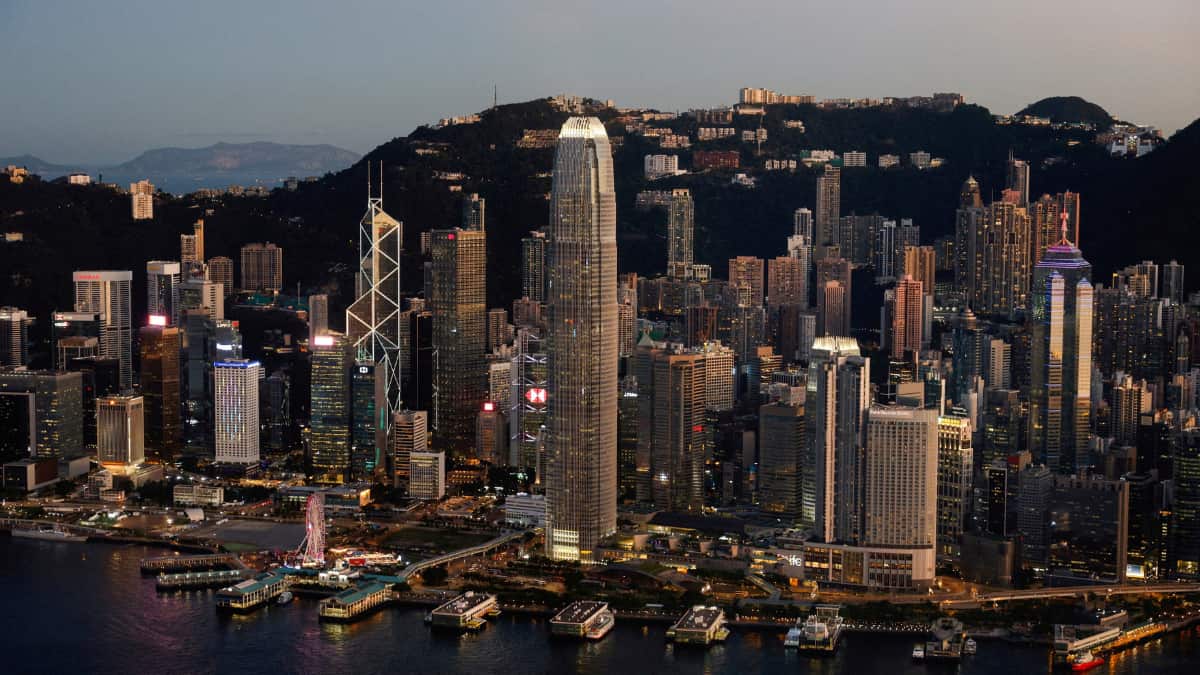
Hong Kong
Hong Kong is back, the Chief Executive of the Special Administrative region of China declared last week. John Lee's optimism was rooted in the fact that the city played host to hundreds of top financiers from across the world, and soon after, the globally followed Rugby Sevens tournament also made a reappearance after a gap of three years.
The financial summit attracted more than 200 leaders from around 120 global financial institutions though there were a few notable absentees. Financial Secretary Paul Chan offered plenty of carrots to the assembled bankers, venture capitalists and hedge fund bosses through multi-billion dollar plans to retain the city’s status as an economic hub and promised even more in the pipeline under the planned Greater Bay Area (GBA) project.
For the uninitiated, the GBA is a grand economic plan pursued by Beijing to link Hong Kong and Macau with nine cities in the adjacent Guangdong province and by 2035 create an economic powerhouse that will rival the likes of California – the US state that would rank as the sixth biggest economy if it were a separate nation.
GBA figures are enough for any financier to salivate as the area boasted of a domestic product worth US$1.67 trillion by 2020 and is a market populated by 86.2 million people. Moreover, most of the hi-tech industries, including future growth engines like robotics, drones and AI, are concentrated in that part of China. As the designated role of Hong Kong is to be GBA’s financial engine, it is no surprise that financiers eager to get a piece of that action made a beeline to the city.
The lure of big bucks is what Beijing and Hong Kong are banking on to paper over the criticisms about the authoritarian approach of the government and lack of rights for its own people. And they are being proved right as the Beijing visit of German Chancellor Olaf Scholz illustrates. The German leader arrived with a planeload of business leaders despite rising scepticism in Europe about overt economic reliance on China and uneasiness about the direction the country is taking under President Xi Jinping.
The mandarins in Beijing know they are holding a trump card as they offer a vast industrial infrastructure that no one can easily replace and offer a market that can seduce any multinational company. These two baits are powerful enough to lure in countries and Western companies who are willing to focus on economic benefits and overlook inconvenient facts like politics and clampdown on freedoms. All Beijing has to do is ease their drastic Covid restrictions, and those with dollar signs on their eyes will flow back in.
Things were different in Hong Kong as many multinationals and banks saw the city’s rule of law and judiciary based on common law system offered them an environment they were familiar with, unlike the mainland China where everything is controlled by the Communist Party, including the courts. But that is changing in Hong Kong, which is now run by “patriots” handpicked by Beijing.
In his weekly Sunday blog, Financial Secretary Chan trumpeted the success of the financial summit which ended on Thursday, saying “it has also achieved another goal – to show the world Hong Kong’s openness and its return to normality”. But cast a glance at the events running up to the start of the summit and you will see a different picture from what Chan sought to portray.
Visitors arriving in the city are now required to stay home for three days and undergo medical surveillance every day during which they carry amber codes on their Covid monitoring app, effectively barring them many public places including restaurants and pubs. But all this was waived for the money bags arriving for the summit who were allowed to host dinner and lunch to meet their “colleagues and clients”.
The summit seemed to be running into more trouble as Chan, who was touring the Middle East, tested positive for Covid while in Saudi Arabia and it looked like the financial secretary will have to stay away from the event. But after obtaining a negative RAT test, he arrived back in Hong Kong, only to be caught positive during a mandatory PCR test.
Still he was allowed to join the event and address the summit without a mask after the authorities said his viral load was minimal and he was not infectious. Both Chan and the government issued statements denying any rules were bent for him and justifying their actions though for most of the residents, it looked like Covid rules were not applicable for some.
Outside of the summit, courts continued the crack down under the National Security Law, jailing more people for offences like posting “seditious” messages on social media while newspaper editors were charged over publication of columns that were critical of the authorities. Just a few days before the summit, 14 school students were suspended for not attending a flag raising ceremony while pro-Beijing politicians continued their call for more steps to instill patriotism in students.
With the economy taking severe hits, linked mostly to the Covid restrictions, more pain was in store for the 4.6 million workers in the city as their Mandatory Provident Fund recorded one of the steepest falls, a loss of HK$258.9 billion in the first nine months, wiping out on average HK$56,000 from their pension funds.
Still the finance chief of the city claims normality has returned to Hong Kong and has vowed to hold more financial summits to “boost our driving force in investment and economic development and attracting firms and talent”.
Yes, Hong Kong is back. But only for some.
(Disclaimer: The views of the writer do not represent the views of WION or ZMCL. Nor does WION or ZMCL endorse the views of the writer.)