Rise and rise of Turkish President Recep Tayyip Erdogan: Name etched in gold, but challenges not over

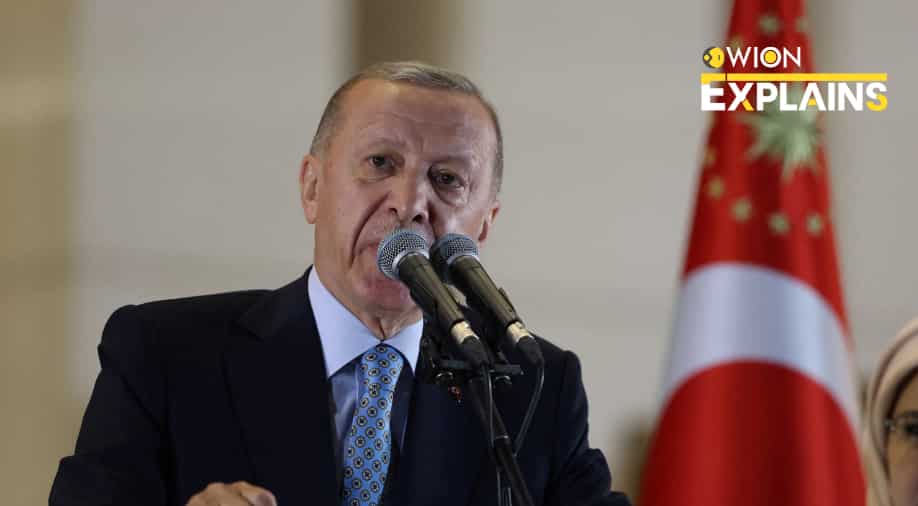
Tayyip Erdogan
Turkish President Tayyip Erdogan said on Sunday (May 28) that it's time to unite around "national goals", after winning a historic runoff election that guarantees his rule at least until 2028. The results were made official late at night and revealed that Erdogan has won the presidency with 52.14 per cent of the votes.
The stunning victory has made Erdogan the most important figure in modern Turkish history, but his political journey, which led him to where he is now, hasn't been an easy one.
He was not projected to win, but the 69-year-old Erdogan emerged to be the ultimate political survivor. He defeated his secular opposition rival, Kemal Kilicdaroglu, by four percentage points.
He has overcome jail and a bloody 2016 coup attempt, economic development and political strife. Earthquakes and subsequent aftershocks in February posed one of the toughest challenges ahead of the election.
He made several visits to the quake-hit zones where more than 50,000 died and also vowed to implement rapid reconstruction works and to punish builders who skirted building regulations. He accused the opposition of seeking advantage from a catastrophe.
Erdogan claims that he has introduced various reforms, but he is also accused of slipping into authoritarianism reminiscent of the Ottoman sultans and not abiding by Turkey's democratic foundations.
The early life of Erdogan
Erdogan was born in Istanbul on February 26, 1954, and graduated from Kasımpaşa Piyale Primary School in 1965. He completed his high school education at Istanbul Imam Hatip School (Religious Vocational High School) in 1973.
Interest in politics was quite evident as Erdogan became known as a fiery orator in the cause of political Islam when he was in high school.
Apart from politics, he was also actively interested in football — a sport which taught him the significance of teamwork and spirit in his younger years. But his inclination towards politics was definitely more.
After being born in a working-class, Erdogan made his name in nascent Islamic movements that were challenging secular domination, becoming the city's mayor in 1994.
However, he was convicted and jailed for four months for inciting religious hatred when he recited a fiery poem that compared mosques to army barracks and called minarets "our bayonets", which led to cutting short of his mayoral term.
Watch this report:
But the setback did not affect his popularity and the way he was with people.
He also founded the AKP after an earlier Islamic party was banned, Erdogan spearheaded its 2002 landslide election victory and became premier less than six months later.
Erdogan grew up as the son of a coastguardon Turkey's Black Sea coast. Reports saythat his father decided to move to Istanbul when he was 13.
As a child, Erdogan sold lemonade and sesame buns to earn extra cash.
Part of NATO, but not so Western
Turkey is part of The North Atlantic Treaty Organization (NATO) — a military alliance majorly comprisingthe Western nations— but he never shied away from holding his ground.
Turkey playeda crucial rolein brokering a grain deal between Russia and Ukraine in the ongoing war, to an extent resolving the global food crisis. Turkey also put brakes on Sweden's plans to join the Western defensive alliance.
Turkey was handed US sanctions in December 2020 over its purchase of Russian S-400 missile defence systems and had been criticised by Western allies over the move. Ankara has said it was forced to opt for Russian weapons because allies did not provide weapons on satisfactory terms.
However, in 2022, he said that it is unclear whether Turkey will buy more Russian arms because of Moscow's invasion of Ukraine.
Power and protests
Erdogan led the 2002 landslide election victory and became premier less than six months later. His signature early achievements included a series of reforms — abolishing the death penalty and beginning a peace process with Kurdish militants.
Mass protests in 2013 over plans to turn an Istanbul park into a shopping mall marked the start of a more divisive era that included corruption allegations levelled against his inner circle.
Turkey's bid to join the EU faltered and peace talks with the Kurds imploded in 2015 when a Kurdish opposition party helped to wrest control of parliament from Erdogan for the first time.
Turkish military operations against Kurdish forces in Syria and Iraq soon followed, creating new tensions with the West.
What are the challenges ahead?
From a crippling economic crisis to a diplomatic standoff with allies, Erdogan will face a myriad of challenges.
Turks are facing a cost-of-living crisis, with annual inflation running at around 40 per cent in April after officially peaking at 85 per cent last year.
Discussion over Sweden's NATO bid, efforts to reconcile with Syria, and earthquake reconstruction, are some of the burning issues that Erdogan will have to take action on.
Opponents accused him of turning a blind eye to corruption and lax building standards that allowed entire cities to crumble in the February 6 earthquake.
(With inputs from agencies)
WATCH WION LIVE HERE
You can now write for wionews.com and be a part of the community. Share your stories and opinions with us here.