When an ISRO scientist said 'Mangalyaan' was running really low on fuel

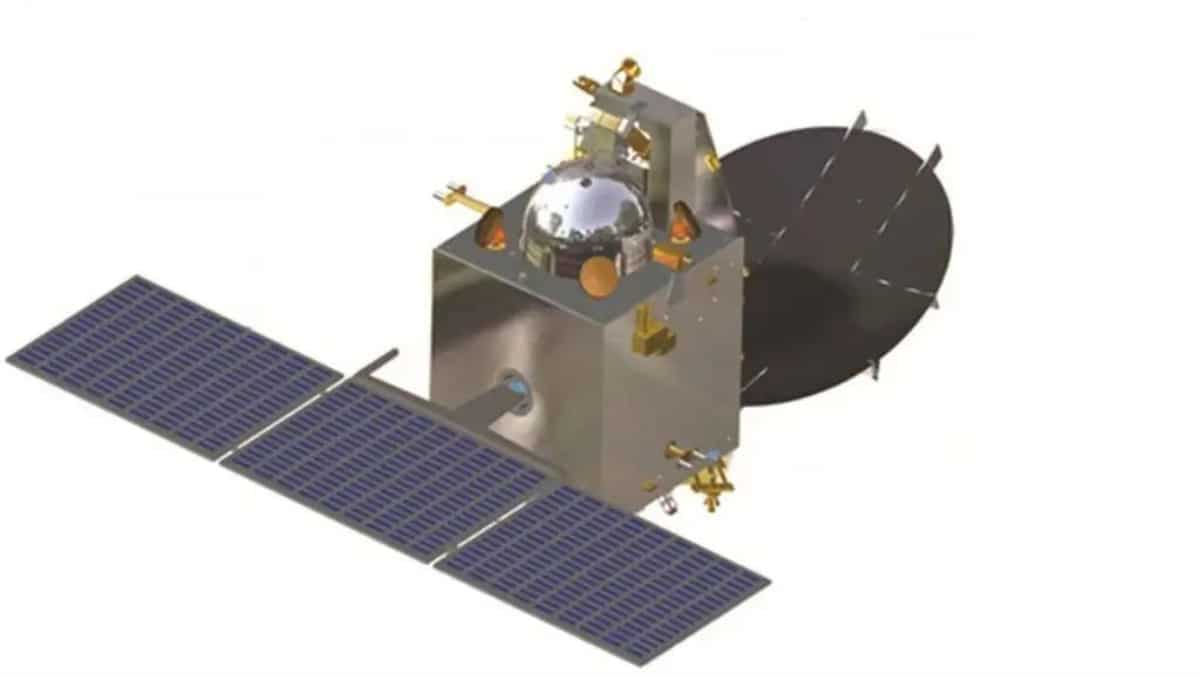
India's Mars Orbiter Mission
If the very manufacturers of a machine expect it to work for only a six-month duration, then it must be taken for granted that every additional day (beyond six months) of its operation is purely a bonus. The aforementioned situation is all the more applicablewhen it comes to machines that have to entirely operate in the harsh environs of Earth'sorbit, deep space, or specifically Mars orbit. We are referring to India's maiden Mars Orbiter Mission(MoM) Mangalyaan, which is speculated to have recently reached the end of its life, after completing nine successful years post-launch from the Earth.
There have been recent reports regarding Mangalyaan having run out of fuel and its battery being drained. However, the Indian space agency i.e. ISRO (Indian Space Research Organization) has not yet come out with any official communication in this regard.
Firstly, one must understand that satellites carry a finite amount of fuel and can exhaust them sooner or later depending on how many times they have to fire their engine(s). In the case of Mangalyaan, the spacecraft had to expend fuel to perform multiple Orbit Raising Manoeuvres (ORM) and also to insert itself into Martian orbit and thereafter get aligned into the final intended orbit.
Additionally, the spacecraft had to also perform burns to correct its orbit and also to avoid any comet showers.
Despite all this, the spacecraft functioned for at least eight years in Martian orbit and performed scientific activities to study the Martian surface features, morphology, mineralogy, and Martian atmosphere.
According to ISRO, the highlights of this mission include having taken snapshots of the full disc of Mars at its farthest point and finer details from the closest point as well as first-time observation of the far side of Deimos, one of the moons of Mars.
The Mars Colour Camera, one of the scientific payloads onboard the spacecraft, has produced 1100+ images so far and published a Mars Atlas, and has helped publish more than 35 research papers in peer-reviewed journals.
As recently as last week, speaking at an event commemorating '8 Years of Mangalyaan', a senior ISRO scientist shared specific details on the MoM. "Right now, we have no fuel left, to be able to change the geometry of the spacecraft to the sun" the scientist is heard saying in the video.
It was also elaborated that the spacecraft had to operate during back-to-back, long-duration eclipses(periods when the shadow of Mars falls on it, thus hindering its ability to receive solar energy on its panels and charge its batteries).
"From April 1, 2022, we have had back-to-back long eclipses that spanned anywhere from 30 minutes to seven-and-a-half hours...the one we really survived was an eclipse that lasted six and a half hours," the scientist says.
Notably, the spacecraft did a critical manoeuvre in 2017 and ended up burning 20 kilogrammes of its 33 kg fuel. After that manoeuvre, the spacecraft had only 13 kg of fuel left, of which 2.5 kg is required every year for basic manoeuvres to remain in orbit, the scientist stated. Finally, it was added that there is only around 2 or 2.4 kg of fuel left in the spacecraft and that quantity won't be sufficient for any future manoeuvres.
Going by that statement, it is evident that ISRO has been well aware of the inevitable. Perhaps, the agency is making final attempts to possibly establish contact with the spacecraft and ascertain its condition.
Under these conditions, it would be best for the Indian space agency itself to use proper channels and expeditiously communicate relevant information on MoM's health. This mission was accomplished in September 2014. Since mid-2015 (beyond the planned six months) the functioning of the spacecraft is only a bonus.
For the coming times, the focus must remain on making the best use of the scientific data captured by this mission and enhancing the knowledge base about Mars and applying those lessons in future Mars exploration missions.
WATCH WION LIVE HERE:
