UK adds India to COVID-19 travel 'red list' after Boris Johnson cancels tour

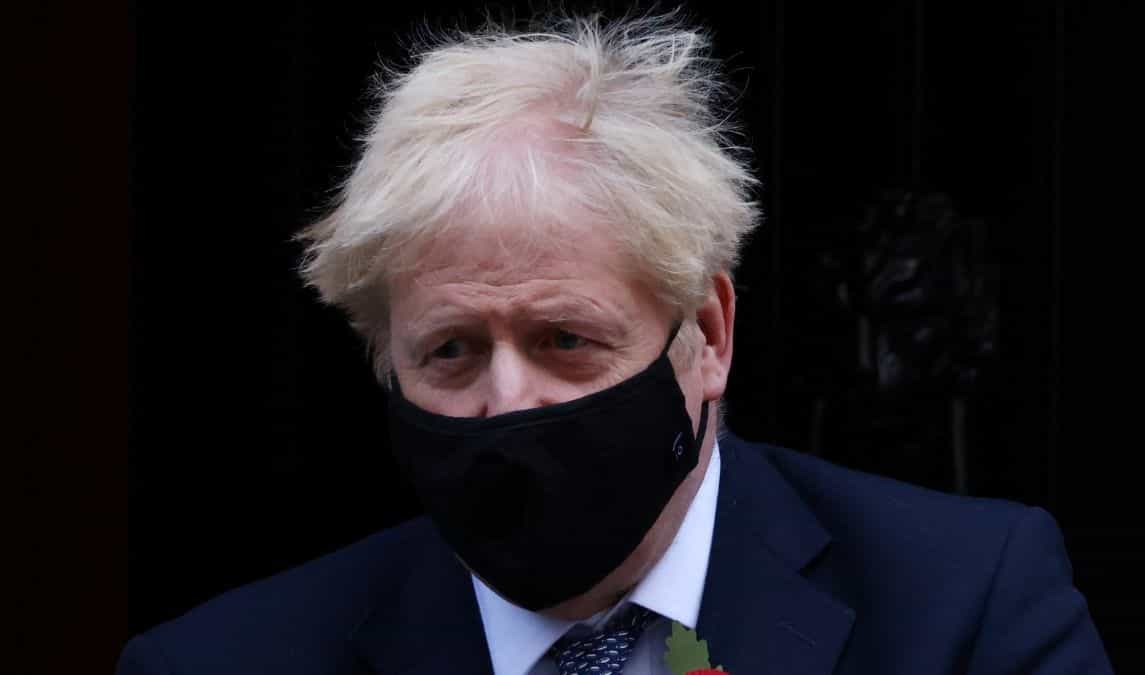
Britain's Prime Minister Boris Johnson wearing a face mask as he leaves Downing Street, after new nationwide restrictions were announced during the coronavirus disease (COVID-19) outbreak in London, Britain
Britain on Monday imposed its strictest travel curbs onIndiaafter an explosion of coronavirus cases there, hours after Prime Minister Boris Johnson called off a trip to New Delhi.
"We've made the difficult but vital decision to add India to the Red List. This means anyone who is not from theUKor an Irish resident or a British citizen cannot enter theUKif they've been in India in the previous 10 days," Hancock told parliament.
"UKand Irish residents and British citizens who've been in India in the past 10 days before their arrival will need to complete hotel quarantine for 10 days from the time of arrival."
The move was taken as a precaution while the variant first identified in India was assessed. Asked whether vaccines being rolled out in Britain worked against the variant, Hancock said he could not give that assurance but was looking to establish an answer as soon as possible.
"The core of my concern about the variant first found in India is that the vaccines may be less effective in terms of transmission and/or in terms of reducing hospitalisation and death," he said.
"It is the same concern that we have with the variant first found in South Africa, and is the core reason why we took the decision today."
Public Health England (PHE) has said that 77 cases of the so-called 'double mutantIndian variant have been detected in the UK since last month and that it has now been classed as a Variant Under Investigation (VUI).
In the event, the UK and Indian governments earlier Monday called off Johnson's visit, which was set for next week after already being postponed in January.
It would have been Johnson's first major foreign visit since he took office in 2019.
"In the light of the current coronavirus situation, Prime Minister Boris Johnson will not be able to travel toIndianext week," the two governments said in a joint statement.
They said that Johnson and Indian Prime Minister Narendra Modi would instead speak later this month "to agree and launch their ambitious plans for the future partnership between the UK andIndia.
"They will remain in regular contact beyond this, and look forward to meeting in person later this year."
Cricket impact
Monday's announcement could also have a knock-on effect upon England's upcoming home international cricket schedule.
Several leading England and New Zealand cricketers currently taking part in the lucrative Indian Premier League tournament are expected to fly in for the two-match Test series that starts at London's Lord's ground on June 2.
Indian players could be affected too, with Virat Kohli's men set to face New Zealand in the inaugural World Test Championship final in Southampton later that month.
But the Rose Bowl ground at Southampton, the headquarters of county side Hampshire, boasts an on-site hotel and it was one of the venues, along with Manchester's Old Trafford, that has a similar set-up, which pioneered international cricket's return from coronavirus-enforced suspension last year.
A spokesperson for the International Cricket Council, the sport's global governing body, said: "The ECB (England and Wales Cricket Board) and other Members have demonstrated how we can stage international cricket safely in the middle of a pandemic and we are confident that we can continue to do that and that the World Test Championship Final will go ahead as planned in June in the UK."
TheIndiawomen's team is also due to arrive for a multi-format series against England starting on June 16.
Johnson's office had last week announced the visit would be shortened. It was originally organised to span three days and set to begin on April 26.
It had initially been heralded as an opportunity for Britain to refocus its international trade policy in the wake of Brexit as it pursues a so-called "global Britain" strategy.
But spiking coronavirus cases, hospitalisations and deaths in Britain earlier this year led to its delay.
Now, surging infections inIndia,where officials have recorded five consecutive days of more than 200,000 cases, have led to its cancellation altogether.
A total of 103 cases of the Indian variant have been identified in Britain, Hancock said.
(With inputs from agencies)