

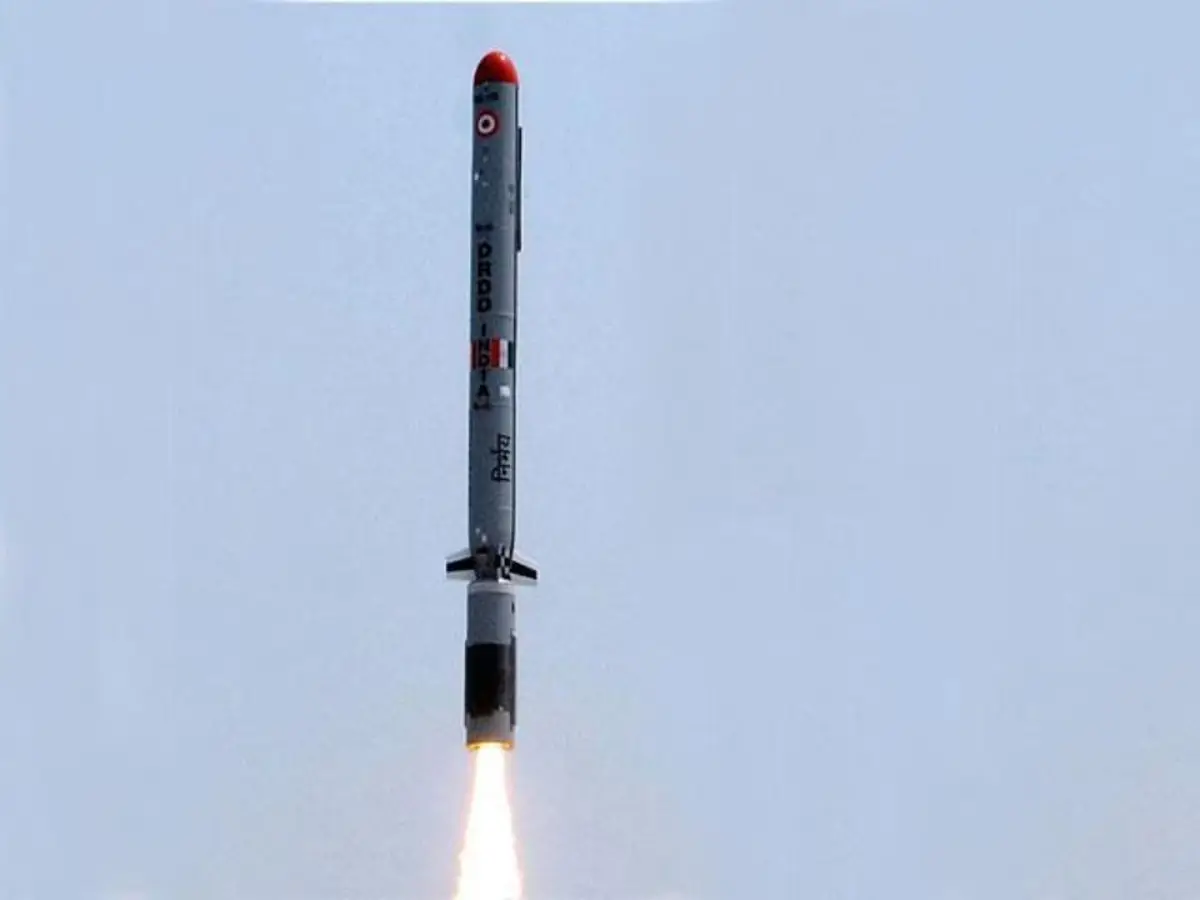
&imwidth=800&imheight=600&format=webp&quality=medium "The weapon Pakistan fears most: Not BrahMos's speed, but Nirbhay's silent lethality")
India's missile program has reached impressive heights with the world-famous BrahMos supersonic cruise missile. Yet, our defence scientists continue developing another missile, the Nirbhay. Many wonder: why do we need two different cruise missiles? The answer reveals India's smart, layered defence strategy that combines speed and stealth, power and precision, cost-effectiveness and overwhelming firepower.
The Tale of Two Missiles
Picture this: BrahMos is like a high-speed express train that reaches its destination incredibly fast but costs more and carries fewer passengers. Nirbhay is like a fuel-efficient, long-distance bus that takes longer but costs less, goes further, and can make multiple stops along the way.
BrahMos travels at blistering speeds of Mach 2.8-3.0 (3,400-3,700 km/hr), making it one of the world's fastest operational cruise missiles. Nirbhay, in contrast, flies at subsonic speeds of around Mach 0.7 (860 km/hr) but offers a superior range of 800-1,000 kilometres, nearly double that of early BrahMos variants.
Why Speed Isn't Everything
BrahMos weighs 3,000 kilograms while Nirbhay weighs only 1,500 kilograms. This weight difference matters enormously. A single warship or aircraft can carry twice as many Nirbhay missiles as BrahMos missiles. In military terms, this means more firepower per platform.
Trending Stories
&imwidth=180&imheight=135&format=webp&quality=medium)
'Hell of a beautiful a**': Trump compliments Nicki Minaj as rapper joins him in Michigan rally
&imwidth=180&imheight=135&format=webp&quality=medium)
'Hire the robot, fire the human': Bill Gates's words hint at a bleak future
&imwidth=180&imheight=135&format=webp&quality=medium)
'Lousy president': Trump hits back at Obama over 'cheesecake factory' White House jibe
&imwidth=180&imheight=135&format=webp&quality=medium)
Student-led movement ousts Serbia's longtime leader as protests rage across Europe | GRAVITAS
&imwidth=180&imheight=135&format=webp&quality=medium)
Cameroon unveils school-based migration clubs to support young people’s migration choices
&imwidth=180&imheight=135&format=webp&quality=medium)
Jordan strikes 'terrorist organisations' in Syria after deadly church attack as Damascus shuts main border crossing
&imwidth=180&imheight=135&format=webp&quality=medium)
Microsoft offers voluntary exit packages to 60,000 employees in India, US, UK and Canada
&imwidth=180&imheight=135&format=webp&quality=medium)
Harry Kane favourite to win 2026 Ballon d’Or ahead of Lamine Yamal and Kylian Mbappé
&imwidth=180&imheight=135&format=webp&quality=medium)
'He is a red flag': Ex-India strength and conditioning coach on Rohit's fitness regime
&imwidth=180&imheight=135&format=webp&quality=medium)
Maurene Comey, daughter of ex-FBI director James Comey, was unlawfully fired as federal prosecutor, judge rules
&imwidth=180&imheight=135&format=webp&quality=medium)
‘That is a miss’: Ravi Ashwin questions Sooryavanshi’s demotion to No. 3 in 2nd T20I vs NZ
&imwidth=180&imheight=135&format=webp&quality=medium)
Hijack scare unfolds on United flight over suspicious text message. Here is what happened
&imwidth=180&imheight=135&format=webp&quality=medium)
Pakistan airline PIA unveils new crew uniforms, faces online criticism
&imwidth=180&imheight=135&format=webp&quality=medium)
'Skinwalker' sightings in Utah from 2010 detailed in new UFO Files
&im=FitAndFill=(700,400)&imwidth=180&imheight=135&format=webp&quality=medium)
New OTT releases this week (October 26-November 1, 2026): Baththa, Akka, The One About Matthew Perry- 7 titles coming on Netflix, Prime Video and more
&imwidth=180&imheight=135&format=webp&quality=medium)
Elon Musk’s Grok releases first AI-generated Odyssey episode, months after promising ‘historically accurate’ full-length film
&imwidth=180&imheight=135&format=webp&quality=medium)
US Midterms 2026: Last leg polls and forecasts indicate Democratic momentum, but Senate control remains uncertain
&imwidth=180&imheight=135&format=webp&quality=medium)
'Already tired of his 9-to-5': Baby born with a moustache becomes internet sensation, video goes viral | Watch
&imwidth=180&imheight=135&format=webp&quality=medium)
Zimbabwe slips four places to 14th out of 29 in Africa’s Digital Rights and Inclusion ranking
&imwidth=180&imheight=135&format=webp&quality=medium)
Maldives opposition leader demands transparency on Muizzu Govt's Pakistan defence, security deals
&imwidth=180&imheight=135&format=webp&quality=medium)
'She is a beautiful woman': Trump mocks Mexican President Sheinbaum, mimics her voice at US Midterms rally
&imwidth=180&imheight=135&format=webp&quality=medium)
At least five shot dead in Guwahati hotel over suspected property dispute, police launch investigation
&imwidth=180&imheight=135&format=webp&quality=medium)
Uttarakhand innovator Ravi Tamta builds flying car without any formal engineering degree
&imwidth=180&imheight=135&format=webp&quality=medium)
Trump offers $1 million before US midterms. What is he asking Americans to report?
&imwidth=180&imheight=135&format=webp&quality=medium)
‘All 3 SIR orders unanimous,’ EC tells SC, denies unilateral decision-making by CEC Gyanesh Kumar
&imwidth=180&imheight=135&format=webp&quality=medium)
Boys, aged 10 and 12, rape 9-year-old in UP’s Hathras, lure her with berries
&imwidth=180&imheight=135&format=webp&quality=medium)
'Shove that ballroom up your a**': Trump heckled at Mississippi rally over White House ballroom renovations | WATCH
&imwidth=180&imheight=135&format=webp&quality=medium)
Meta’s AI bet is getting more expensive: What its $95 billion share plan means
&imwidth=180&imheight=135&format=webp&quality=medium)
Trump’s oil and gas holdings surge to $81.6 million amid Iran war as Americans face rising fuel costs
&imwidth=180&imheight=135&format=webp&quality=medium)
'I've done my work sincerely': AR Rahman on facing backlash over Ramayana soundtrack
Nirbhay's special capabilities include loitering, which can circle around a target, perform multiple manoeuvres, and then re-engage. Think of it as having a patient, intelligent weapon that can wait for the perfect moment to strike, while BrahMos is designed for immediate, devastating impact.
The Economics of Defence
Here's where it gets interesting for taxpayers. A Tomahawk missile (similar to Nirbhay) costs around $1.5 million (₹13 crore), while BrahMos costs $2.7 million (₹23.5 crore), nearly double. The latest reports suggest BrahMos costs about $5 million (₹43.5 crore) per unit, making it a premium weapon system.
The Long Range-Land Attack Cruise Missile (derived from Nirbhay) provides Indian armed forces with a cost-effective option for large-scale attacks, offering a low-cost alternative for mass launches, while BrahMos will be reserved for fewer high-value targets. It's like having both a luxury sedan and a practical hatchback in your garage—each serves different purposes.
Launch Platform Versatility
Both missiles showcase India's multi-platform capability. BrahMos can be launched from land-based Mobile Autonomous Launchers (MAL), naval ships through Vertical Launch Systems, submarines from depths of 40-50 meters, and aircraft, including the Sukhoi-30MKI fighters. The Indian Air Force has already modified 50 Su-30MKI aircraft to carry BrahMos, with plans to modify more.
Nirbhayoffers even greater platform flexibility. It can be launched from land-based mobile launchers using Tata's high-mobility 12×12 vehicles, naval ships through Universal Vertical Launch Modules (compatible with BrahMos launch systems), submarines through torpedo tubes, and eventually from various aircraft platforms. The submarine-launched variant weighs just 975 kg and can be fired from submerged platforms.
Different Jobs, Different Tools
BrahMos is primarily a tactical weapon designed for high-impact missions against heavily fortified targets, while Nirbhay serves strategic purposes and can carry both conventional and nuclear warheads. BrahMos has more than 32 times the kinetic energy of a Tomahawk missile due to its speed and weight, making it devastating against hardened targets.
However, it would be wasteful to use an expensive BrahMos against lightly defended targets when Nirbhay can do the job at half the cost and from twice the distance.
The Stealth Factor
Nirbhay's subsonic speed contributes to its terrain-hugging capability and sea-skimming ability, enabling a low radar signature and extended flight endurance. It can fly at different altitudes ranging from 50 meters to 4 kilometres above ground and can fly at extremely low altitudes like tree level to avoid enemy radar detection.
This stealth capability is crucial in modern warfare, where being undetected can be more valuable than being fast. BrahMos's speed makes it harder to intercept, but Nirbhay's stealth makes it harder to detect in the first place.
Indigenous Achievement
Nirbhay represents 100% indigenous technology development, with DRDO collaborating with local firms, including the Bengaluru-based Gas Turbine Research Establishment that developed the Manik engine. This makes Nirbhay crucial for India's self-reliance goals in defence technology.
Strategic Deployment Reality
India has already deployed both BrahMos and Nirbhay missiles along the Line of Actual Control to deter Chinese aggression. As of November 2023, the Ministry of Defence is considering proposals for Nirbhay induction across all three armed services, showing the military's recognition of its complementary role.
The Future Arsenal
Both missiles will become part of India's planned Integrated Rocket Force, alongside Pralay and Pinaka systems. The Long Range-Land Attack Cruise Missile variant of Nirbhay will have up to 1,500 kilometres range and will be compatible with the same Universal Vertical Launch Modules used by BrahMos on naval ships.
Bottom Line
India needs both missiles for the same reason a cricket team needs both fast bowlers and spinners. BrahMos provides the shock and awe, devastating speed that can penetrate the strongest defences and destroy high-value targets with minimal warning time. Nirbhay offers the strategic depth, patient, precise, cost-effective strikes across greater distances with stealth capabilities.
In an era where modern conflicts have proven that the future of warfare lies in long-range precision attacks, having diverse missile capabilities isn't a luxury, it's a necessity. While our neighbours scramble to counter one type of threat, India maintains the flexibility to choose the most appropriate weapon for each scenario.
The real genius of India's missile strategy isn't in developing the world's fastest missile or the stealthiest one, it's in developing both, ensuring our armed forces have the right tool for every mission, from surgical strikes to overwhelming firepower demonstrations.
As tensions continue in our neighbourhood, this dual-missile approach gives India something invaluable: options. And in the complex game of modern defence, having more options often means having the winning hand.
