
Video: 10 things to know about 'INS Karanj', third Scorpene class submarine

Authored By Wion Web Desk
Published: Jan 30, 2018, 20:22 IST | Updated: Jan 30, 2018, 20:22 IST
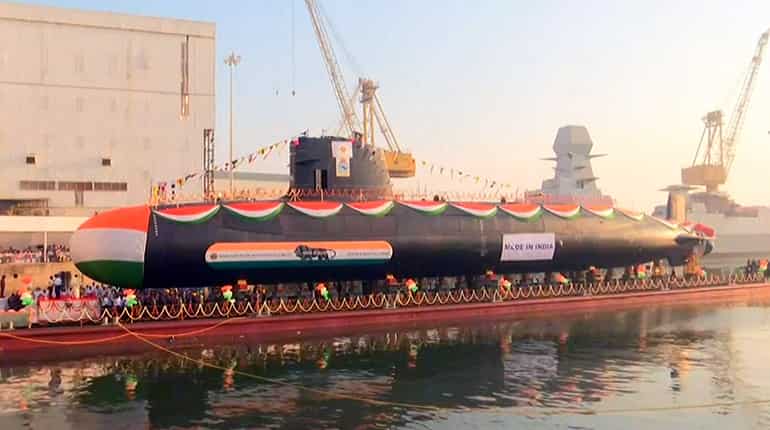
Watch: India launches third Scorpene-class submarine in Mumbai
Story highlights
The launch of INS Karanj marked a significant departure from the manning and training philosophy that was adopted for the first two submarines.
After prolonged delays and extremes of red-tapism,Indian Navy launched its third Scorpene class submarine in Mumbai on Wednesday. The Scorpene submarines are seen as new-age equipment deployed to overhaul and refurbish India's submarine fleet. With the growing presence of Chinese navy in the Indian Ocean, the deployment of Scorpene submarines comes like a move of utter significance.
- The third indigenously-built diesel-electric Scorpene-class submarine, INS Karanj, was launched at the Mazagaon Dock Shipbuilders Ltd (MDL) on Wednesday.
- INS Karanj was launched by Reena Lanba, wife of the Indian Navy chief, Admiral Sunil Lanba.
- Another three Scorpenes being built by MDL in collaboration with DCNS of France under a Transfer-of-Technology contract, are in the pipeline.
- The first of the vessels, INS Kalvari, was commissioned into the Indian Navy on December 14, 2017, while the second, INS Kandhari was launched in January of that year and is undergoing sea trials.
- The launch of INS Karanj marked a significant departure from the manning and training philosophy that was adopted for the first two submarines.
- The previous INS Karanj had served the nation for 34 years from 1969 to 2003 and had also participated in the 1971 war.
- The state-of-the-art technology utilised for constructing the Scorpene class submarines has ensured superior stealth features.
- The stealth of this potent platform is enhanced by the special attention given to various signatures. These stealth features give it an invulnerability, unmatched by most submarines.
- However, in a setback to the programme, the indigenous AIP will not be incorporated in vessels five and six as originally planned but retrofitted on all six boats at a later stage.
- The submarine is designed to operate in all theatres, with means provided to ensure interoperability with other components of Naval Task Force. It marks a generational shift in submarine operations.