Decriminalisation of homosexuality: Supreme Court reserves verdict on Section 377

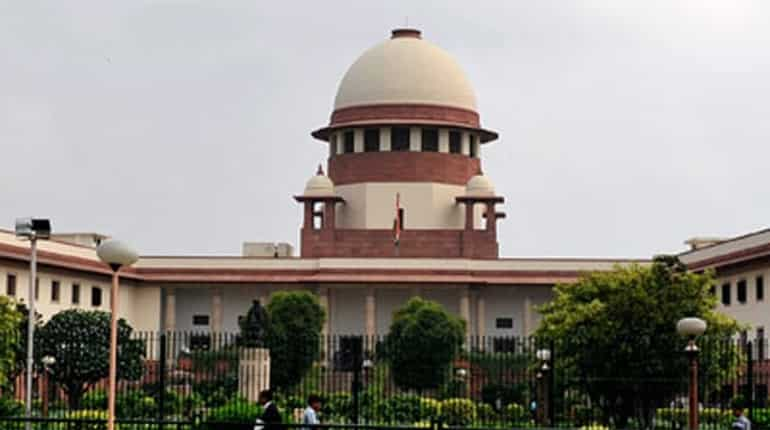
Supreme Court
The court has asked the council to submit their written views irrespective of 'for' and 'against' of Section 377 by this Friday
The court has asked the counsel to submit their written views irrespective of 'for' and 'against' of Section 377 by this Friday.
The case is being heard by the newly reconstituted bench, headed by Chief Justice Dipak Misra and comprises of Justices R F Nariman, A M Khanwilkar, D Y Chandrachud and Indu Malhotra.
Manoj George, the lawyer of the Christian community, opposed and said that homosexuality should remain a crime and that sex objective should only be to have children.
Justice RF Nariman commented: 'If a law is against fundamental rights, we will not wait for the majority of the government to cancel it. As soon as we are assured that any law is against fundamental rights, we will take immediate action against it, and not wait for the government.'
Nariman said that if the government makes prostitution legal in India, then they can avail to health services. And if avoided, it can create many problems in the future.
Chief Justice Dipak Misra said to cancel to Section 377, it is important that both people are agreeing to homosexuality. Without the consent of a person, it will be considered as a violation of rights.
Last week, Centre passed the buck on Supreme Court and said that the Constitutionality of 377 is to be decided by the Court.
What is Section 377?
Section 377 refers to 'unnatural offences' and says whoever voluntarily has carnal intercourse against the order of nature with any man, woman or animal, will get life imprisonment, or with imprisonment of either description for a term which may extend to 10 years, and shall also be liable to pay a fine.
This archaic law dates back to 1861, and the ambit extends to any sexual union involving penile insertion.