Supreme Court on EVM and VVPAT case: ‘We know what happened when there were ballot papers’

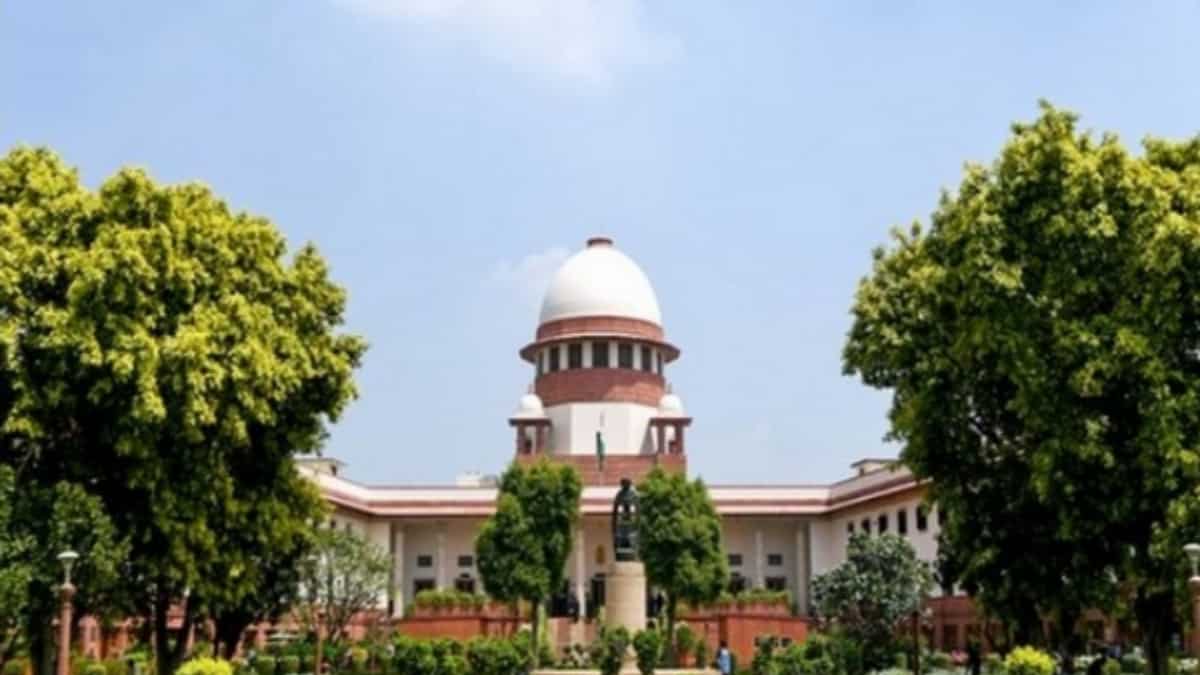
File photo of the Indian Supreme Court.
The Supreme Court of India on Tuesday (Apr 16) heard a plea seeking a 100 per cent count of Voter Verifiable Paper Audit Trail (VVPAT) slips in polls as opposed to the current practice of verification of only five randomly selected Electronic Voting Machines (EVM) through VVPAT paper slips.
The bench comprised of Justices Sanjiv Khanna and Dipankar Datta. The petitions were filed by the Association for Democratic Reforms (ADR) and others.
During the hearing, India's top court highlighted the issues with the secret ballot voting method, with Justice Khanna telling Prashant Bhushan, counsel for ADR: "We are in our 60s. We all know what happened when there were ballot papers. You may have, but we have not forgotten."
Justice Khanna was replying to Bhushan, who weighed in on alternate solutions.
Bhushan suggested that going back to the ballot paper was one of the ways."Earlier there used to be ballot papers. There can be ballot papers. Most European countries have gone back to back to ballot papers," he said.
He said, "We can go back to paper ballots. Another option is to give the VVPAT slip to the voters in hand. Otherwise, the slips fall into the machine and the slip can be then given to the voter and it can be put into the ballot box. Then the VVPAT design was changed, it had to be transparent glass, but it was changed to dark opaque mirror glass where it is only visible when the light is on for second seconds."
Telling about the source, Bhushan said that it was a poll conducted by the Centre for the Study of Developing Societies (CSDS). Replying to the same, Justice Datta said, "Poll! Let's not believe in these private polls."
Justice Khanna said, "This type of argument may not be acceptable because there is no data about that. A private poll will not be able to. It's possible somebody else will take out a poll to the contrary. Let's not go into all that."
On the European nation's example, Justice Datta asked, "What is the population of Germany?"
"My home state West Bengal's population is more than that of Germany. We need to trust someone. Don't try to bring down the system like this. Don't cite such examples. European examples don't work here," Justice Datta said.
He added it is a "humongous task". "Not possible for any European country to conduct. Let’s not draw analogies and comparisons from Germany and other countries," he further said while replying to senior Advocate Gopal Sankaranarayanan, who appeared for another petitioner.
He said human interventions "lead to problems and human weakness can be there, which includes biases as well".
"Machine normally without human intervention will give you accurate results. Yes, the problem arises when there is human intervention or (a human) makes unauthorised changes when they are around the software or machine, if you have any suggestion to avert this, then you can give us that," he added.
(With inputs from agencies)