SC/SC Act verdict instead of filling gaps resorted to 'judicial legislation': Centre to Supreme Court

SC/ST protection act
India's Attorney-General Mukul Rohatgi filed written submission over the issue in India's top court.
The government told the Supreme Court that verdict on SC/ST Act dealt with very sensitive issue causing anger, unease and sense of disharmony in the country.
"There is separation of powers between legislature, executive and judiciary and it is inviolable," the government told the top court.
The verdict, instead of filling gaps in the SC/ST Act, resorted to "judicial legislation", theCentre told the Supreme Court.
India's Attorney-General Mukul Rohatgi filed written submission over the issue in India's highest court.
"It is submitted that the confusion created by this judgment may have to be corrected by reviewing the judgment and recalling the directions issued by this Honorable Court," the Centre told the Supreme Court.
"Bland statement that 'power to declare law carries with it, within the limits of duty, to make law when none exists' is wholly fallacious because we live under a written Constitution of which separation of powers between the legislature, the executive and the judiciary is the very basic structure and is inviolable," the government said.
Last month, the Supreme Court had said banning immediate arrest of a person accused of insulting or injuring a Scheduled Caste/Scheduled Tribe member was meant to protect innocents from arbitrary arrest and not an affront to Dalit rights.
"An innocent should not be punished. There should not be terror in society... We do not want any member of the SC/ST to be deprived of his rights. We only want an innocent not to be punished,” Justice Goel had said.
Justice Goel said the verdict had "fortified" the Scheduled Castes and the Scheduled Tribes (Prevention of Atrocities) Act of 1989.
The judgement has done great damage to the country, the government told the court.
The judgement had directed authorities to conduct a "preliminary enquiry" and to file an FIR only after a Deputy Superintendent of Police verifies the report.
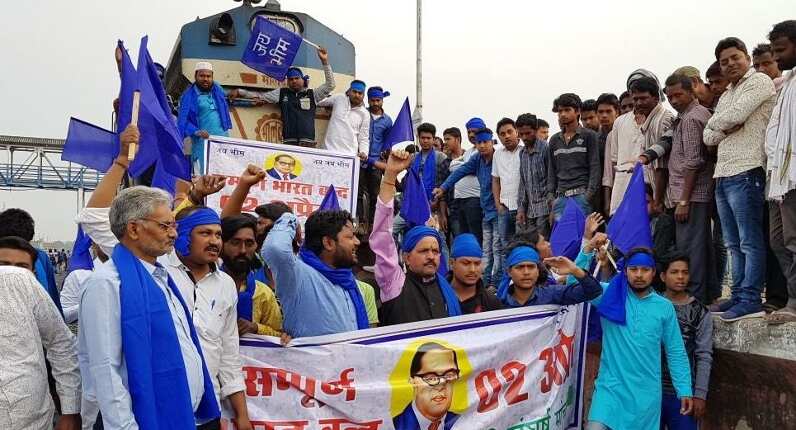
The Centre's submission came in the backdrop of several states being rocked by violence and clashes on April 2 following a 'Bharat Bandh' call given by several SC/ST organisations protesting the top court's March 20 order, which claimed at least eight lives and injured hundreds.