Rupee-Dirham mechanism is a template for other countries: Indian Ambassador to UAE Sunjay Sudhir

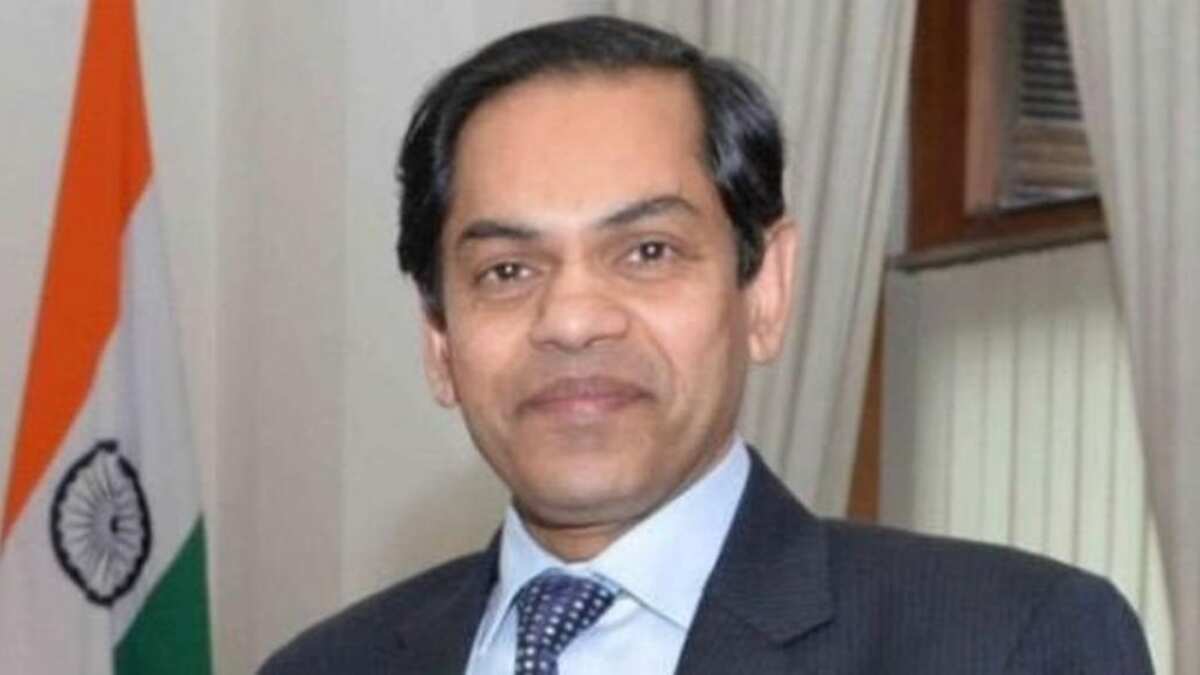
Indian Ambassador to UAE Sunjay Sudhir
India's Ambassador to the United Arab Emirates, Sunjay Sudhir has termed the India-UAE pact on trading in national currencies —Rupee and Dirham — as a "template" for other countries to go for such an arrangement.
The announcement of the pact comes amid New Delhi's bid to promote the usage of the Indian Rupee for global trade.
Speaking to WION's diplomatic correspondent Sidhant Sibal, Ambassador Sudhirhailed the development as a "paradigm shift on how we make our trade settlements".
The mechanism, building upon the preferential tariffs granted under the Comprehensive Economic Partnership Agreement (CEPA), aims to reduce transaction costs and time, benefiting exporters and importers.
Sudhir explained, "The mechanism will use the existing banking systems... [and] will convert payments into either rupee/Dirham directly without the need for third-country currencies."
The Memorandum of Understanding (MoU) on Local Currency Settlement (LCS) System was signed between the Reserve Bank of India and the Central Bank of United Arab Emirates enabling the use of the Indian Rupee (INR) and UAE Dirham (AED) for Cross-border Transactions.
This is India’s first-ever LCS and was signed during the visit of PM Modi to the country over the weekend.
The UAE visit was alsothe fifth by Indian Prime Minister Modi since 2014, reflecting high-level engagement between the twosides.
Ambassador Sudhir also spoke on the establishment of India's premier engineering institute, the Indian Institute of Technology in UAE, and ties in other domains.
Below is the full interview.
Sidhant Sibal: One of the key outcomes of the visit was trading in national currencies of India, UAE-Rupee and Dirham. How significant is it for the two countries?
Sunjay Sudhir: Thank you very much for having me on your show. I think the Rupee-Dirham trading arrangement is very relevant and is something that is extremely significant. It actually marks a paradigm shift on how we make our trade settlements. You will recall that when India and the UAE signedComprehensive Economic Partnership Agreement (CEPA)last year, in February, that was the first CEPA ever for the UAE and for India, which we had with any country, in this part of the world. Likewise, this kind of trade settlement is also the first time we are doing it with any country in the world actually. And same for the UAE. Equally significant is the MoU on interlinking payments and messaging systems. So, if you recall two very big concrete economic or say FinTech MoU were signed, the second one, I think, was equally significant because that talks about the availability of the Rupay card and the utility of new pay cards in this country. It also talks about interlinking, our UPI and the instant payment system of the UAE and also our instant messaging system, which has recently been developed by RBI.
Sidhant Sibal: How does this mechanism work, if you can simplify it? And how does it help the trade between the two countries?
Sunjay Sudhir: So actually, the Rupee-Dirham mechanism takes CEPA a step further. CEPA gave tariffs preference, so from our perspective, it gave 5 per centtariff preference to all the items covered under CEPA. Now the Rupee-Dirham mechanism will further reduce transaction costs and also transaction time. It will give an added benefit to our exporters and importers. And the way it works is very simple. The mechanism will use - the existing banking systems in the 2 countries. All the exporters and importers now have a choice to pay for the transactions in either the UAE Dirham or Indian Rupees based on their commercial judgment or mutual agreement. This will be converted by financial intermediaries, in today's context, the banks in the two countries, into either rupee/Dirham directly without having the need to use third country currencies. Two kinds of accounts will facilitate this, one is the SNRR account which is the special non-resident rupee account and second is the vostro account. Exchange rates, of course, will be determined by the market. And you know the beauty of this mechanism is that the mechanism actually covers all current account transactions including transactions like oil and also permissible capital account transactions. The money which accrues out of this could also be used for investing in equities, government securities, private securities, so it gives a wide gamut of usage. Also, and it is so simple to operate that the day it was signed, the same day a major gold transaction also happened. An exporter in the UAE actually exported gold to yes bank and federal bank worth 12.84 crore rupees. And as you know, gold and gems and jewelry are the second largest traded item between us. It constitutes about 20 per cent of our entire trade portfolio.
Sidhant Sibal: And usage of payment apps, how will it simplify things for the common man?For large number of Indians in UAE.
Sunjay Sudhir: Actually, the second MoU was more of an enabling MoU to work further on developing the technical linkages but the way it will help will be immense because under the under the RuPay tag. What will happen is that anybody traveling from India with an international RuPay card or domestic RuPay card will be able to use his or her credit card. Or anybody here, as you know, there are 3.5 million Indians living in the UAE which is the largest population of Indian nationals in any country in the world. If they have RuPay cards from India, then they can also very easily make the transaction and as far as the UPI is concerned once the UPI gets linked to the instant payment platform of the UAE the ease with which we are all able to pay in India, for example, using BHIM app or Google Pay or Paytm it will be the same seamless ease with which our tourists and the Indian community will be able to make payments so in a way it enhances the ease of ease of living in this country I would say.
Sidhant Sibal: Will we use the Rupee Dirham trading arrangement for trading with other west Asian countries or with Russia?
Sunjay Sudhir: As I just mentioned India and the UAE have been pioneers, whether it is CEPA or the Rupee-Dirham payment mechanism, and that has its obvious advantages which I just listed out. Now the thing is that a template is already in place. It is for other countries to decide if they want to go in for a similar arrangement or not. This is entirely their call. But India by the virtue of setting up this mechanism has already conveyed its willingness to go in for more and more such deal.
Sidhant Sibal: Another key announcement was establishment of IIT Delhi campus in UAE, how will it strengthen the educational ties between the 2 countries?
Sunjay Sudhir: You know our relations are so multi-dimensional, education is one sub part of it. UAE was actually the first country with which we started discussions on setting up a campus of the IIT last year and on our part, it was the IIT Delhi which took the lead. So, by setting up a campus of IIT D here, we will further increase our education ties and it will be another feather in the cap of India UAE relationship. The IITD campus will also enhance India's educational reputation globally as well as that of IIT Delhi and allow it to expand its international footprint. You know very well that IIT D is something which is a global brand, but so far, a very national kind of presence with this setting up for campus of IIT Delhi in Abu Dhabi, the brand will actually be going out and establishing itself in another country. This is also likely to improve IIT Delhi's global rankings due to the presence of international students, international research collaborations and so many other things. Actually, discussions are already on with the big entities like ADNOC on how we can do some research in say the sustainability field in the R&D sphere of oil and gas, renewables and other sphere. So IIT Delhi's presence here being at the cutting edge of R&D will actually also synergize other similar efforts which are already happening in Abu Dhabi, and they are there are scores of them. While it will not be restricted to Indians, it could serve the needs of the larger Indian community in the UAE and this part of the world, and I think that will be a great boon for the Indian diaspora in this part of the world.
Sidhant Sibal: India UAE have ties in other domains as well, from food security to connectivity, and also multilaterally like I2U2, if you can update us of that.
Sunjay Sudhir: Relationship as I said is such a multi-dimensional relationship people to people contact is so strong and connectivity is strong. And today, the air frequencies between India and the UAE is perhaps the largest, which India has with any other country in the world. If you recall last year in February when Prime Minister Modi and His Highness Sheikh Mohammed bin Zayed, had a virtual conference and witnessed the signing of CEPA a very key document was signed or unveiled was the vision statement. And the vision statement actually lays out the roadmap for our relationship in different areas whether it's health, education, FinTech, space, defense, food security, and so many other areas. So, there's work happening on all these areas. As far as I2U2 is concerned, you will recall that the first I2U2 leader summit was held virtually in July last year, or two projects were announced at that time involving UAE investment of about $2 billion in setting up food parks and other was about energy Park. After that the first business conclave of I2U2 countries took place in Abu Dhabi in February of this year. So, there's a lot happening in that area. And there's active engagement already taking place between UAE and Gujarat govt for setting up food parks.
Sidhant Sibal: You mentioned space, what kind of collaboration we are looking at in the space front?
Sunjay Sudhir: Yes, and we have a history too, because the first micro satellite of the UAE was actually launched by India and ISRO had the credit to do that. And UAE has made significant progress in space research. Today as we speak one of their astronauts is on a six-month long voyage in space. In fact, you might have heard that on the International Day of yoga, one of the messages he sent out from space was about yoga. And he tweeted from the asking people that this my meditative posture, so he asked people everywhere that this is my favoriteasan, which one is yours.
Sidhant Sibal: And how popular is Yoga in UAE?
Sunjay Sudhir: There's a huge and growing interest in yoga. And we can see that for ourselves. For instance, when we celebrated International Yoga Day, on 21st June this year, the theme which we had adopted was the ocean connect initiative. Now under INS Brahmaputra called on Port Rashid in Dubai and Port Rashid is a very important port because that port has really stood for connectivity between India and the UAE, between Indians and Emirati, it was the first hub for trade and people-to-people contact and it is most befitting that we did our flagship Yoga day celebration this year at Port Rashid. We did another one for exclusively for diplomats and for the international community under the iconic dome of Louvre Museum in Abu Dhabi, and we are grateful to His Highness Shiekh Nahyan, Minister of tolerance and coexistence for agreeing to be chief guest this year as he always gracious does every year. That was, again, a very big, very big event. So, the yoga, actually people are getting to realise more and more that this ancient Indian treasure, how useful and how beneficial is it is for their lives.
WATCH WION LIVE HERE
You can now write for wionews.com and be a part of the community. Share your stories and opinions with us here.