

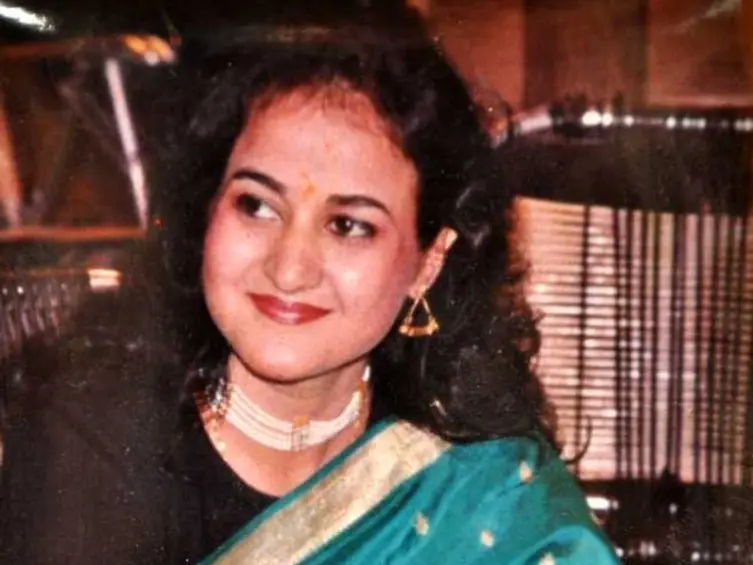
&imwidth=800&imheight=600&format=webp&quality=medium "Priyadarshani Mattoo's family urges Delhi Home Minister to reject killer's premature release")
Family of Priyadarshani Mattoo met Delhi Minister of Home Department Ashish Sood on Wednesday (July 24). The meeting came after Delhi High Court directed Sentence Review Board (SRB) to reconsider the premature release of convict Santosh Kumar Singh, who has been charged with rape and murder of the 25-year-old law student in 1996. They urged Sood to reject the Singh's release in order to uphold justice.
The horrific 1996, was orchestrated by Singh, the son of an IPS officer, who was stalking Mattoo, his junior in college. The incident took place after Mattoo and her father filed a complaint with the police. He had been relentlessly pursuing her since and after repeated such encounters, led her to the police. Students and activists have been fighting for justice against the heinous crime. In a letter, her brother Hemant Mattoo wrote to the SRB, which mentioned, “She lodged multiple complaints: on February 25, 1995 when she was stalked and forced to stop her car; on August 16, 1995 when he followed her home and tried to break into her house; and on November 6, 1995, when he physically assaulted her at the college campus. She was compelled to seek help from police repeatedly, and each time, the convict gave undertakings that he would stop harassing her."
“When even after giving the undertaking, he did not stop, she and her father approached the Commissioner of Police for protection. Santosh Kumar Singh while seeking revenge even filed malicious complaints with the university resulting in her results being withheld. These facts underline that the Santosh Kumar Singh displayed a dangerous pattern of obsessive, violent behaviour that eventually led to the most extreme violation—a crime committed not in a moment of passion but with premeditated malice. His past conduct outside prison cannot be ignored when evaluating his so-called ‘good conduct’ within its walls,” it added.
In 1999, Singh was acquitted, giving him the benefit of doubt. Later in February 2000, the CBI took the case to the Delhi High Court, which denied priority to the case. 'Justice for Priyadarshani' a nationwide uproar, which led the Delhi High Court to begin trials and the killer was ultimately awarded the death penalty. But in 2010, the Supreme Court turned the death sentence to life imprisonment.

