

&imwidth=800&imheight=600&format=webp&quality=medium "WATCH | PM Modi receives Daruma doll during Japan visit – Know its significance and cultural essence")
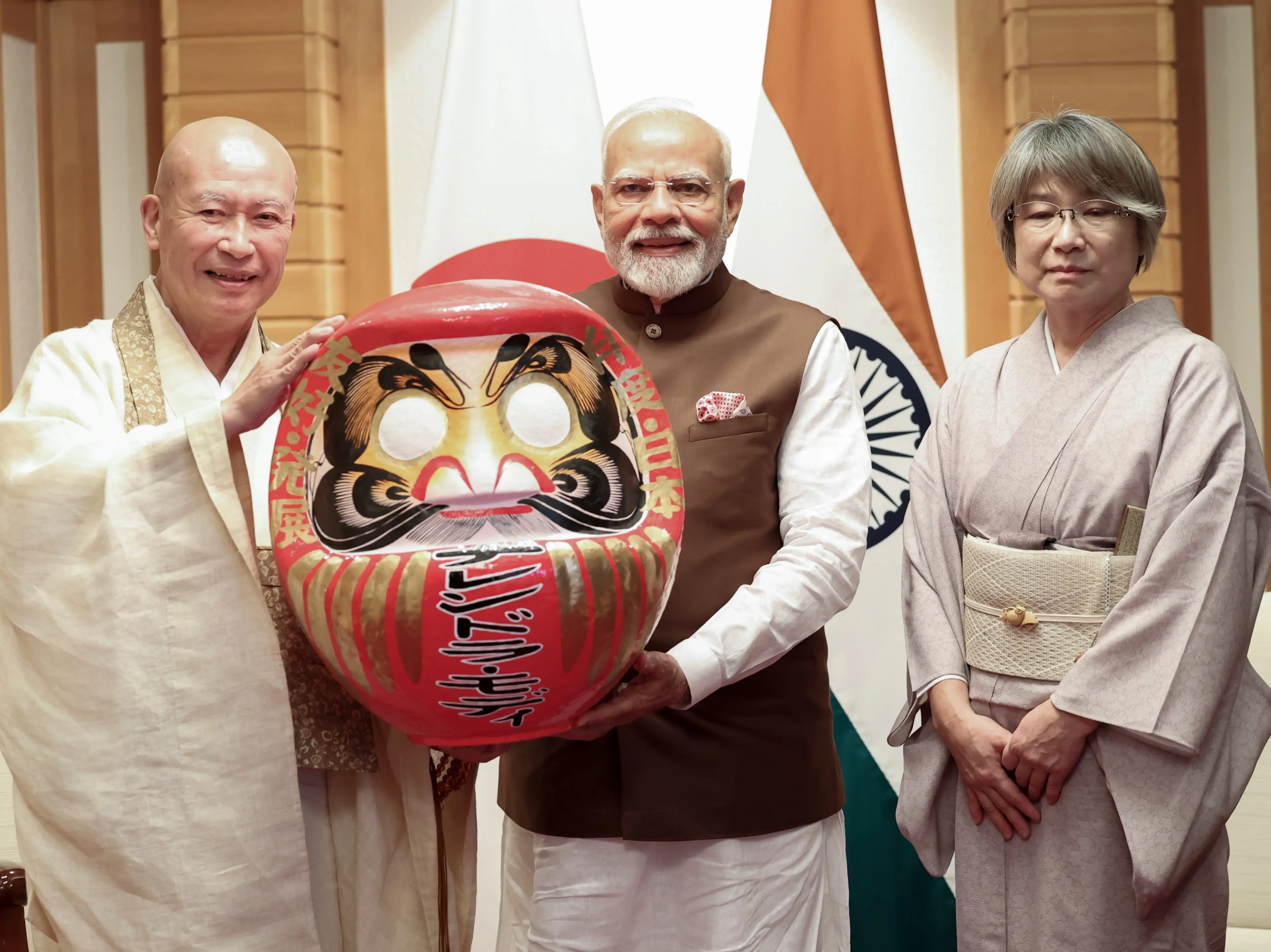
During his two-day visit to Japan, Indian Prime Minister Narendra Modi was presented with a Daruma doll by the Chief priest of Shorinzan Daruma-Ji Temple, Rev Seishi Hirose, in Tokyo on Friday (Aug 29). The traditional Japanese doll, which was gifted to PM Modi as a gesture of goodwill between the two nations, is a symbol of good luck and holds a significant place in the country’s culture.
In a post on X, PM Modi wrote, “It was an honour to meet Rev. Seishi Hirose, Chief Priest of Shorinzan Daruma-Ji Temple in Takasaki-Gunma. My gratitude to him for presenting a Daruma Doll. Daruma is considered to be an important cultural symbol in Japan and also has a connect with India. It is influenced by Bodhidharma, a noted monk.”
What does Daruma doll signify?
The hollow, round, and brightly painted doll represents resilience, perseverance, and good fortune and is one of the most enduring cultural symbols of Japan. It is modelled on Bodhidharma, the founder of Zen Buddhism.
The doll has a unique weighted design that ensures that it returns to an upright position if it is pushed over, reflecting the Japanese proverb: “Nanakorobi yaoki”, which translates to “fall seven times, stand up eight”.
A new Daruma doll has its eyes left blank white. After purchasing, an owner makes a wish or selects a goal, then fills the left eye with black ink. Once the goal is fulfilled, only then is the right eye painted. Pilgrims visit the temple to receive the dolls as a symbol of good fortune and resilience.
By presenting the doll to PM Modi, the chief priest not only expressed a gesture of goodwill but also extended spiritual blessings of persistence and success. It is also a symbol of expressing faith in someone’s determination to achieve their goals, as per the Japanese tradition.

