PM Modi hails Garba as 'celebration of life' after UNESCO's listing of dance form as 'Intangible Heritage'

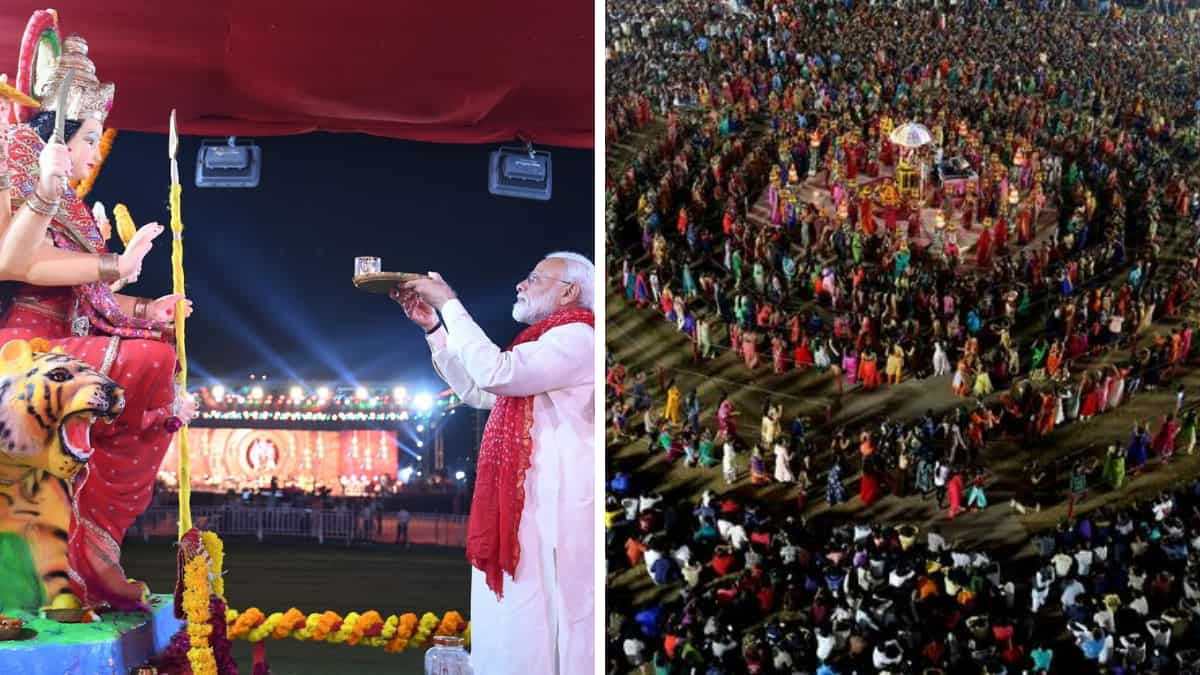
File photo of India's Prime Minister Narendra Modi worshipping at a Garba Pandal
Garba, the traditional dance form of western India's Gujarat which is also the home state of India's Prime Minister Narendra Modi, has been declared as an Intangible Heritage by the United Nations Educational, Scientific and Cultural Organisation (UNESCO).
In a post on social media platform X (formerly Twitter) on Wednesday, UNESCO said, "New inscription on the Intangible Heritage List: Garba of Gujarat, India. Congratulations!"
Prime Minister Narendra Modi also reacted to the development and hailed Garba as "a celebration of life".
"Garba is a celebration of life, unity and our deep-rooted traditions. Its inscription on the Intangible Heritage List showcases to the world the beauty of Indian culture. This honour inspires us to preserve and promote our heritage for future generations. Congrats for this global acknowledgment," Modi wrote on X.
How India's Garba became world's intangible heritage?
The decision was reached at the 18th session of the Intergovernmental Committee for the Safeguarding of the Intangible Cultural Heritage. The meet is currently being held at the Cresta Mowana Resort in Kasane, Botswana.
The ongoing session, initiated on December 4 and set to conclude on December 9, highlights diverse cultural practices worldwide. Garba, a ritualistic and devotional dance integral to the Hindu festival of Navaratri, secured its place on this list.
What is Garba?
During Garba performances, participants encircle a perforated earthenware pot illuminated with an oil lamp or an image of the Hindu goddess Amba.
The dance unfolds with clockwise movements, gradually intensifying to spirited whirling.
Practitioners, spanning dancers, musicians, social groups, craftspeople, and religious figures, constitute to the festive atmosphere in a designated pandaal.
UNESCO's citation for Garba
According to the UNESCO's citation, Garba is not merely a dance but a cultural legacy which has continued through generations in both urban and rural settings. The transfer occurs through dedicated practice, live performances, imitation, and attentive observation.
Garba joins a distinguished roster of cultural elements from around the globe.
Other recent additions include the rickshaws and rickshaw painting in Dhaka, Bangladesh, Indonesia's Jamu wellness culture, and Thailand's Songkran festival.
Notably, various elements of heritage from India, such as the Nawrouz festival, Kumbh Mela, Durga Puja of Kolkata, Ramlila, and Vedic Chants, have also found a place on UNESCO's Representative List of Intangible Cultural Heritage of Humanity.
As of January 2022, a total of 14 Intangible Cultural Heritage elements are inscribed on UNESCO's list, a show of cultural diversity of our world.
(With inputs from agencies)