Pfizer in talks with government to bring its COVID-19 vaccine to India: Report

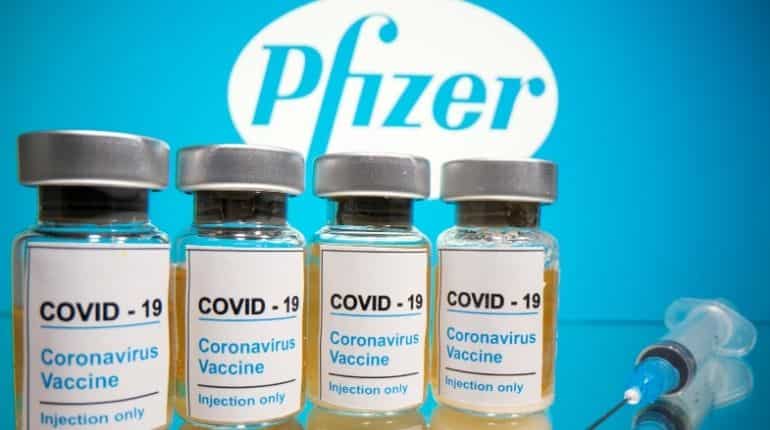
Vials with a sticker reading, "COVID-19 / Coronavirus vaccine / Injection only" and a medical syringe are seen in front of a displayed Pfizer logo in this illustration taken October 31, 2020
Pfizer Inc is currently in discussions with the government to distribute its potential COVID-19 vaccine in India.
"We remain committed to advance our dialogue with the Government of India to make this vaccine available for use in the country," Indian media quoted the spokesperson as saying.
India is currently having a discussion on securing Pfizer's messenger RNA vaccine as well as a number of other domestic and foreign COVID-19 vaccine candidates.
Pfizer is also working closely with the US government and state officials on how to ship the vaccine from its distribution centres in the United States, Germany and Belgium around the globe. The detailed plan includes using dry ice to transport frozen vaccine vials by both air and land at their recommended temperatures for up to 10 days.
Earlier, Pfizer Inc said its experimental COVID-19 vaccine was more than 90% effective, a major victory in the fight against a pandemic that has killed more than a million people, battered the world's economy and upended daily life.
Pfizer and German partner BioNTech SE are the first drugmakers to release successful data from a large-scale clinical trial of a coronavirus vaccine. The companies said they have so far found no serious safety concerns and expect to seek US authorization this month for emergency use of the vaccine.
But according to the reports, the experimental COVID-19 vaccine developed by Pfizer Inc and BioNTech SE may not be coming to local pharmacies for the general public any time soon.
The vaccine's complex and super-cold storage requirements are an obstacle for even the most sophisticated hospitals in the United States and may impact when and where it is available in rural areas or poor countries where resources are tight.
(With inputs from agencies)